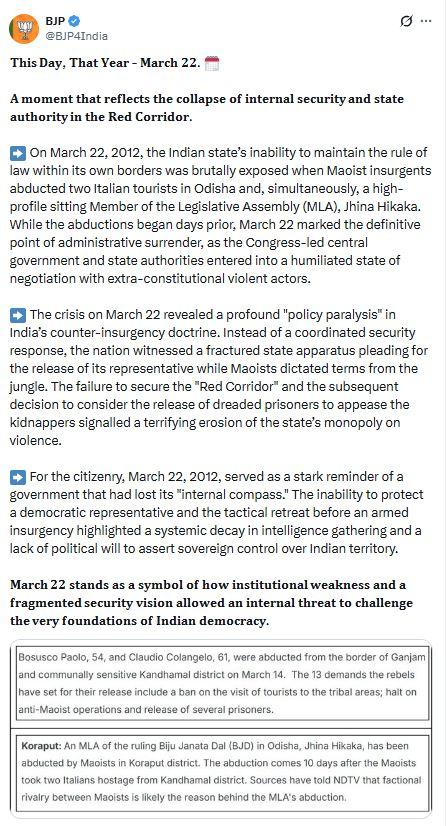
March 22, New Delhi: On March 22, 2012, India experienced a significant failure in internal security when Maoist insurgents abducted two Italian tourists and Jhina Hikaka, a sitting MLA in Odisha. While the abductions began days earlier, March 22 marked the critical day when the central and state governments were forced into negotiations with armed non-state actors.
The incident exposed deep flaws in India's counter-insurgency policy. Instead of a coordinated response, the state apparatus struggled while the Maoists dictated terms. The failure to secure the "Red Corridor" and the consideration of releasing prisoners to appease the kidnappers underscored the erosion of the state's monopoly on violence.
Paolo Bosusco (54) and Claudio Colangelo (61) were abducted from the Ganjam-Kandhamal border, and the rebels' 13 demands included halting anti-Maoist operations, restricting tourism in tribal areas, and releasing prisoners.
Meanwhile, MLA Jhina Hikaka was abducted from the Koraput district, reportedly due to factional rivalries among the Maoists. March 22 serves as a reminder of institutional weaknesses and fragmented security that allowed internal threats to challenge the foundations of Indian democracy.