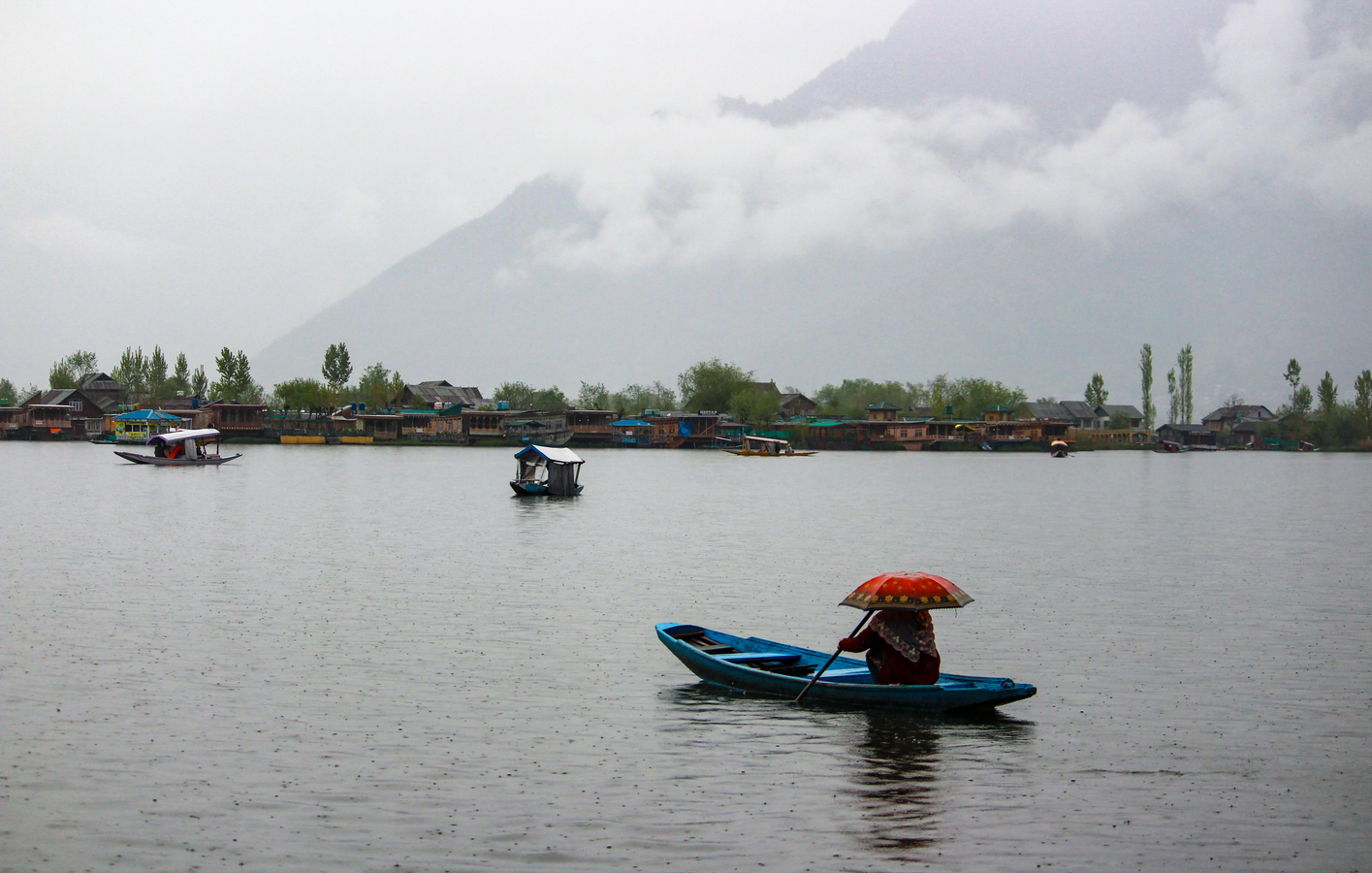
Jammu, April 9 – The Comptroller and Auditor General (CAG) has raised serious concerns about the deteriorating condition of lakes in Jammu and Kashmir, revealing that over 74% of the 697 natural lakes in the region – specifically 518 lakes – have either disappeared or significantly shrunk since 1967. This has led to significant ecological imbalances and a loss of biodiversity.
According to the CAG's report on the conservation of lakes in the region for the year ended March 31, 2024, out of the total 697 lakes covering an area of 28,990 hectares, 315 lakes covering 1,537.07 hectares have disappeared, while the area of 203 lakes has shrunk by 1,314.19 hectares. The report states that a total decrease and disappearance of 2,851.26 hectares occurred across these 518 lakes.
The CAG strongly recommended a series of measures for effective conservation and management of lakes in Jammu and Kashmir, emphasizing the need for a structured and time-bound approach.
The report highlighted that this significant shrinkage has resulted in the loss of flora and fauna, disruption of ecological services, and adverse impacts on water, food, and biodiversity. It also pointed out that the reduction in lake area has contributed to climate insecurity and played a role in the devastating floods in Jammu and Kashmir in September 2014, emphasizing that lakes act as natural flood buffers.
Jammu and Kashmir, with its 697 natural lakes spread across 20 districts, holds immense ecological and socio-economic significance. This includes 185 major lakes, such as the Wular Lake (the largest freshwater lake in India), along with several other prominent water bodies.
The audit report revealed that 150 lakes recorded an increase in area by 538.22 hectares, while 29 lakes remained unchanged. However, it noted that the reasons behind the increase in lake areas were not adequately analyzed or monitored by the relevant departments.
Of the disappeared lakes, 80 fell under the jurisdiction of the forest department, while 235 were under the revenue and agriculture departments.
Among the 203 lakes that experienced shrinkage, 63 have lost more than 50% of their area, putting them at high risk of extinction.
The CAG attributed the disappearance and degradation of lakes primarily to changes in land use within the lake bodies and their catchment areas, along with deforestation, climate change, and unregulated human activities.
The audit, which covered 63 sampled lakes accounting for 87% of the total lake area, used satellite imagery, remote sensing data, and field verification to assess spatio-temporal changes. It found that some lakes had nearly dried up, while others, such as Khushal Sar and Anchar, were undergoing severe degradation.
A questionnaire-based survey on the 63 test-checked lakes was also conducted as part of the audit. Furthermore, the audit utilized satellite images of the lakes provided by the Ecology, Environment, and Remote Sensing Department (EE&RSD) to analyze the spatio-temporal changes in the lakes.
The report also highlighted institutional and administrative gaps, noting that despite being mandated since 1989, the forest department had not prepared comprehensive conservation and management plans for 255 lakes under its jurisdiction. The report cited a lack of technical manpower and infrastructure as key constraints.
The CAG observed that conservation efforts were limited to only six lakes – Dal, Wular, Hokersar, Manasbal, Surinsar, and Mansar – while no structured programs existed for the remaining 691 lakes.
It further pointed out the absence of a dedicated legal framework for lake conservation, with only fragmented provisions existing under various laws and policies. "Multiple agencies handling lake management have also led to a lack of coordination and accountability," the report said.
Recommending urgent action, the CAG called for the enactment of a comprehensive law for the conservation and management of lakes and the establishment of a centralized, specialized authority to ensure coordinated efforts.
It also stressed the need for enhanced funding, scientific planning, and the deployment of experts, including hydrologists, ecologists, and GIS specialists.
The report suggested strengthening sewage treatment, preventing encroachments, regulating construction around lakes, and launching public awareness campaigns to safeguard these critical ecosystems.
Emphasizing that lake conservation is a scientific and multi-disciplinary process, the CAG urged the government to adopt a holistic approach to restore and preserve the fragile lake ecosystems in Jammu and Kashmir.
The Comptroller and Auditor General has strongly recommended a series of measures for effective conservation and management of lakes in Jammu and Kashmir, stressing the need for a structured and time-bound approach.
The CAG recommends that Generic lake management activities such as survey, categorization, sewage treatment, and flushing should be planned and carried out in a time-bound manner.
The CAG recommends that the Government of Jammu and Kashmir should increase its budgetary allocation for the conservation and management of lakes, highlighting the need for greater financial commitment to protect these vital natural resources