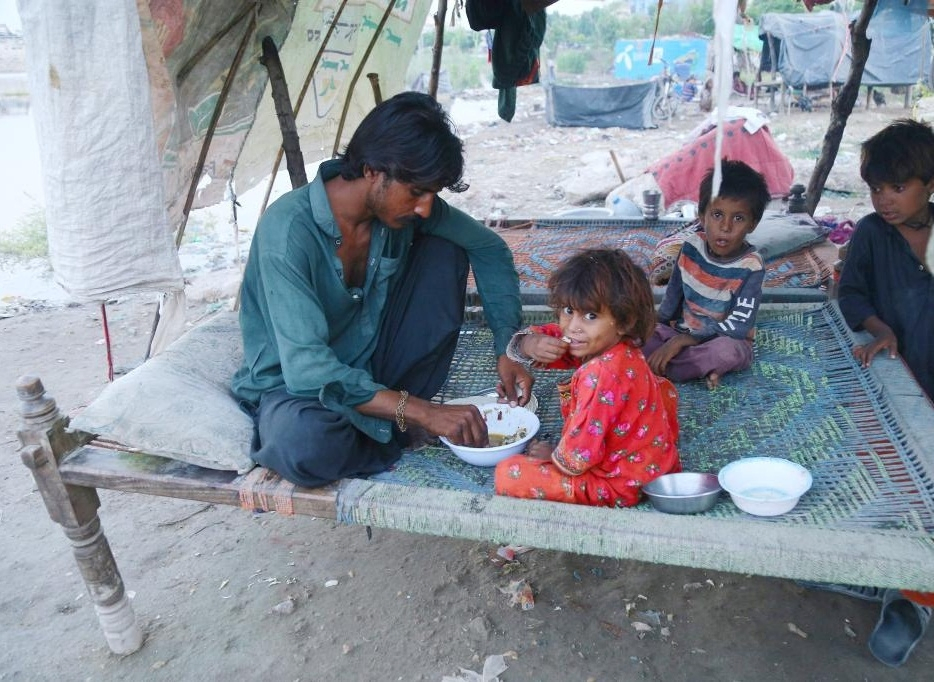
Islamabad, March 12. Millions of children in Pakistan are being left behind due to the slow, subtle erosion of chronic malnutrition. The crisis involves nearly 40 per cent of children under five in Pakistan who are stunted, nearly 10 million affected by chronic growth failure, and millions more whose brain development is compromised during the most important phase of human life, placing further strain on Pakistan's already strained systems, according to a report.
Children affected by stunting suffer cognitive damage. They typically have poor memory, reduced attention, and lower educational achievement. Even a small percentage indicates hundreds of thousands of children who will require early intervention, rehabilitation, and inclusive education in the coming years, Rabiya Javeri Agha, Chairperson of Pakistan's National Commission for Human Rights, wrote in the country's leading daily, Dawn.
"The crisis is unfolding, and Pakistan is not prepared. Pakistan has over 5,500 Basic Health Units and 96,000 Lady Health Workers, but routine developmental screening is lacking. A child can be repeatedly seen without being assessed for delays until those delays prevent school participation. Even birth registration remains critically low, with only 42 per cent of children under five registered," Agha mentioned.
"Without an identity, millions remain invisible to the systems meant to support them. Access to rehabilitation services is limited to cities, with therapists and psychologists largely absent in remote areas. A family in rural Balochistan must choose between forgoing support or incurring unaffordable travel costs. The window for early intervention closes, and the child enters school already behind," she added.
The Chairperson of the National Commission for Human Rights opined that, despite Pakistan's efforts for inclusive education, the system still heavily relies on segregated models. Research suggests that nearly 70 per cent of children with disabilities have not been admitted to school. The majority of mainstream schools do not have assistive devices or accommodations for children with learning difficulties. These are the students who are most likely to be left behind in classrooms.
The 2023 Census revealed that 7.45 million people in Pakistan have disabilities, while more than 23 million have functional limitations. This disparity indicates that many children with developmental delays remain out of formal recognition systems. Since over five million children are born each year in Pakistan, even a modest prevalence of developmental delay translates into enormous need every year, as per the report. Pakistan lacks the capacity to respond, while the data systems created to track children do not communicate with one another, making it difficult for the authorities to anticipate future needs.
"The children who are stunted today will be school-aged tomorrow. They will enter school with delays and face systems ill-equipped to support them. Those who leave school early will face labor markets that already exclude persons with disabilities at disproportionate rates. This is not a prediction, but an identification of risk, and risk can be mitigated through action," Agha wrote in Dawn.
This week, Pakistan will discuss its laws and policies before the Committee on the Rights of Persons with Disabilities in Geneva. However, accountability can be measured whether a child in rural Balochistan, a girl in a village of Punjab, or a boy in Karachi gets the support they require for learning and participation.