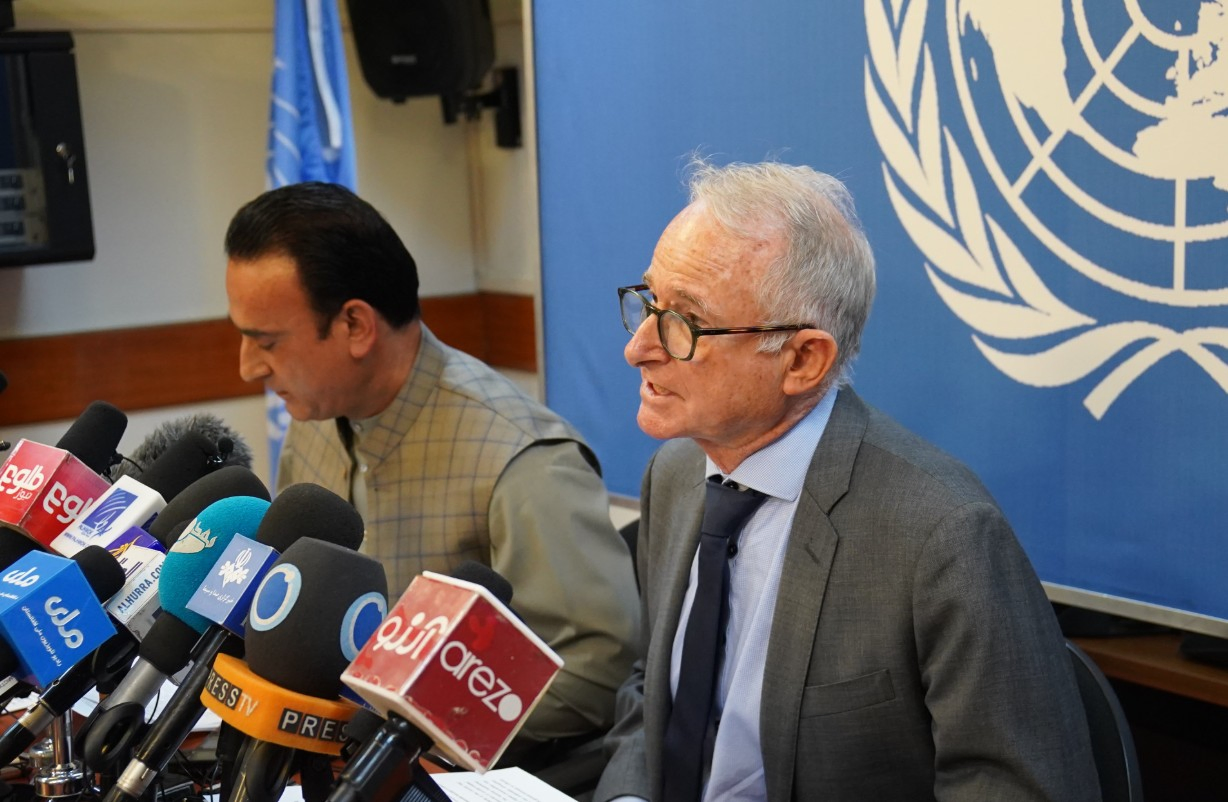
Kabul, February 26 – Richard Bennett, the United Nations Special Rapporteur on the human rights situation in Afghanistan, has warned that restrictions and cuts in international funding have severely affected Afghan women's access to essential healthcare services, local media reported on Thursday.
Bennett will present a new report on the rights of women and girls to health at the 61st session of the United Nations Human Rights Council in Geneva on Thursday, according to Khaama Press, Afghanistan's leading news agency. He said that Afghanistan's healthcare system has been fragile due to decades of war, poverty, and underinvestment in infrastructure. However, he emphasized that current restrictions have further worsened women's and girls' access to healthcare services.
He attributed the crisis to three factors: structural weaknesses in the healthcare system, restrictive policies imposed by the Taliban, and cuts in international funding. Bennett stated that more than 300 clinics have been forced to close due to funding cuts, while working hours and staffing levels, particularly among female doctors, nurses, and midwives, have been significantly reduced.
He explained that the Taliban's restrictions on women, such as banning them from pursuing medical education, restricting their freedom of movement, and requiring a male guardian to visit clinics, have created obstacles for them to access healthcare.
The report takes a "multi-dimensional" approach, analyzing the discrimination faced by women. Women in rural areas, especially those with disabilities, elderly women, and those without a male guardian, face even greater hindrances in accessing physical, mental, and reproductive healthcare services.
Bennett called Afghan women and girls' determination to pursue education a sign of hope and stressed that education empowers individuals to understand and claim their rights. Since seizing power in 2021, the Taliban has banned girls from secondary schools, universities, and medical institutes, raising concerns about the long-term sustainability of Afghanistan's health sector.
On February 10, the United Nations Development Programme (UNDP) stated that the economic conditions of Afghan women remain fragile, with limited access to jobs and income opportunities, and deteriorating household vulnerabilities in Afghanistan, according to local media.
The report released on February 10 revealed that 75 per cent of Afghans face difficulty in meeting daily needs, while 88 per cent of female-headed households do not have access to minimum living requirements, showcasing the severe economic pressure faced by residents, Khaama Press reported.
Afghanistan's economy has been weakened by years of conflict, economic isolation, and reduced international aid, leaving millions of people dependent on humanitarian support and informal income sources for survival.
Furthermore, restrictions on women's employment and education in Afghanistan have also reduced income opportunities, resulting in many families being dependent on irregular work while poverty and food insecurity are increasing.
UNDP stated that only seven per cent of women work outside the home, compared to 84 per cent of men, highlighting gender disparity in employment opportunities in Afghanistan.