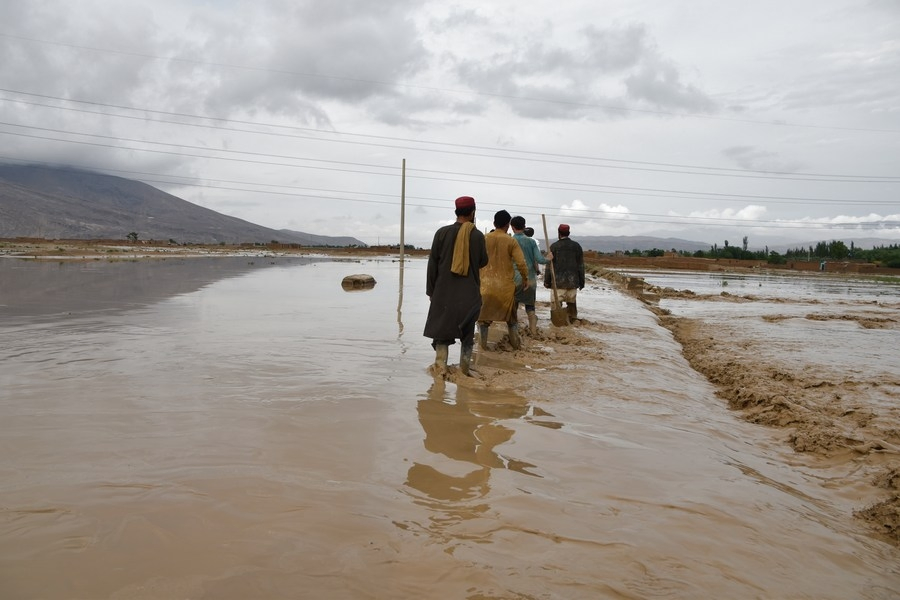
Kabul, April 10 – At least 148 people have been killed and 216 others injured in Afghanistan over the past two weeks due to heavy rains, flash floods, landslides, earthquakes, and lightning that have struck several parts of the country, local media reported on Friday, citing updates released by the Afghan disaster authorities.
The province of Nangarhar in eastern Afghanistan was among the worst-affected areas in Afghanistan during the latest extreme weather conditions, according to Khaama Press, Afghanistan's leading news agency. According to authorities, 24 people were killed and 33 others injured in Nangarhar over the past two days, with many deaths related to collapsing roofs, floodwaters, and storm-related damage. At least 1,149 homes were destroyed, and roads, farmland, and local infrastructure suffered extensive damage, according to reports.
Over 7,500 families have been affected, highlighting how seasonal storms cause humanitarian emergencies in rural and poorly protected areas. Key roads have been damaged, disrupting connectivity between Kabul and several provinces of Afghanistan. Residents stranded in some areas were airlifted as floodwaters swept through villages and urban neighborhoods.
Weather authorities have warned that more extreme weather conditions are likely, raising fears that casualties and destruction could further increase in the coming days, Khaama Press reported. In recent years, Afghanistan has faced repeated climate-related disasters, including floods, earthquakes, and droughts, which have impacted vulnerable communities.
Meanwhile, the United Nations has said that severe seasonal flooding has caused extensive damage across Afghanistan over the past two weeks, according to Tolo news, based in Afghanistan, which reported on Friday.
According to the report, heavy rains and resulting floods from March 26 to April 6 have hit communities in several provinces of Afghanistan, inundating hundreds of villages, Xinhua News Agency reported. More than 73,000 people have been affected by the disaster.
More than 9,000 homes have been damaged and over 15,500 acres of agricultural land have been destroyed in Afghanistan, raising concerns about food security in the affected regions.