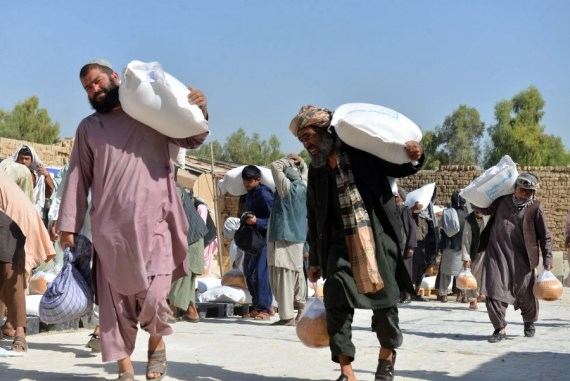
Kabul, March 7 – The World Food Programme (WFP) has raised alarm over Afghanistan's hunger crisis, warning that millions are facing acute food insecurity amid escalating border conflicts with Pakistan.
The agency stated that without sufficient funding, it may also struggle to provide aid to refugees fleeing Iran and Pakistan, as well as those internally displaced due to conflict along the border.
"Afghanistan remains one of the world's most severe hunger crises, with one in three Afghans – 17.4 million people – in urgent need of food assistance. Child malnutrition has also reached worrying levels, with 3.7 million children projected to need treatment in 2026. With a new crisis brewing and the current funding outlook, the WFP will not be able to reach families fleeing Iran and Pakistan and those internally displaced by the cross-border conflict in Afghanistan," said John Aylieff, WFP Afghanistan Representative and Country Director.
According to Aylieff, the cross-border violence between Pakistan and Afghanistan has intensified since February 26, displacing approximately 20,000 Afghan families across the eastern, southeastern, and southern regions.
He stressed that across the Afghan provinces, including Nangarhar, Nuristan, Kunar, Laghman, Paktika, Paktya, Khost, Kandahar, Helmand, and Zabul, the WFP has been forced to temporarily suspend emergency, social protection, school feeding, and livelihood activities, affecting nearly 160,000 people.
Highlighting that on Afghanistan's western border, violence in Iran is sparking fears of a surge in returnees, Aylieff said, "We witnessed a similar surge in returns during increased fighting in June 2025. For many, coming back to Afghanistan means not only facing poverty, unemployment, and hunger but also renewed instability."
"Afghanistan already saw an influx of more than 2.5 million returnees from Iran and Pakistan in 2025. Even before the latest escalation, projections estimated a similar influx in 2026 – but renewed fighting may drive those numbers even higher, placing an unbearable strain on a woefully underfunded humanitarian response," he added.
Aylieff stated that for the winter response in 2026, the WFP was able to provide food assistance to a fraction of those in need, while cautioning that funding for emergency operations will run out in the next month, putting millions at risk of losing critical support in Afghanistan.
"Our funding needs for the next six months stand at US$313 million. The WFP urges the international community to honour their commitment and not abandon Afghanistan in its hour of greatest need," he noted.