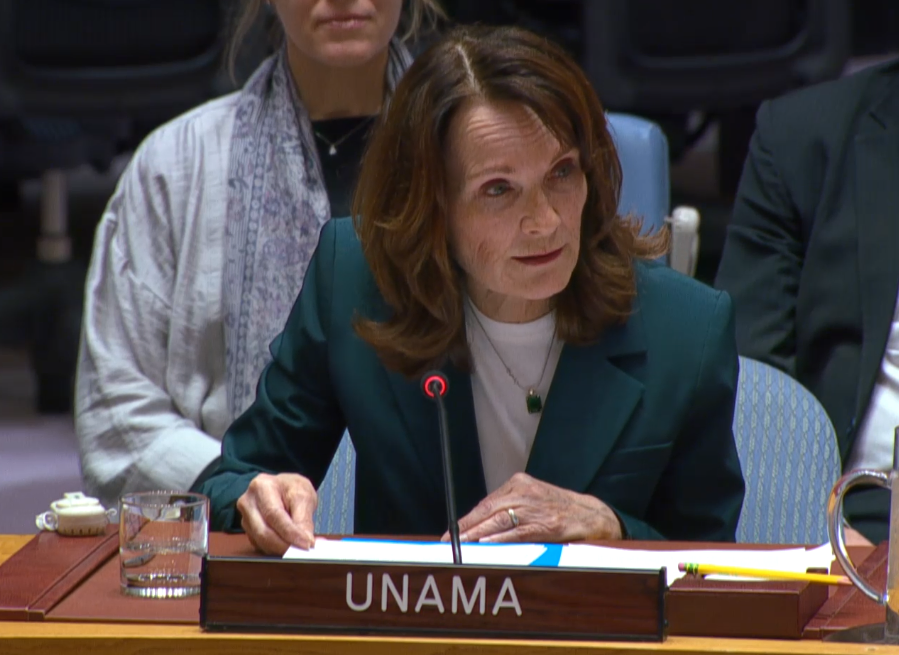
Kabul, March 10 – The United Nations Assistance Mission in Afghanistan (UNAMA) has warned that the restrictions imposed on women in Afghanistan are hindering the country's progress and exacerbating humanitarian challenges, local media reported on Tuesday.
UNAMA Acting Head Georgette Gagnon stated that the Taliban is prioritizing ideological policies over the welfare of people in Afghanistan. In her remarks at a meeting of the United Nations Security Council (UNSC), Gagnon said the Taliban's ban on women from working in humanitarian organizations demonstrates how the Taliban's policies are impacting aid operations and restricting the ability of agencies to assist vulnerable people. Khaama Press, Afghanistan's leading news agency, reported this.
"The United Nations' ability to deliver assistance and reach Afghan women is being hampered by a six-month ban on UN female national personnel being able to report for duty at their places of work. Their absence deprives the UN of their skills and experience, and reduces our ability to provide vital support to Afghan women and the wider community."
"These restrictions are a violation of international rules regarding the privileges and immunities of UN personnel, and a violation of the UN Charter. We once again urge the de facto authorities to lift these restrictions and allow our UN national female staff to return to their offices," she added.
She emphasized that the humanitarian crisis in Afghanistan has deteriorated in 2026 due to reduced international funding, rising needs, and the return of large numbers of migrants, combined with restrictive Taliban policies.
Gagnon mentioned that major urban centers were facing severe pressure due to years of economic decline and repeated climate disasters, which have weakened families' ability to cope, causing new waves of migration and internal displacement.
Humanitarian partners have called for approximately USD 1.71 billion to assist 17.5 million Afghans. However, according to UN officials, only around 10 per cent of the funding has been secured so far.
A few months back, the Taliban imposed a ban on Afghan women from working in United Nations offices, a move that the UN has said severely limits its ability to provide aid to Afghan women in need.
Since seizing power in Afghanistan in August 2021, the Taliban has banned women from working in many government and non-government organizations and prohibited girls from studying in schools above the sixth class.
The United Nations and several nations have repeatedly requested the Taliban to allow women to work in humanitarian agencies, terming it a key step towards Afghanistan's reintegration into the international community.
On February 10, the United Nations Development Programme (UNDP) stated that the economic conditions of Afghan women remain fragile, with limited access to jobs and income opportunities, and deteriorating household vulnerabilities in Afghanistan.
The report released on February 10 revealed that 75 per cent of Afghans face difficulty in meeting daily needs, while 88 per cent of female-headed households do not have access to minimum living requirements, showcasing the severe economic pressure faced by residents.
Afghanistan's economy has been weakened by years of conflict, economic isolation, and reduced international aid, leaving millions of people dependent on humanitarian support and informal income sources for survival.
Furthermore, restrictions on women's employment and education in Afghanistan have also reduced income opportunities, resulting in many families being dependent on irregular work while poverty and food security are increasing.
UNDP stated that only seven per cent of women work outside the home in comparison to 84 per cent of men, showcasing gender disparity in employment opportunities in Afghanistan.