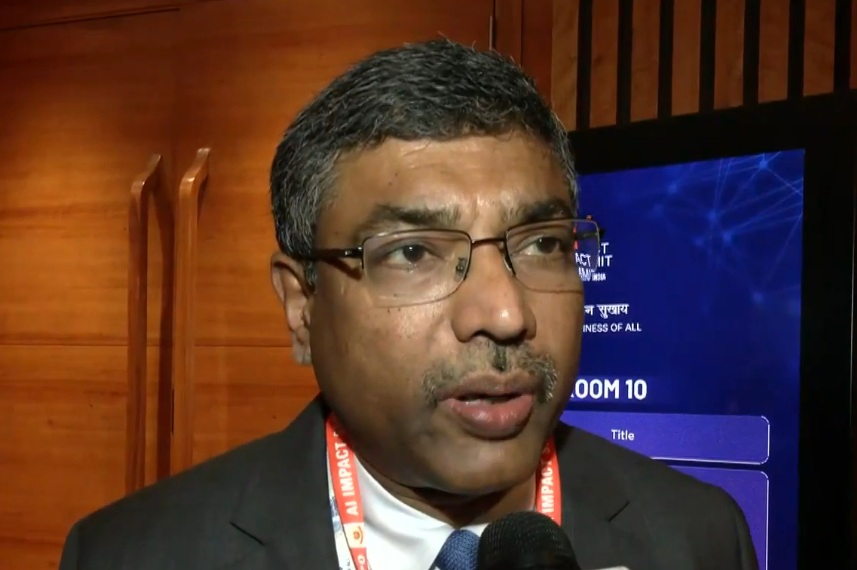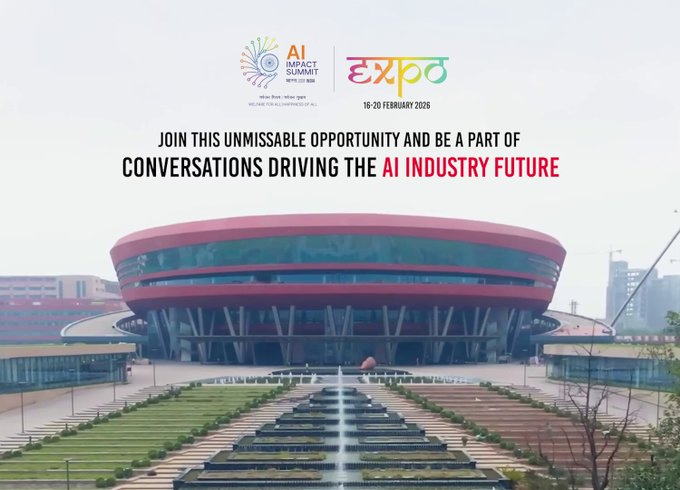
Beijing, February 17 The AI Impact Summit 2026, taking place in New Delhi, is not simply a technology event, but a statement of India's strategic intent to position itself as one of the world's leading AI system builders, Consul General of India in Shanghai, Pratik Mathur said.
In a commentary posted on China’s business portal Caixin Global, Mathur said India is emerging as a global AI system builder, with the AI Impact Summit 2026 showcasing its integrated ecosystem of computing, data, models, talent, and deployment.
Writing on “India's AI Rise and its Significance for the Global South: A Strategic Perspective from the Commercial Capital Shanghai," Mathur said the next phase of the global artificial intelligence (AI) race will not be decided by laboratory breakthroughs alone.
"It will be shaped by who can build large-scale, reliable, and socially embedded AI ecosystems, those that integrate computing power, data, talent, regulation, and real-world deployment," he said.
In this context, the AI summit held in Delhi from February 14 to February 16 is not simply a technology event. It is a statement of strategic intent: that India is positioning itself as one of the world's leading AI system builders, he said.
India has invited China to participate in the summit.
On the significance of the summit to China, he said, "from the vantage point of the Eastern China region comprising Shanghai, Jiangsu, and Zhejiang, this development deserves close attention."
"The Yangtze River Delta already functions as one of the world's most intensive zones of digital production, combining manufacturing, logistics, financial technology, and platform-based services."
"But as the global AI economy matures, the competitive frontier is moving from application-layer deployment to control over computing infrastructure, data platforms, foundational models, and talent pipelines," he said.
"It is precisely in these areas that India is now making its most consequential moves," he said, adding that India's global standing in AI is no longer aspirational.
Quoting Stanford University's Global AI Vibrancy Tool 2025, he said India now ranks third in the world in AI competitiveness, behind only the United States and China.
"This ranking reflects India's rapid gains in talent, research output, start-up formation, infrastructure, and policy coherence. The AI Impact Summit 2026 is designed to consolidate and project that position internationally," Mathur said.
At the centre of India's AI strategy is the India AI Mission, approved by the cabinet with a financial outlay of over 103 billion rupees (USD 1.2 billion) over five years.
"Unlike many national AI plans that focus narrowly on R&D grants or pilot projects, India's AI is structured as a full-stack ecosystem, covering computing, data, models, skills, start-ups, and governance. Its most consequential achievement so far has been the expansion of India's AI computing capacity," he said.
"From an original target of 10,000 graphics-processing units (GPUs), India has already onboarded 38,000 high-end GPUs, made available to start-ups, universities, and researchers at a subsidized rate of 65 rupees per hour," he said.
"This is not merely a budgetary statistic. In today's AI economy, access to affordable computing determines who can train models, who can experiment, and who can scale."
"By building a nationally accessible GPU backbone, India is ensuring that AI development is not monopolized by a small number of large firms. This is a structural intervention that directly underpins India's ability to host a meaningful global AI summit," he said.
Computing alone, however, does not create AI systems. Data does. Through AIKosh, India has assembled a national platform that now hosts more than 5,500 datasets and 251 AI models across 20 sectors, ranging from agriculture and healthcare to governance and climate, he said.
India is not piloting AI for thousands of users; it is deploying AI for hundreds of millions. This is why the country's focus on inclusion is not rhetorical, Mathur said.
NITI Aayog's AI for Inclusive Societal Development roadmap places India's 490 million informal workers at the centre of its AI strategy, using voice interfaces, real-time translation, smart contracts, and micro-credentials to integrate them into the digital economy," he said.