New Delhi, February 23 Reliance Industries Ltd (RIL) has significantly altered its business model roughly every decade during its nearly 48-year history as a publicly listed company. Its plan to invest $110 billion over seven years in artificial intelligence (AI), related energy supply, and the digital ecosystem marks its next major shift in capital allocation, analysts said.
The proposed AI investment is comparable in scale to the company's investments in telecom and consumer goods between 2014 and 2021, brokerage Morgan Stanley said in a report.
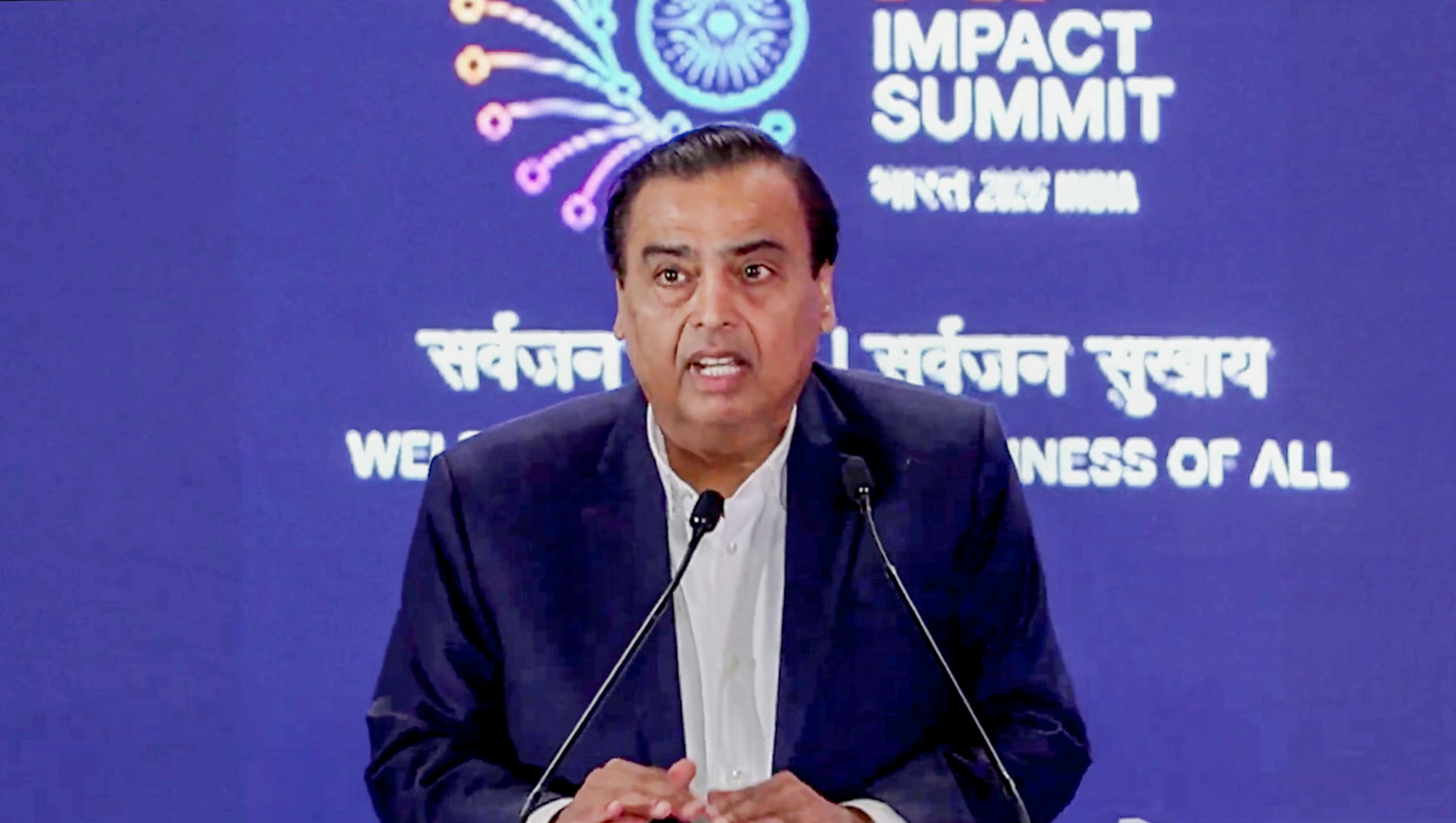
Reliance Chairman and Managing Director Mukesh Ambani announced a plan to invest ₹10 lakh crore (approximately $110 billion) in artificial intelligence over the next seven years at the India AI Impact Summit last week, pledging to achieve what his group has achieved in making mobile and internet data affordable and accessible across India.
The company is expected to adopt a partnership-led approach as it expands its capacity, Morgan Stanley said.
With an annual operating cash flow of $14-15 billion and ongoing investment commitments, it is estimated that $4-5 billion per year may need to be funded through asset monetization, such as telecom fiber, to maintain free cash flow breakeven.
The planned $110 billion investment is expected to span multi-gigawatt data centers, 10 GW of renewable energy infrastructure, energy storage systems, and AI chip investments.
"We estimate that the AI business will generate a ROCE of 12 per cent or more, i.e. 2 times higher than its consumer/telecom investments over the past decade," it said, adding that Reliance is set to commission 120 MW of capacity in the second half of FY26 and, in line with global peers, is likely to scale up over five years, suggesting a back-loaded investment cycle.
"So, investments are indeed more back-loaded," it said.
Estimates indicate that the new AI business could generate a return on capital employed (ROCE) of over 12 per cent – roughly twice the level achieved by its consumer and telecom investments over the past decade.
For the first 1 GW currently under construction, AI infrastructure investments excluding energy are estimated at $12-15 billion, pending further details from the company.
India's expanding AI infrastructure opportunity and the convergence of energy and digital markets could position Reliance strongly as investments ramp up. Partnerships with Meta Platforms and Google are also expected to help lower capital outlay as the company scales its AI offerings.
"While RIL has provided limited details on its AI plans, our bottom-up analysis using estimates from around the world points to a ROCE of 12 per cent and a return on equity (ROE) of 18 per cent for RIL's AI infrastructure investments over the next five years," Morgan Stanley said in the report.
India is catching up with the world on AI infrastructure, and the diffusion of energy and AI markets is set to make Reliance stand out as it ramps up its investments. Its partnerships with META and Google should also help lower capital outlay as it scales its AI offerings, it added.