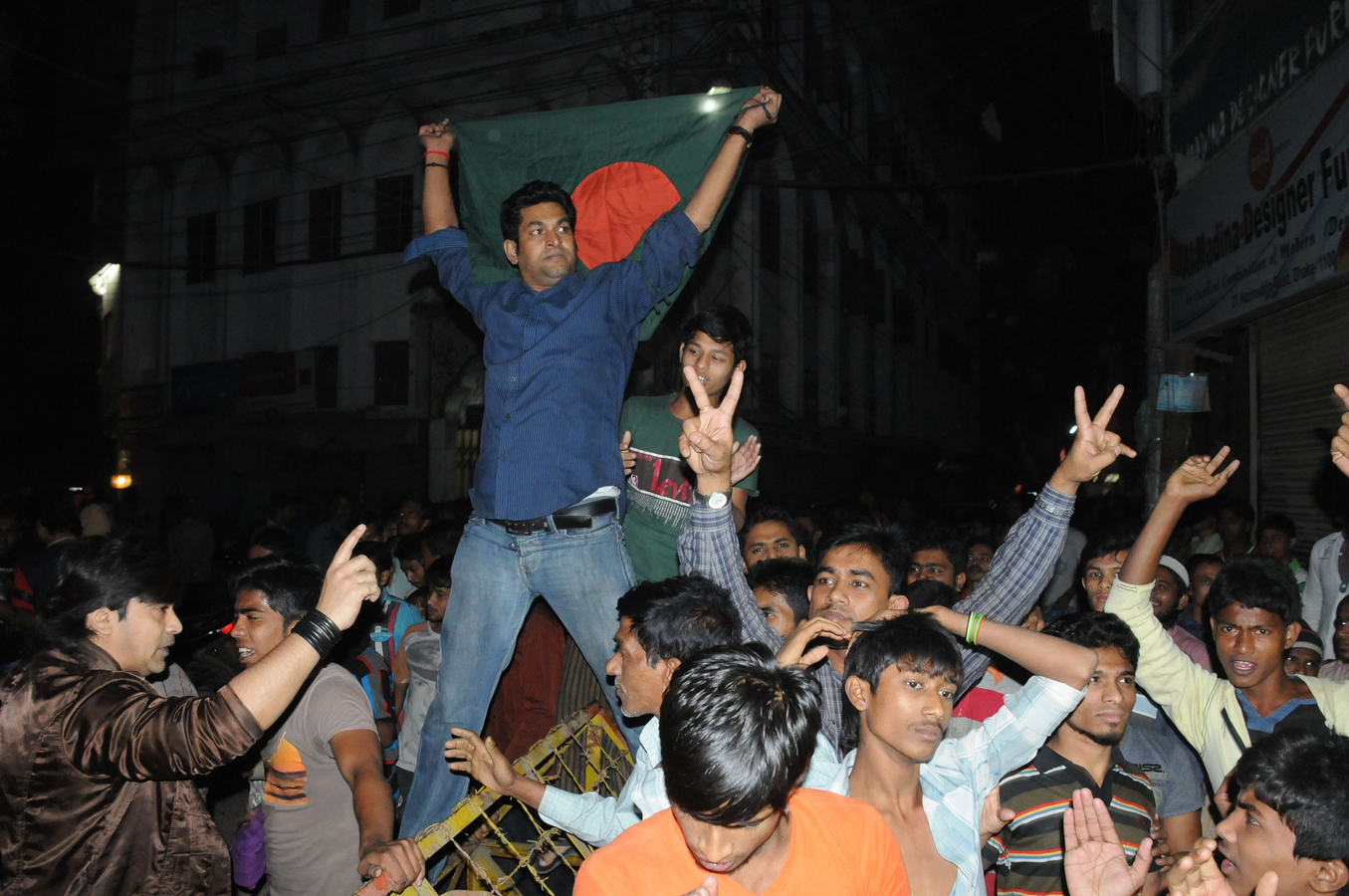
Dhaka, February 24 – The Awami League (AL) in Bangladesh is showing signs of revival, with grassroots leaders and activists recently reopening offices in several districts across the country, raising national and party flags, putting up party posters and banners, while facing no restrictions on their activities, according to a report published on Tuesday.
The report added that such actions are more than just formalities; they signal a strong political presence and send a "psychological message" to party activists that the party is on the path to resurgence.
In an article for the leading international magazine 'The Diplomat', Bangladeshi researcher and journalist Purnima Chowhan stated that this has sparked discussion in Bangladesh about the AL's future, whether the party is gradually returning to mainstream political activity, and who will lead the comeback.
The Awami League, led by former Prime Minister Sheikh Hasina, which ruled Bangladesh for over 15 years, was banned in May 2025 by the interim government led by Muhammad Yunus and was barred from contesting the February 12 national elections.
"The AL faced numerous challenges after its government was ousted on August 5, 2024. In addition to the ban on the party, the interim administration cracked down on its leaders and activists through mass arrests and court cases. Neither Hasina nor her son, Sajeeb Wazed Joy, who is considered her successor, is in the country. Other AL leaders are either living in hiding in Bangladesh or abroad. Consequently, the revival of the AL's organization is a major challenge," Chowhan explained.
She further questioned whether the Tarique Rahman-led Bangladesh Nationalist Party (BNP) government would allow the AL to re-enter mainstream politics.
The report noted that in some constituencies, AL leaders and activists backed and voted for BNP candidates during the national elections.
"As a result, a relationship has been established with BNP leaders who seem to have helped them to open offices. Some BNP-supported MPs are speaking in favour of AL's return to participation in politics," it added.
The pressing question, the report said, is whether the AL is merely trying to survive or aiming for a political comeback.
Citing pre-election surveys, it stated that the AL would have performed reasonably well had it contested the polls, suggesting that survival, therefore, should not be a major challenge.
"If the party is keen to make a strong comeback, symbolic gestures alone will not be enough. A structured action plan, people-focused policy positions, youth engagement, and clarity regarding leadership will be essential. If there are no visible programs, confusion increases, speculation about alternative leadership spreads, and even fears of disintegration set in," the report stressed.
"From the AL's recent moves, it is hard to say whether it is aiming for strategic preservation for now or it wants to make a comeback. What is clear is that a new political churning is happening and Joy stands at the centre of that process," it stated.