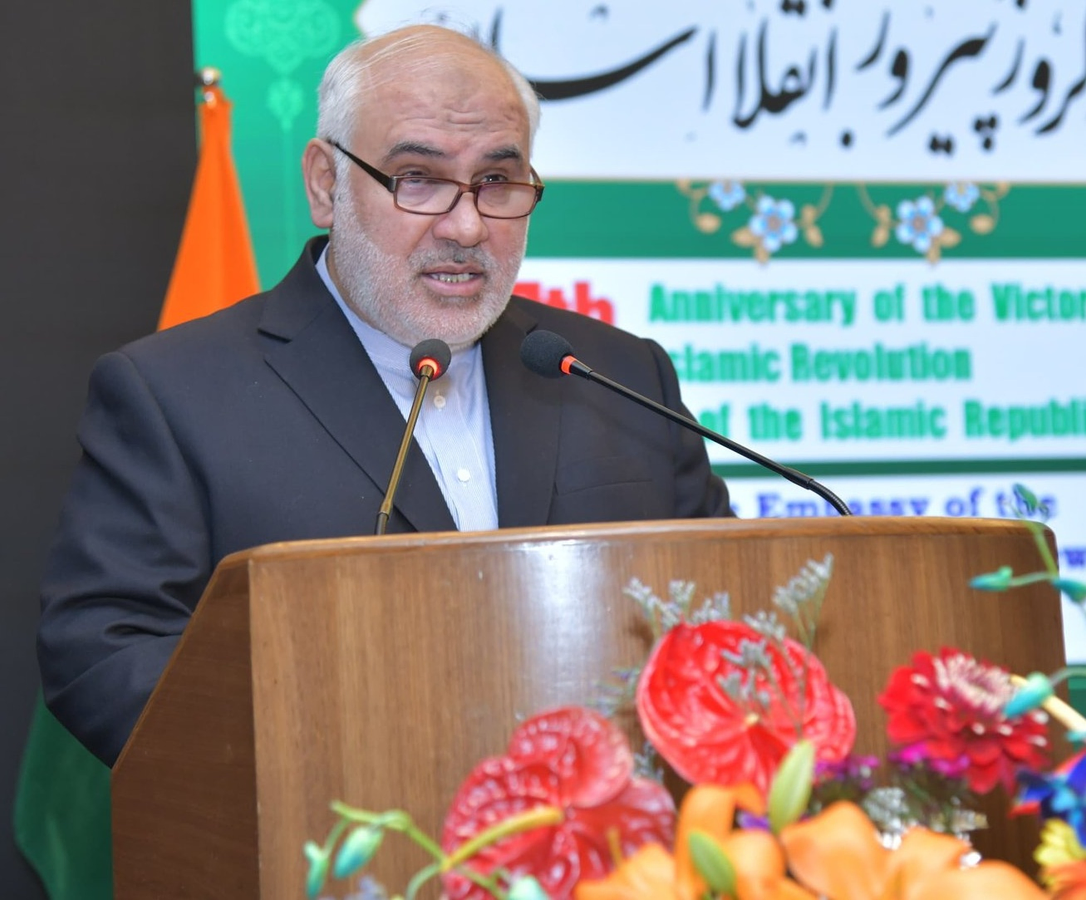
New Delhi, March 14: Citing the "historical relations" between the two countries, Iran's Ambassador to India, Mohammad Fathali, said on Saturday that Tehran had allowed some Indian vessels to pass through the Strait of Hormuz, although he declined to share further operational details.
"Yes, we have allowed some passage, but I will not disclose the exact number. As the Ambassador of Iran to India, I will continue to monitor this issue because Iran and India have historical relations. Of course, as an Ambassador, I have done my best. There was a delay, but it happened," Fathali said in response to a question at the annual India Today Conclave in New Delhi about how many Indian ships had been allowed passage and "for how many days."
The Iranian diplomat's comments came amid reports that two Indian LPG tankers had been allowed to transit the Strait of Hormuz amidst the ongoing conflict in West Asia. Two oil tankers, Shivalik and Nanda Devi, are expected to arrive in the country in a couple of days. These vessels are owned by the state-run Shipping Corporation of India Limited.
The Strait of Hormuz is one of the world's most vital shipping lanes, through which 20% of the world's oil and gas exports transit.
Following the safe passage of the two LPG carriers, more tankers are lined up to cross the war-affected zone, after Iran granted Indian-flagged tankers safe passage from the Strait, reliable sources told.
Fathali also defended Tehran's decision to target US bases in several Gulf nations, highlighting that the Tomahawk missile that reportedly struck a girls' school in Iran and killed around 170 students was launched from a US base in the region.
"We have announced that you will not actually be targeted... Your assets, whatever you have inside your country... But, we asked them what we should do when one of our schools, including the children, was hit by American Tomahawk missiles. We respect them completely, but we will definitely target the American bases. It is very unfortunate that we witnessed these schools being hit by missiles launched from a base in one of the neighboring countries," the envoy remarked.
Ambassador Fathali asserted that Tehran had repeatedly conveyed that it was ready for both negotiations and war.
"We have announced several times. Iran is ready for negotiation and war. But we prefer negotiation," the Iranian diplomat said at the event on Saturday.
"We are also ready for the war. But be warned, you can start, but you cannot finish," he responded to another question on the ongoing conflict.
He also spoke about the recent discussions held between Prime Minister Narendra Modi and Iranian President Masoud Pezeshkian over a phone call, highlighting that the call was delayed due to technical difficulties being faced during the ongoing conflict.
"I believe that Iran and India have common interests," Fathali said while also mentioning that both sides have the "political and social maturity" to handle any differences and work together.