Indore, February 23 The Indore bench of the Madhya Pradesh High Court on Monday granted all parties two weeks to submit their objections, views, suggestions, and recommendations on the scientific survey report of the Archaeological Survey of India (ASI) on the Bhojshala temple-Kamal Maula Mosque complex in the Dhar district.
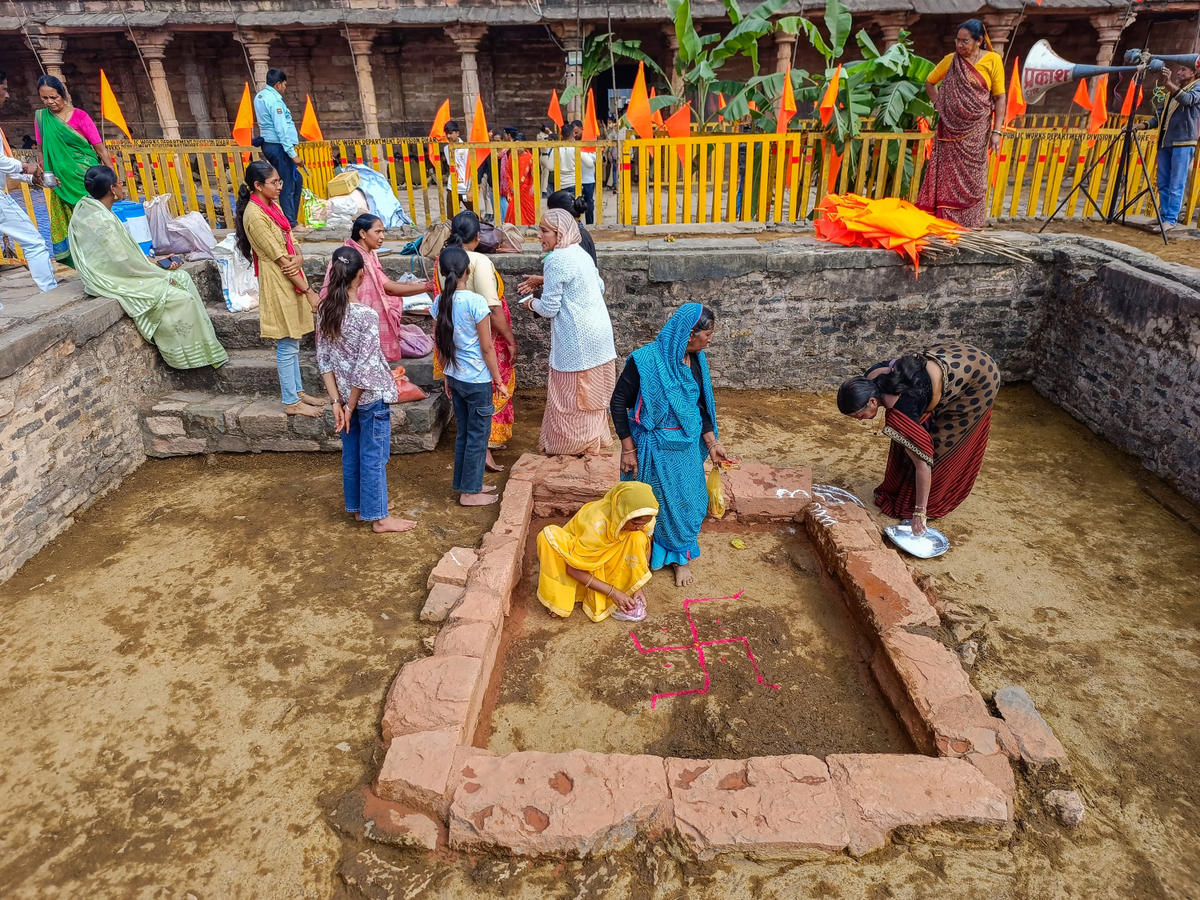
The Bhojshala is considered a temple of Vagdevi (Goddess Saraswati) by the Hindu community, while the Muslim side claims the 11th-century monument as the Kamal Maula Mosque. The complex, protected by the ASI, was surveyed by the agency at the direction of the high court, and a detailed report was submitted two years ago.
The Supreme Court had on January 22 directed the high court to open the ASI's scientific survey report, submitted in a sealed cover, on the disputed complex.
A division bench of Justices Vijay Kumar Shukla and Alok Awasthi, while hearing separate petitions, observed that the report had already been opened and copies provided to the parties.
The court noted that the parties had so far not placed their objections, opinions, suggestions, and recommendations on the report before it.
"In view of this situation, the parties are granted two weeks to submit their objections, opinions, suggestions, and recommendations on the report," the bench said.
The court fixed March 16 as the next hearing date in the matter.
The ASI submitted its survey report before the high court on July 15, 2024.
According to the parties, the chapter titled 'Brief findings of the survey' in the report, citing scientific examination of archaeological remains, stated that "retrieved architectural remains, sculptural fragments, large slabs of inscriptions with literary texts, Nagakarnika inscriptions on pillars, etc., suggest that a large structure associated with literary and educational activities existed at the site."
Based on scientific investigations and archaeological remains recovered during the investigations, this pre-existing structure can be dated to the Paramara period, it said.
According to the parties, the detailed report further said, "Based on scientific investigations, survey and archaeological excavations conducted, study and analysis of retrieved finds, study of architectural remains, sculptures, and inscriptions, art and sculptures, it can be said that existing structure was made from the parts of earlier temples."
Advocate Vinay Joshi, counsel for the petitioner organization Hindu Front for Justice, told reporters that the ASI prepared a report of over 2,000 pages in 10 volumes after conducting a 98-day scientific survey of the disputed complex.
He said the report contained detailed descriptions of coins, symbols associated with Sanatan Dharma, and idols of deities found at the site, adding that the nature of the complex would be determined by the court's final verdict.
Three persons who offer Friday prayers at the Kamal Maula Mosque in the disputed complex have filed intervention applications in the HC in the case filed by the Hindu Front for Justice.
Their counsel Ashhar Warsi told reporters that the petition concerned facts related to the disputed complex and that a civil court should first hear the matter to decide the veracity of those facts.
He argued that the case was presently not maintainable before the HC.
Following the emergence of the dispute over the historic complex in Dhar, the ASI had issued an order on April 7, 2003, allowing Hindus to worship at the site every Tuesday and Muslims to offer prayers there every Friday.