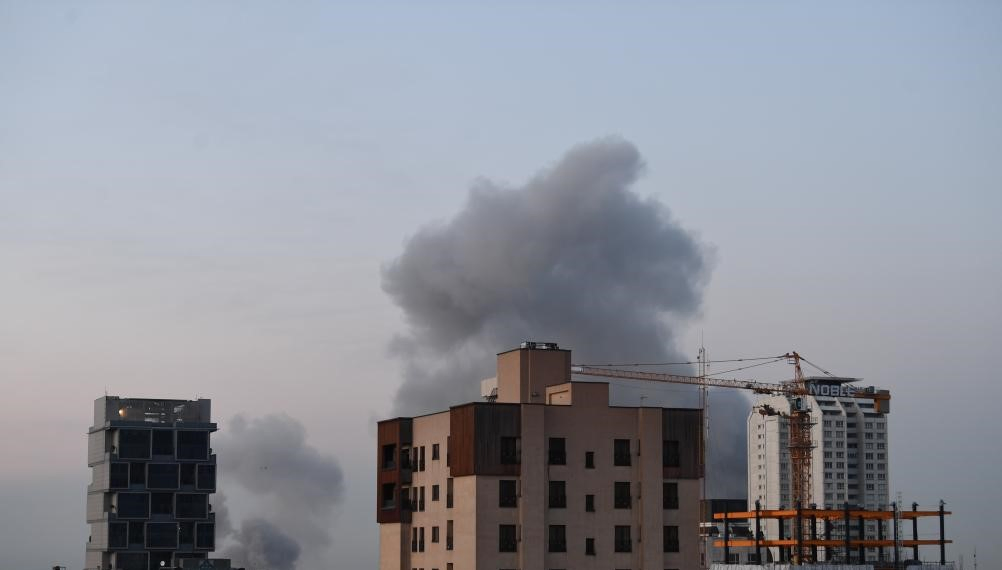
Manila, April 10 – The ongoing conflict in the Middle East has heightened global geopolitical risks and intensified downside risks for economic growth in developing Asia and the Pacific, according to a new report released by the Asian Development Bank (ADB) on Friday.
The Asian Development Outlook, April 2026, projected that under an early stabilization scenario, regional growth in developing Asia and the Pacific is expected to moderate to 5.1 per cent in both 2026 and 2027, from 5.4 per cent in 2025, according to Xinhua news agency.
However, if disruptions in the Middle East persist through the third quarter of 2026, growth could slow to 4.7 per cent in 2026 and 4.8 per cent in 2027.
Albert Park, ADB's chief economist, stated that higher energy prices will increase production costs and consumer prices, while export growth will normalize after the front-loading of exports ahead of US tariff increases last year. He warned that more persistent disruptions would make the inflationary situation even worse and further weigh on growth across the region.
According to ADB's forecast, under the early stabilization scenario, inflation is projected at 3.6 per cent in 2026 and 3.4 per cent in 2027, up from 3 per cent in 2025. However, if tensions in the Middle East persist through the third quarter of 2026, inflation would rise to 5.6 per cent this year.
The report noted that despite having only modest direct trade exposure to Middle Eastern economies, developing Asia and the Pacific is highly vulnerable to spillovers transmitted through global energy markets, trade and transport networks, and financial conditions.
"The conflict in the Middle East has amplified global geopolitical risks. More persistent disruptions would push energy prices even higher, raising inflation and further weighing on growth across the region. In addition, a sudden tightening of global financial conditions could raise borrowing costs. New tariff increases and trade policy uncertainty could also disrupt global supply chains and weaken external demand," the report stated.