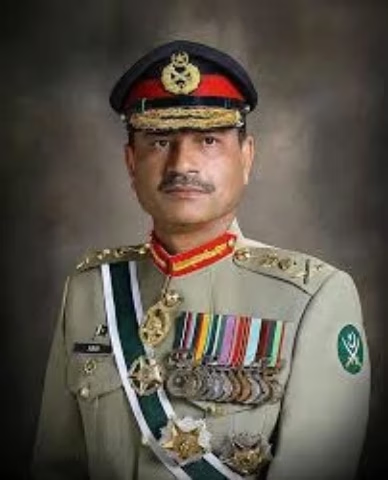
New Delhi, March 21 – Pakistan is in need of multiple diversions as it faces setbacks on multiple fronts. The war in Afghanistan and the conflict with the Balochistan Liberation Army (BLA) and Tehreek-e-Taliban Pakistan (TTP) has left Pakistan's security apparatus badly weakened. The pressure on Field Marshal Asim Munir, who is the head of the army, is immense, and he needs a major diversion.
Indian agencies tracking developments in Pakistan say that Munir's next move is to incite violence between Sunni and Shia Muslims.
The army chief is following in the footsteps of General Zia-ul-Haq, who ran a major campaign to suppress Shia Muslims in Pakistan.
Since the beginning of the war in Iran, Shia Muslims in Pakistan have been targeted. Rallies in solidarity with Iran have been branded as anti-national and anti-Sunni.
Asim Munir, during a recent event, humiliated Shia Muslims and said that if they love Iran so much, they should go to Iran.
This is a clear attempt to incite tensions and hope that Shia Muslims will engage in violence. This, in turn, would lead to a major escalation of violence between the Shia and majority Sunni Muslim population in Pakistan.
Another official said that this latest ploy by Asim Munir is clearly aimed at dividing the population. Hostilities between Sunni and Shia Muslims in Pakistan are nothing new. However, stoking tensions at a time when the war in Iran is ongoing is a dangerous game by the Pakistani army chief.
The Shia community has expressed shock at the way Asim Munir spoke about the community.
Those who follow Pakistan's military say that there are multiple reasons why the army chief has brought up the Shia issue again. He has been doing this subtly for a long time, but currently he has taken it to another level. Munir is clearly trying to further the rift by portraying the Shia Muslims as having their loyalties elsewhere.
The Shia Muslims have been trying to remind the army chief that their loyalties are not elsewhere and they would not go against their country.
Expressing solidarity with Iran is not a crime, and Munir is wrong in terming this as an act that is anti-national, the Shia Muslims say.
Officials say that the Pakistan army chief does not care about the sentiments of the Shia community. He is caught between a rock and a hard place, and all he wants is a diversion, even if it means that his country burns due to a communal conflict.
Munir is tired of explaining to the people about the need for battles on multiple fronts, especially when the country's economy is dying with each passing day.
Furthermore, the war in Iran has prompted the Pakistani establishment to take several austerity measures, including a hike in fuel prices. All these measures are not helping, and are having a negative impact on the common man, officials say.
While the internal strife is one part of the reason why Munir is trying to incite the Shia Muslims against the Sunni Muslims, the other remains the Saudi Arabia angle.
Questions are being asked about Pakistan's commitment to the pact by which it has to join the war if Saudi Arabia is being attacked. The pact between the two countries says that an attack on either country would be considered as an attack on both.
In the ongoing war, Saudi Arabia has been targeted many times by missiles from Iran. Officials say that the fact is that Pakistan may have signed the pact, but in reality, it does not have the bandwidth or resources to join the war.
The Shia Muslims have been very vocal about their support for Iran since the war commenced. This has not gone down too well with Saudi Arabia, as the country views Iran as an enemy.
Munir is under pressure to shut down these voices, which explains why he is desperate for an outbreak of violence between Shia and Sunni Muslims in Pakistan.