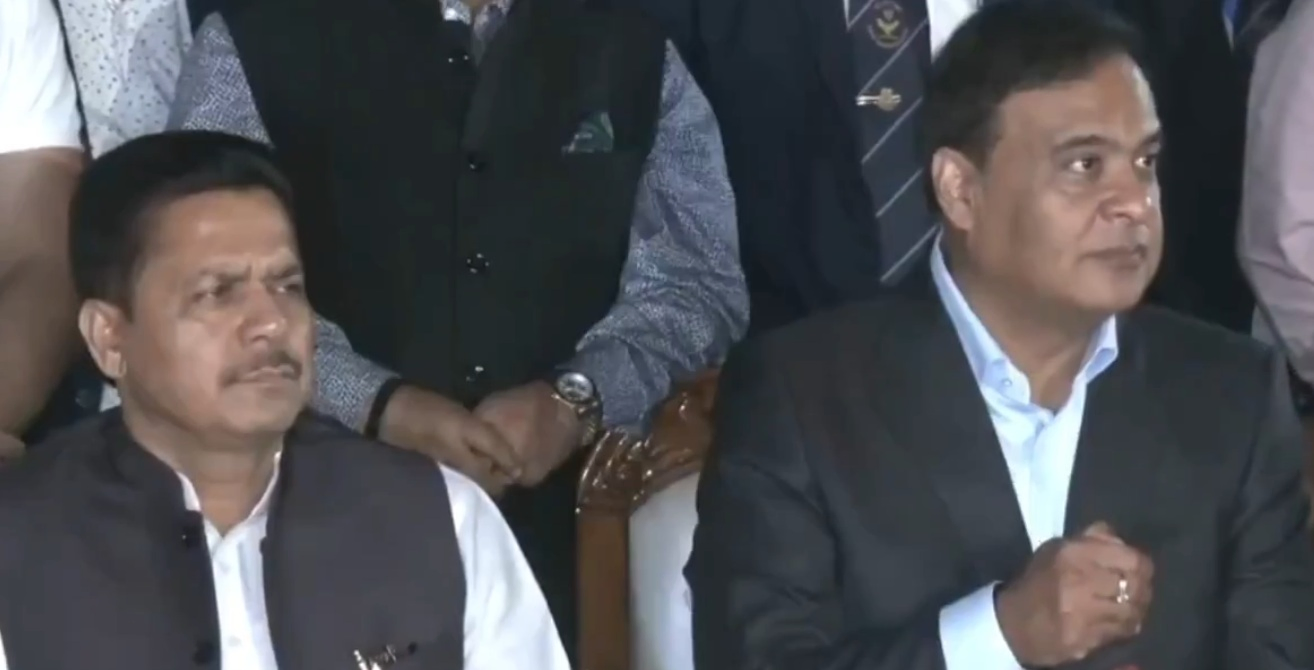
Guwahati, February 17 The Congress party in Assam is likely to face a significant political and psychological setback following the departure of its senior leader and former APCC president, Bhupen Kumar Borah.
Chief Minister Himanta Biswa Sarma stated that this development would weaken the opposition party's organizational strength ahead of the upcoming elections.
On Tuesday, Sarma formally announced that Borah would join the Bharatiya Janata Party on February 22, describing the move as a turning point in Assam's political landscape.
Addressing the media at Borah's residence, Sarma said the departure of a leader who spent nearly three decades in the Congress and rose to become its state president reflects deep-rooted internal problems within the party.
The Chief Minister said he would have another round of in-depth political discussions with Bhupen Borah on Wednesday. Rejecting allegations that Borah had been acting as a "BJP agent," Sarma said such claims were baseless and politically motivated.
He emphasized that a leader of Borah's stature does not resign without serious reasons, particularly after holding key organizational responsibilities.
The Chief Minister questioned the Congress high command's handling of Borah's concerns, suggesting that his grievances were ignored rather than addressed with sensitivity.
Without naming specific individuals, Sarma alleged that certain leaders within the Congress function like "feudal lords," were disconnected from grassroots realities and unwilling to accept accountability.
He said such an internal culture has repeatedly pushed committed leaders to the margins, ultimately forcing them to quit.
On the broader political impact, the Chief Minister asserted that Borah's exit would severely dent the Congress's credibility and morale in Assam, given his influence within the party structure. While clarifying that the BJP is not driven by a "Congress-mukt" agenda, Sarma said the party is focused on providing a strong and stable political alternative for the state.
He predicted a larger political realignment by 2031, adding that Borah's departure would exert sustained pressure on the Congress organization in the years ahead.