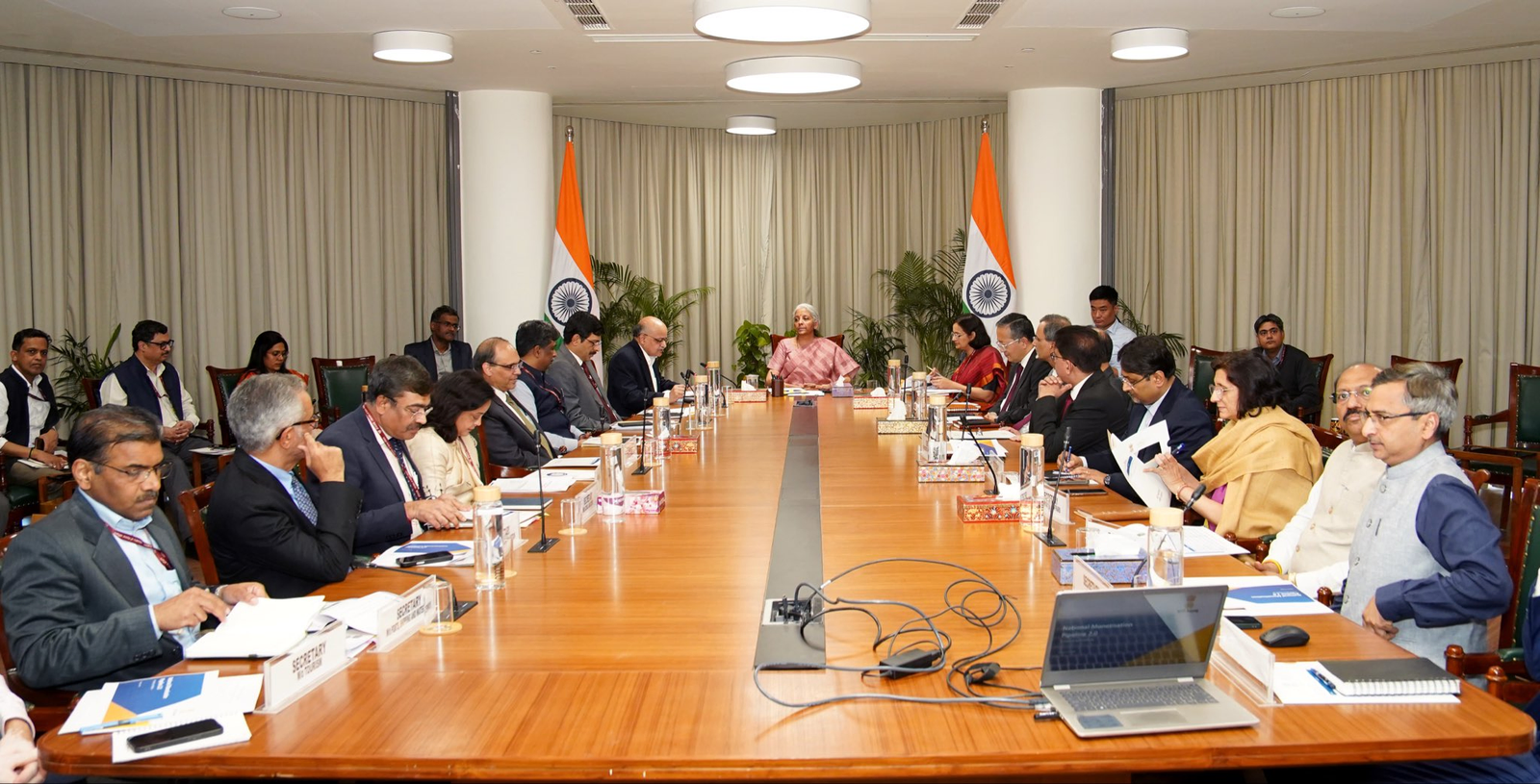
New Delhi, February 23 – The National Monetisation Pipeline (NMP) 2.0, launched by Finance Minister Nirmala Sitharaman on Monday, aims to mobilize ₹10 lakh crore over a period of 5 years.
NMP 1.0, launched in 2021 by Niti Aayog for FY2022-25, targeted to unlock value in brownfield public infrastructure assets, aiming to generate ₹6 lakh crore through leasing to private investors. NMP 1.0 achieved 89 percent of its target, amounting to ₹5.3 lakh crore.
The Union Budget 2025-26 announced a target for NMP 2.0 as ₹10 lakh crore over five years (FY26-30).
NMP 2.0 estimates a total monetisation potential of ₹16.72 lakh crore, including private sector investment of ₹5.8 lakh crore under the asset monetisation pipeline of Central ministries and public sector entities over the five-year period from FY 2026 to FY 2030, according to an official statement.
In her address at the launch, Sitharaman praised all ministries and departments, as well as Niti Aayog, for achieving nearly 90 percent of the ₹6 lakh crore target set for NMP 1.0.
She stated that NMP 2.0 aligns with the mission of achieving "Viksit Bharat" through accelerated infrastructure development, and that NMP has the potential to drive India's growth momentum.
Observing that NMP 1.0 was the first of its kind on a large scale, and that best practices learned by the authorities should be leveraged in NMP 2.0, she said that learnings and experiences from NMP 1.0 will serve as a guide to ensure that resources and opportunities are optimized to achieve results in a time-bound manner.
She urged all departments to focus on process simplification and standardization, so that monetisation becomes a seamless experience.
The five-year asset monetisation target has been set at an ambitious ₹16.7 lakh crore, which is more than 2.6 times higher than under NMP 1.0, the minister said, adding that the ministries/departments must aim to surpass the indicated targets through proactive efforts.
Highlighting the significance of asset monetisation, she said that NMP enables the recycling of productive public assets, thereby unlocking resources for reinvestment in new projects and capital expenditure.
She noted that this approach facilitates efficient mobilization of funds for capital expenditure in public assets while minimizing the budgetary outgo of the government.
NMP 2.0 is a culmination of insights, feedback, and experiences consolidated through multi-stakeholder consultations undertaken by Niti Aayog, the Ministry of Finance, and line ministries.
Several rounds of discussion have been held by Niti Aayog with stakeholders. This is a whole-of-government initiative.
An empowered Core Group of Secretaries on Asset Monetisation (CGAM), chaired by the Cabinet Secretary, will continue to monitor the progress of the Asset Monetisation programme, the statement said.
The government is committed to making the asset monetisation programme a value accretive proposition for both public sector and private investors/developers, through improved infrastructure quality and operations and maintenance, it added.
NMP 2.0 will contribute to strengthening the asset monetisation ecosystem and enable stakeholders to collaborate more effectively in the years ahead.
After detailed discussions with the concerned central ministries, this strong portfolio covers key sectors, such as highways, railways, power, petroleum and natural gas, civil aviation, ports, warehousing and storage, urban infrastructure, coal, mines, telecom, and tourism.
Proceeds from asset monetisation projects are allocated to four different heads -- the Consolidated Fund of India, allocation to PSU/Port Authorities, the State Consolidated Fund, and direct investment (private), depending on the implementing agency for the project, as well as the mode of monetisation.
As regards target, highway is expected to garner the highest, at ₹4.42 lakh crore, followed by power at ₹2.77 lakh crore, ports at ₹2.64 lakh crore, and railways at ₹2.62 lakh crore, over the five-year period.
The approach can be divided into five stages, beginning with the identification of asset classes for each sector to be included under NMP 2.0, determination of the most suitable mode of monetisation per asset class, and estimation of the target for awarding monetisation projects between FY26 and FY30.
This analysis is supplemented by an additional analysis undertaken in this phase of NMP, viz., for assets that revert to the monetising agency after the concession period, the estimated monetisation value net of depreciation has been studied to assess the economic value of monetisation, and the determination of the allocation of monetisation proceeds among government accounts.
It is estimated that the largest portion of the proceeds under NMP 2.0 will accrue to the Consolidated Fund of India, followed by direct investment (private), PSU or Port Authority allocation, and the State Consolidated Fund.
The assets and transactions identified under NMP 2.0 are expected to be rolled out through a range of instruments, including direct contractual instruments, such as public-private partnership concessions, and capital market instruments like Infrastructure Investment Trusts (InvITs), according to the statement.
The choice of instrument will be determined by the sector, nature of the asset, timing of transactions (including market considerations), the target investor profile, and the level of operational/investment control envisaged to be retained by the asset owner, etc., it added.