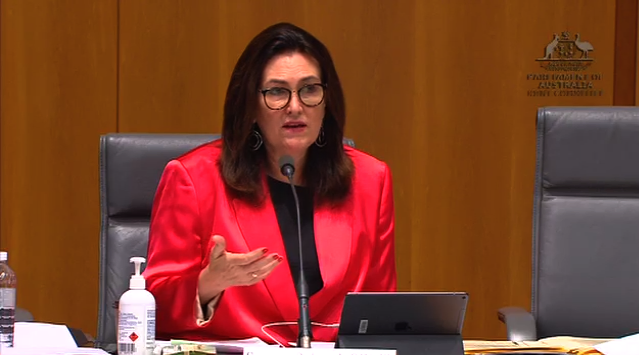
Canberra, March 17 – The Inter-Parliamentary Alliance on China (IPAC) co-chair, Senator Deborah O’Neill (Labour), continues to highlight the international concern over human rights violations in Tibet and the protection of Tibetan cultural and religious identity. Senator O’Neill recently introduced a cross-party motion on Tibet in the Australian Senate. This motion marked the 67th anniversary of the 1959 Tibetan Uprising, and a similar motion was also passed in the Australian House of Representatives.
This initiative marks Australia as the first nation within the IPAC network to introduce a parliamentary motion on Tibet following the Alliance's agreement at the IPAC Brussels Summit 2025 to pursue coordinated parliamentary action on Tibet.
Senators from various political parties co-sponsored the motion, demonstrating strong cross-party consensus in the Australian Senate regarding the importance of protecting Tibetan human rights and safeguarding religious freedom.
The motion stated that the Senate extends its best wishes to the Dalai Lama on his 90th birthday and commends his lifelong commitment and contribution to the promotion of human unity, non-violence, human rights, interfaith harmony, environmental awareness, and democracy. It reiterated that governments should not interfere in the selection of religious leaders, including the reincarnation of the 14th Dalai Lama.
It also expresses deep concern over the Chinese Government's "repressive policies" in Tibet, aimed at eradicating the distinct cultural and religious identity of the Tibetan people, including plans to interfere in the centuries-old spiritual tradition concerning the reincarnation of the Dalai Lama. The motion urged the Chinese Government to recognize the fundamental human rights of the Tibetan people and to engage in genuine dialogue, without preconditions, with the Dalai Lama, with the aim of achieving long-term peace and freedom in Tibet.
Last month, the leading human rights group, Human Rights Watch (HRW), in its 2026 World Report, stated that the Chinese government intensified its repression in 2025, with Chinese President Xi Jinping directing the government to impose ideological conformity and loyalty to him and the Chinese Communist Party.
According to HRW, Uyghurs, Tibetans, and other communities with different identities, including members of unofficial churches, face the most severe human rights violations. Chinese authorities have also intensified repression in Hong Kong, it said.
Maya Wang, Deputy Asia Director at Human Rights Watch, said, "The Chinese government under Xi Jinping has amassed a disastrous human rights record, expanding and deepening its crackdown on fundamental freedoms. Foreign governments have largely been unwilling to push back against the threats the Chinese government poses to the international human rights system, let alone within China."
According to the HRW statement, Xi Jinping visited Tibet and Xinjiang largely to showcase his government's strong control. The Chinese government is expected to pass a draft law to justify the repression of minorities, facilitate increasing ideological control, and foster control abroad.
According to the report, thousands of Uyghurs continue to be unfairly imprisoned in China. The Chinese government also banned celebrations of the 90th birthday of the Tibetan religious leader, the Dalai Lama, in Tibet. It mentioned that repression has increased after Chinese authorities imposed the National Security Law on Hong Kong.