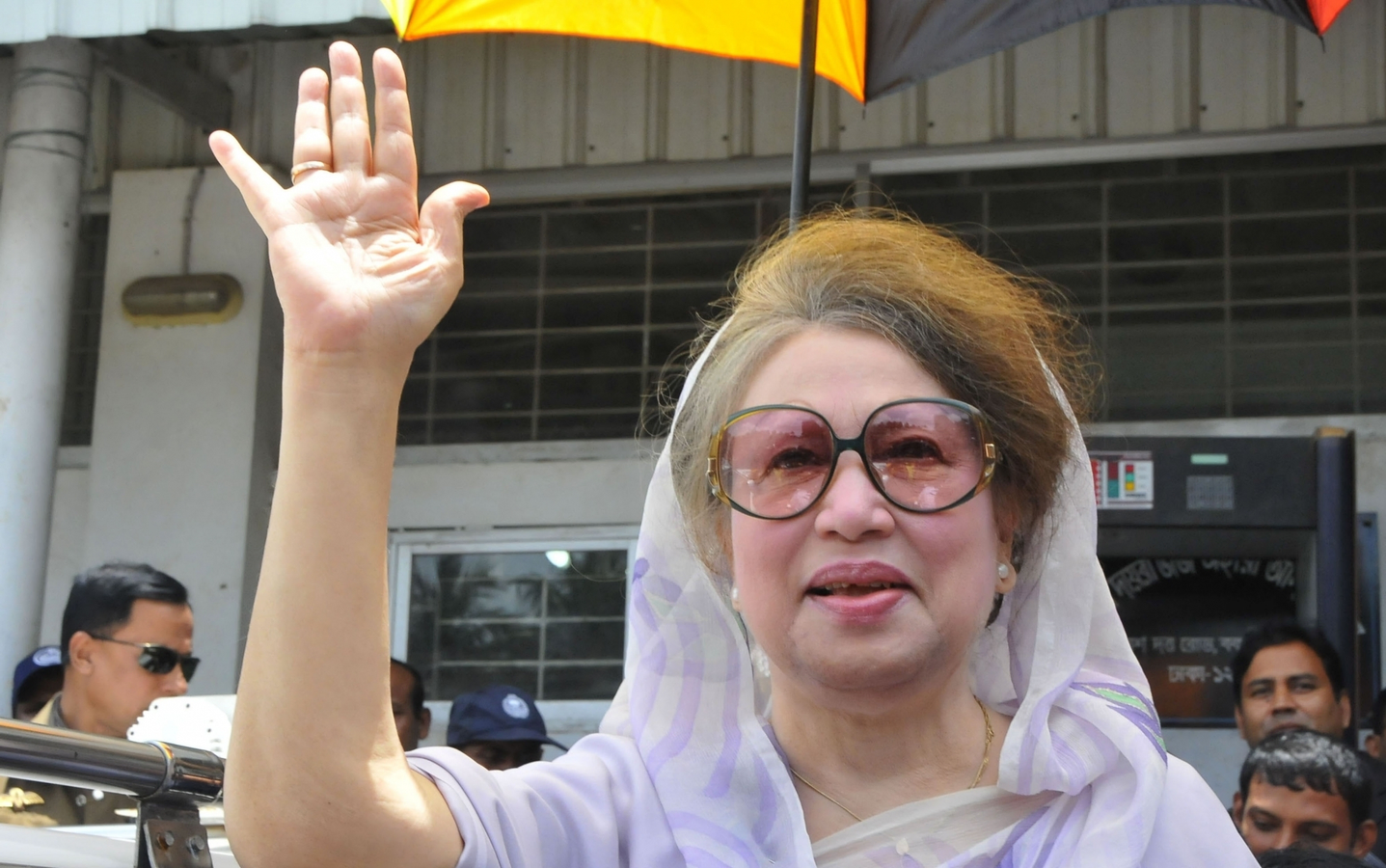
Dhaka, March 7 – The Ministry of Women and Children Affairs of Bangladesh has decided to posthumously award the "Best Indomitable Woman in Advancing Democracy" award to former Prime Minister Khaleda Zia, according to local media reports on Saturday.
The award will be presented as part of the "Indomitable Women Award" program to mark International Women's Day 2026 on Sunday at the Osmani Memorial Auditorium in Dhaka.
Khaleda Zia is being honored for her unwavering leadership in the struggle to restore democracy in Bangladesh and for her significant contributions to safeguarding the democratic process, according to The Dhaka Tribune, Bangladesh's leading newspaper.
In addition, five other women, including Nurun Nahar Akter, Bobita Khatun, Nurbanu Kabir, Shamla Begum, and Afroza Yasmin, will also be honored as "Best Indomitable Women" in five different categories this year.
This award comes at a time when critics have raised concerns about the low representation of women candidates in the February 12 parliamentary elections in Bangladesh and the broader exclusion of women from decision-making processes.
Earlier in January, the Bangladesh Election Commission revealed figures highlighting the stark disparity – despite women comprising half the population, they remain significantly underrepresented among candidates.
Among the 2,568 candidates for the February 12 polls, only 109 – 4.24 per cent – are women, with 72 nominated by political parties, while the rest are independents, according to The Daily Star, a leading Bangladeshi newspaper.
Reports suggest that the exclusion was particularly stark among the radical Islamist party Jamaat-e-Islami, which fielded 276 candidates without a single woman, followed by Islami Andolan Bangladesh with 268.
The BNP, which was led by a woman for more than four decades, allocated tickets to only 10 women out of 328 aspirants for the 300 seats.
Several parties, including Bangladesh Khilafat Majlis with 94 candidates, Khilafat Majlis with 68, and the Bangladesh Islami Front (BIF) with 27, have entirely excluded women, fielding only male candidates.
With the lowest level of women's participation in Bangladesh's 13th parliamentary elections, seven female candidates emerged victorious out of the 300 seats.
Bangladesh also witnessed escalating violence against women and children during the eighteen-month tenure of the Muhammad Yunus-led interim government.