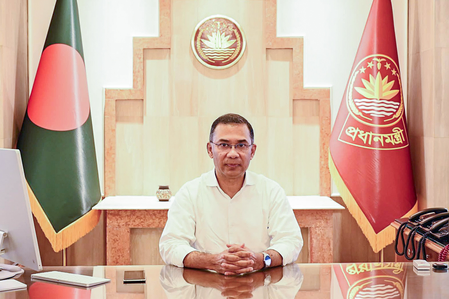
Dhaka, March 25 – On Wednesday, Bangladeshi Prime Minister Tarique Rahman described the events of March 25, 1971, as a "pre-planned massacre" and one of the most brutal chapters in the nation's history, as the country observed Genocide Day in remembrance of those killed during the crackdown by Pakistani forces.
"March 25, 1971, is observed as Genocide Day. On this occasion, I pay my deepest respect to all the martyrs. In the history of freedom-loving Bangladesh, March 25, 1971, remains one of the most disgraceful and brutal days," read a statement issued by Tarique on the occasion of Genocide Day.
The Prime Minister said that the Pakistani occupation forces launched one of the most "heinous" genocides in history against the unarmed Bangladeshis on that night under "Operation Searchlight".
Calling the 1971 crackdown a pre-planned massacre, Tarique added that Pakistani forces indiscriminately opened fire on teachers, intellectuals, and innocent civilians at multiple places, including Dhaka University, Pilkhana, and Rajarbagh Police Lines, resulting in numerous deaths.
Emphasizing the need to uphold the ideals of the 1971 Bangladesh Liberation War, the Prime Minister said, "Let us all strive to honour the sacrifices of the martyrs by establishing in the state and society the spirit of the great Liberation War – equality, human dignity, and social justice. Let us work together to build a just, developed, prosperous, self-reliant, and democratic Bangladesh."
Meanwhile, Bangladeshi President Mohammed Shahabuddin said that March 25, 1971, remains the most brutal and painful chapter in the nation's history, when the entire nation was left speechless and stunned by this genocide.
He said that on the night of 1971, the Pakistani forces carried out indiscriminate massacres on unarmed and sleeping civilians in the name of "Operation Search Light".
President Shahabuddin called on the people of Bangladesh, regardless of their religion, caste, party, or opinion, to work together with a spirit of patriotism to fulfill the ideals and aspirations of the martyrs of the 1971 Bangladesh Liberation War.
"The hope, aspiration, and dream of the martyrs in the Liberation War were to build a humane, democratic, and real state – where there will be no discrimination, deprivation, misrule, corruption, and injustice," Bangladeshi daily Dhaka Tribune quoted him as saying.