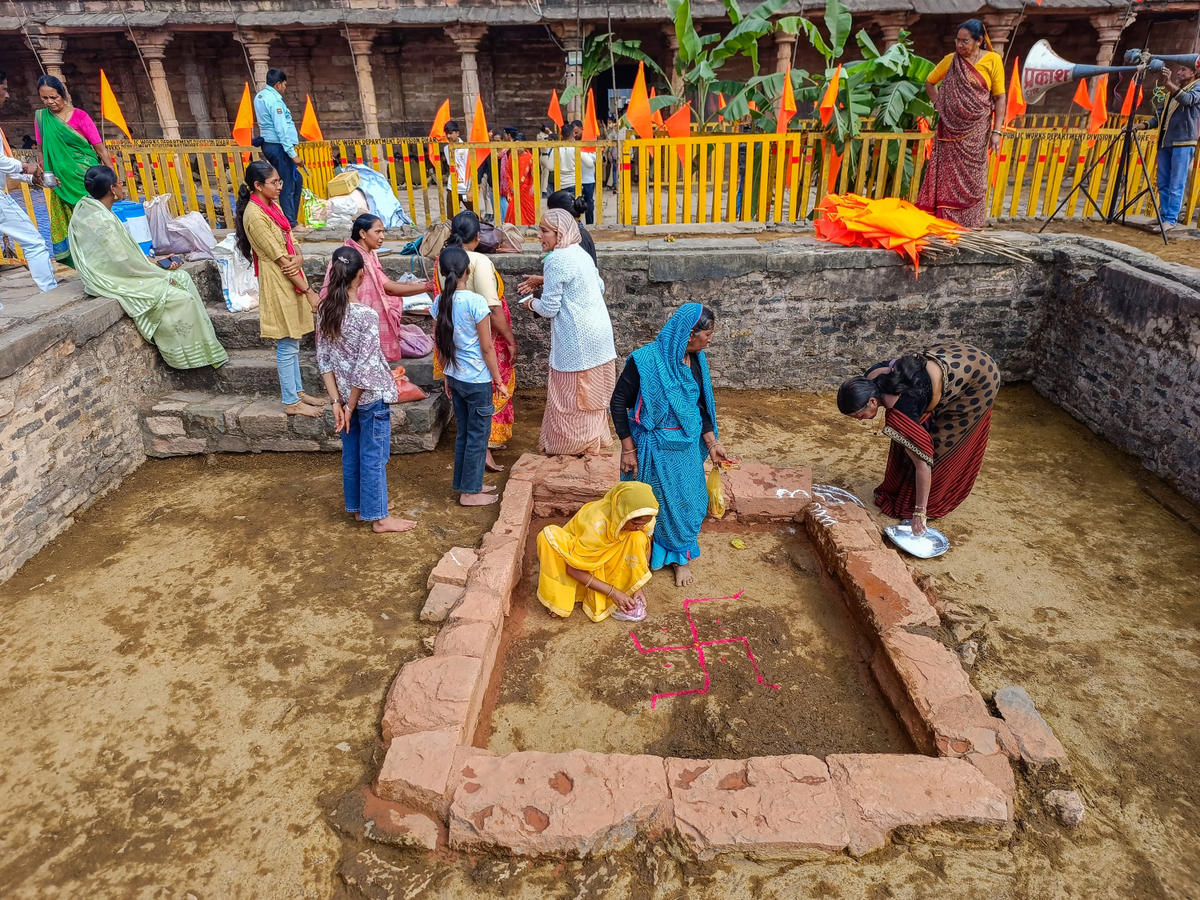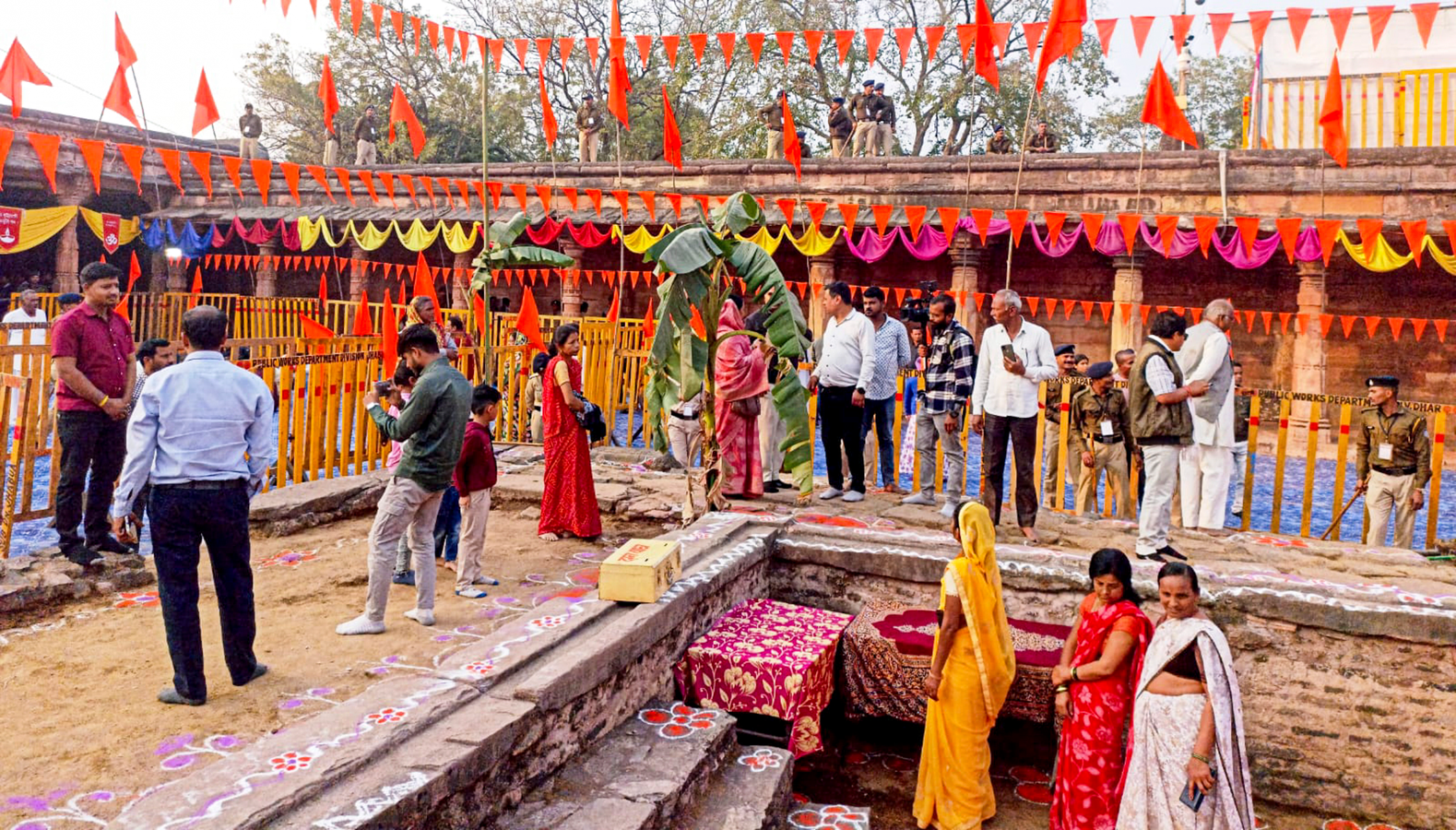
Indore, February 24 An ASI report claiming that the Bhojshala-Kamal Maula complex was originally a Parmar-era temple has drawn sharp reactions, with Hindu groups hailing the findings while the Muslim side rejected the report and vowed to challenge it over alleged procedural flaws.
According to the report, a copy of which was provided to the media by a Hindu group, the survey indicated that the current structure was built from parts of ancient temples.
The Indore bench of the Madhya Pradesh High Court on Monday granted all parties two weeks to submit their views on the Archaeological Survey of India's report of its scientific survey of the monument in Dhar district.
While Hindus consider the monument to be a temple of Vagdevi (Saraswati), the Muslim side claims that it is a mosque.
Ashish Goyal, a member of Hindu Front for Justice, one of the petitioners, said, "Our main plea is to determine the religious nature of the complex. The ASI report supports our contention that Bhojshala is a Parmar-period monument and a new structure was built after damaging it."
Abdul Samad, leader of the Maulana Kamaluddin Welfare Society, a petitioner on the Muslim side, said, "We will submit to the high court our objections to the ASI report." He also claimed that the ASI ignored their earlier objections and considered in its survey "objects placed through the backdoor".
According to the report, which runs into over 2000 pages, architectural remains, sculptural fragments, large slabs of inscriptions with literary texts and Nagakarnika inscriptions suggest that a large structure associated with "literary and educational activities" existed at the site.
Based on scientific investigations and archaeological remains, this pre-existing structure can be dated to the Paramara period, it added.
Further, it can also be inferred that "the existing structure was made from the parts of earlier temples," the ASI report said.
The report mentioned the presence of idols of Hindu deities, religious symbols and coins, as well as inscriptions in Sanskrit, Prakrit, Arabic and Persian.
It can be said that the existing structure was constructed over a pre-existing structure of basalt, the lower part of which still exists as the base, the ASI noted.
The existing structure was built over the structure of an earlier phase which was damaged and modified for reuse, it added.
From the art and architecture of decorated pillars and pilasters, it can be said that they were part of earlier temples and were reused while making colonnades of the mosque, said the report.
The Sanskrit and Prakrit inscriptions predate the Arabic and Persian ones, said the report.
A total of 31 coins of silver, copper, aluminum and steel which can be dated to periods of Indo-Sassanian civilisation (10th-11th century), Delhi Sultanate (13th-14th century), Malwa Sultan (15th-16th century), Mughals (16th-18th century), Dhar state (19th century), British (19th-20th century), and independent India, were found at the complex, the ASI said.
The earliest coins are Indo-Sassanian, dating to the 10th-11th century when Paramara kings ruled in Malwa with their capital at Dhar, said the ASI.