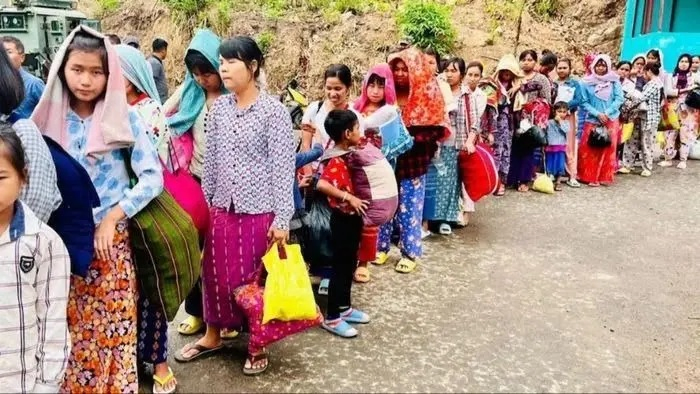
Aizawl, March 2 Authorities in the 11 districts of Mizoram have so far completed biometric enrollment of over 97 per cent of the approximately 28,355 Myanmar refugees, including women and children, who took shelter in the state in different phases following the military coup in February 2021, officials said on Monday.
On the advice of the Ministry of Home Affairs (MHA), the biometric enrollment process for both Myanmar and Bangladeshi refugees has been underway in Mizoram since July 2025, using the Foreigners Identification Portal and the Biometric Enrolment System.
A senior official of the Mizoram Home Department said that of the 28,355 Myanmar nationals currently residing across the state, biometric details have been recorded for 27,574 individuals, accounting for 97.24 per cent coverage.
The biometric exercise has been fully completed in Aizawl, Lunglei, Serchhip, and Champhai districts.
Champhai district, which shares the longest unfenced international border with Myanmar, hosts the largest number of refugees, a total of 12,083. Lawngtlai district in southern Mizoram, which borders both Myanmar and Bangladesh, shelters the second-highest number of Myanmar nationals at 5,034. Of these, the biometric data of 4,870 individuals, or 96.74 per cent, have been collected.
However, the enrollment process has slowed considerably in six districts over the past two months due to various challenges, including poor internet connectivity.
The exercise is yet to be completed in Siaha (3,195 refugees), Hnahthial (590), Khawzawl (312), Mamit (310), Saitual (190) and Kolasib (185).
Overall, of the 2,365 Bangladeshi refugees currently sheltered in four districts, biometric enrolment has been completed for 501 individuals, accounting for 21.18 per cent of the total.
Three districts – Serchhip (235 refugees), Lunglei (76) and Aizawl (7) – have completed biometric data collection for all Bangladeshi nationals residing there.
In Lawngtlai district, which shelters 2,042 Bangladeshi refugees, biometric data have been recorded for only 183 persons, accounting for just 8.96 per cent.
The Mizoram government has maintained that the exercise aims to ensure proper documentation and facilitate administrative coordination while extending humanitarian assistance.
Both Myanmar and Bangladeshi refugees are staying in designated relief camps as well as in rented houses and with relatives across all 11 districts of the mountainous state. The Home Department official noted that while collecting biometric details from camp residents is relatively easy, the process is more challenging for those staying in relatives’ homes and rented accommodations spread across hundreds of remote villages.
To address this issue, district authorities have sought assistance from village councils and civil society organisations, particularly the Young Mizo Association, the official said.
In addition to biometric data, the enrollment process includes the collection of biographical details such as names, addresses, parents' names and employment history in both Myanmar and Mizoram.
Most of the Myanmar refugees are from Chin state, while the Bangladeshi refugees largely belong to the Bawm (also known as the Bawmzo tribal community). Both communities share close ethnic, traditional and cultural ties with the majority Mizo population of Mizoram.
At one point, the number of Myanmar refugees in the state had risen to around 35,000. However, with some improvement in the situation in the neighbouring country, a few thousand have since returned. Myanmar’s Chin state shares a 510-km-long unfenced mountainous border with Mizoram’s Champhai, Siaha, Lawngtlai, Hnahthial, Saitual and Serchhip districts. Meanwhile, Mamit, Lunglei and Lawngtlai districts share a 318-km-long unfenced border with Bangladesh. Mizoram has also provided shelter to several thousand displaced tribals who fled ethnic violence between the Meitei and Kuki-Zo communities in neighbouring Manipur in May 2023.