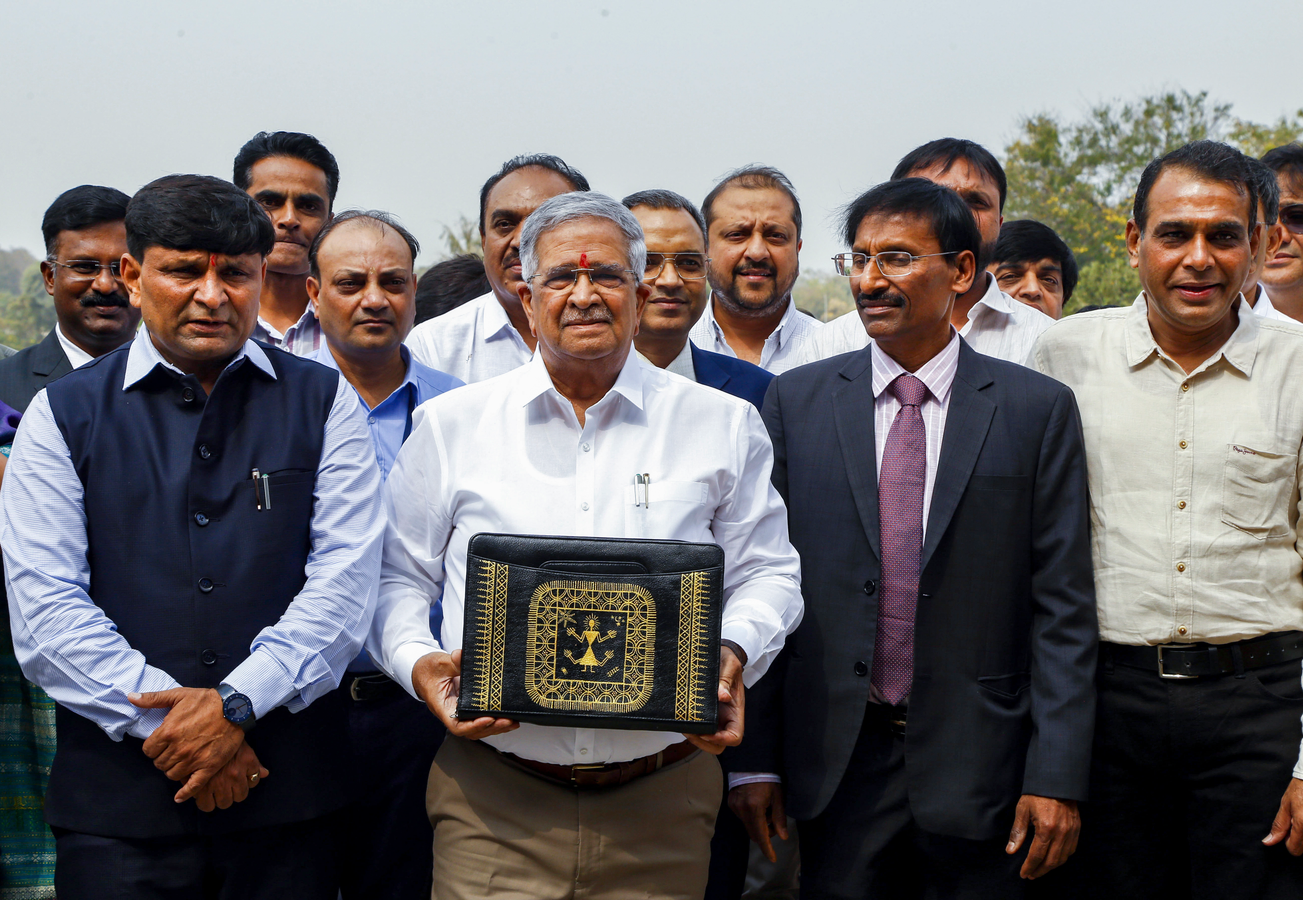
In Gandhinagar, Gujarat Finance Minister Kanubhai Desai presented the 2026-27 budget, focusing on tourism promotion, digital governance, regional growth, and sports infrastructure development ahead of the 2030 Commonwealth Games.
The budget, with an estimated surplus of ₹974 crore and no new taxes, continued the 5% tax rebate for electric vehicles.
Desai announced an overall increase of ₹37,803 crore (10.2%) in the total outlay to ₹4,08,053 crore compared to the previous financial year.
A key feature of the budget was the state government's plan to develop Ahmedabad as an "Olympic-ready city" for the 2030 Commonwealth Games, which Gujarat will host.
The budget proposed an allocation of ₹1,278 crore for infrastructure related to the upcoming Games, including the development of international-level sports complexes and stadiums, and improving urban transport connectivity around key venues.
A total of ₹1,331 crore was allocated for the sports department. This includes ₹500 crore for developing Ahmedabad as an "Olympic-ready city" and for the SVP (Sardar Vallabhbhai Patel) Sports Enclave.
Another ₹165 crore was allocated for developing sports complexes in various districts.
₹100 crore was proposed for creating Olympic-level infrastructure in Karai and setting up a Para High Performance Centre in Gandhinagar. An additional ₹90 crore was set aside for constructing a world-class hockey stadium.
Tourism was another key focus area. Announcing 2026 as "Gujarat Tourism Year", the minister said the state aims to prominently position itself on national and international tourism maps.
₹236 crore was allocated for enhancing facilities in and around the Statue of Unity, which has emerged as a major global attraction and boosted local employment, particularly among tribal communities.
The government also proposed ₹300 crore for the Ambaji Corridor Masterplan to ensure holistic development of the Ambaji pilgrimage center. In addition, ₹447 crore was earmarked for building iconic bus stations at Somnath and Ambaji, and for constructing a multi-modal transport hub at Somnath.
Other allocations include ₹60 crore for developing Somnath and Shivrajpur beaches as world-class tourist destinations and promoting tourism in the Visavadar-Porbandar region.
₹95 crore was proposed for tourism promotion initiatives, including the training of 1,000 tourist guides and development of facilities at heritage sites.
Desai highlighted Gujarat's rich heritage, from the White Rann of Kutch to Somnath, Gir, and the Sun Temple, which offers immense potential to attract domestic and international visitors.
Special campaigns, such as "Wed in Gujarat," will also be launched to promote the state as a wedding destination.
The budget proposed ₹16,116 crore under the Swarnim Jayanti Mukhyamantri Shaheri Vikas Yojana for urban areas, marking a 17% increase over the previous allocation.
The minister said the government remains committed to building world-class infrastructure to support economic growth while promoting Gujarat's cultural and sporting aspirations on the global stage.
Last year, the state government had announced a 5% rebate on Motor Vehicle Tax for electric vehicles. Desai proposed to continue this rebate for another year, providing a tax relief of ₹210 crore to citizens.
The budget has an estimated overall surplus of ₹974 crore, according to the minister.
The government has also allocated over ₹850 crore for Artificial Intelligence and digital governance initiatives.
A Gujarat Unified Digital Stack will be created to deliver services on a single platform, while a Data Fusion Centre and Centre of Excellence will be set up using AI for safety and security.
Digital "lake and air-watch systems" will be introduced for monitoring air and water quality.
Balanced regional growth has been emphasized through economic masterplans for six regions – Kachchh, Saurashtra, Coastal Saurashtra, North Gujarat, Central Gujarat, and Surat Economic Region, with over ₹6,600 crore allocated for 80 projects.
Education, health, rural development, and tribal welfare were key focus areas in the 2026-27 budget, with substantial allocations made to strengthen human resource development and grassroots infrastructure.
According to the budget documents presented in the assembly, 20% of the total developmental expenditure has been earmarked for the education, sports, art, and culture sector, making it one of the top priority areas.
The government has announced the development of 926 new PM SHRI Schools equipped with modern facilities to enhance the quality of education. A provision of ₹100 crore has been made for the establishment of the Namo Central Library in Gandhinagar.
The health, nutrition, and social welfare sector accounts for 19% of the total developmental expenditure. The budget provides for the development of multi-specialty hospitals in Ahmedabad and Surat.
A total of 2,000 new Anganwadis will be constructed to strengthen nutrition support for women and children.
Agriculture, irrigation, and rural development have been allocated 17% of the total developmental outlay. More than ₹1,400 crore has been provided for agricultural mechanisation initiatives, while over ₹392 crore has been earmarked to promote natural farming.
The fisheries sector will receive ₹1,340 crore for infrastructure and equipment support.
₹5,600 crore has been allocated under the Mukhya Mantri Gram Sadak Yojana to upgrade rural roads and bridges.
A provision of ₹1,500 crore has been made under the VB-G RAM-G scheme to provide 125 days of employment annually to rural households.
The Nirmal Gram Yojana has been allocated ₹650 crore to improve sanitation in villages, and ₹545 crore has been earmarked for the National Rural Livelihood Mission.
Tribal welfare remains a major thrust area, with ₹35,780 crore allocated in 2026-27 under the Jan Jaati Kalyan initiative.
The government has also outlined a five-year plan with a total outlay of ₹2 lakh crore for tribal development. The measures include setting up five new Gujarat Industrial Development Corporation areas in tribal parts of the state, providing 500 mini-buses for tribal students and workers, and enhancing scholarship assistance for tribal youth.
Desai highlighted Gujarat's strong macro-economic indicators, stating that the state's per capita income has risen to nearly ₹3 lakh, about 1.6 times higher than the national average.
Gujarat's unemployment rate stands at 1.2%, making it among the lowest in the country, while labour force participation has improved significantly at 69.6% against the national average of 64.3%.
The recent restructuring of GST slabs by the Centre will result in a lower tax burden and the people of the state will save nearly ₹11,000 crore in a single year, said Desai.
The budget, built around five pillars – social security, human resource development, infrastructure, economic growth, and green growth – aims to accelerate Gujarat's journey towards becoming a developed state by 2047, the finance minister said.