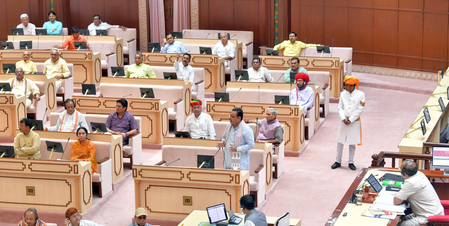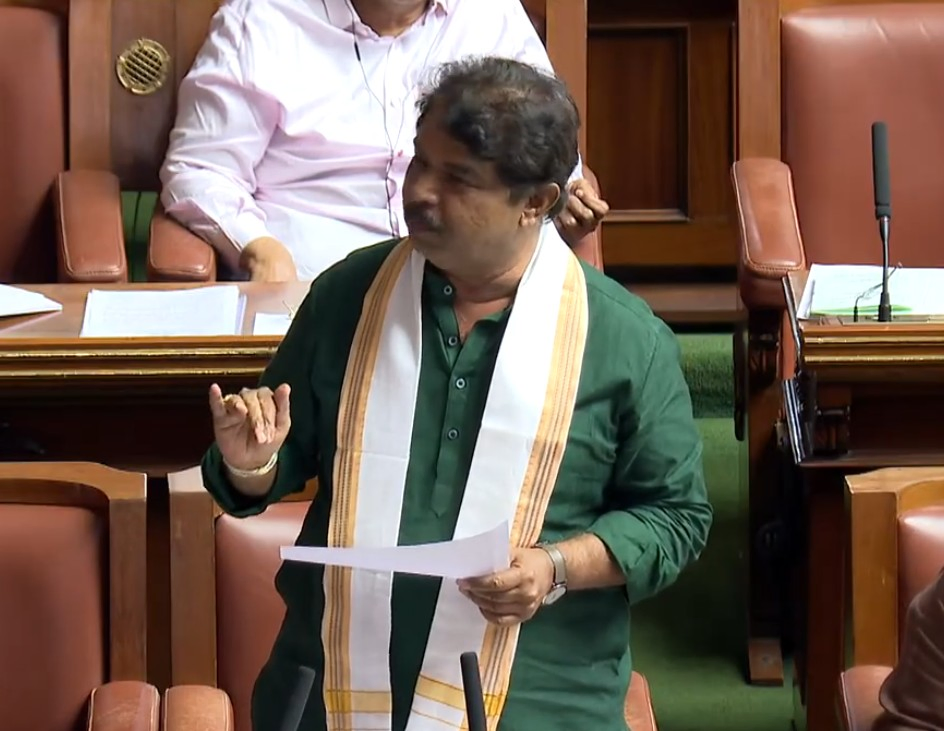
New Delhi, March 24 JMM Rajya Sabha member Mahua Maji on Tuesday expressed concerns over the passing of the budget without proper debate in the House, saying that it amounts to compromising the fundamental principles of democracy.
Participating in the discussion on the Appropriation Bill No 2, 2026, in the Upper House, Maji said it is unfortunate that the way in which the Bill is being presented "has become a mere formality".
"It is a matter of concern that the role of Parliament, which should be to ensure accountability, is slowly being curtailed. Parliamentary scrutiny is weakening in this process," she said.
"When we approve expenditure without proper debate, it is a compromise with the fundamental principles of democracy. Lack of transparency and off-budget borrowing is also a serious issue."
If the government is spending while hiding the real financial situation, it is not only against economic discipline but also weakens the public's trust, she said, while registering her objection to the Bill in its current form.
The bill was introduced on Monday by Minister of State for Finance Pankaj Chaudhary on behalf of Finance Minister Nirmala Sitharaman. It was passed by the Lok Sabha last week.
Taking part in the discussion, Haris Beeran of IUML raised questions over the funding priorities of the government, alleging that funds meant for scholarships of minority students have been reduced.
According to him, another area of deep concern is that the Appropriation Bill does not make any mention of the impact of the West Asia crisis.
Lahar Singh Siroya of the BJP said the Budget announcements open a new era of possibilities for 1.4 billion Indians amid unprecedented global geopolitical tensions.
He said it is unfortunate that India is experiencing economic consequences of war even when it has zero involvement in it.
Siroya called for restraint to be exercised in line with the preaching of Jainism, observing that the religion espouses non-violence, which assumes significance during the current geo-political circumstances.
Ajeet Madhavrao Gopchade of the BJP said India was among the fragile five economies prior to 2014, but today, as a result of Prime Minister Narendra Modi's decisive leadership, it is among the top five global economies.
While the Opposition cries tax terrorism, the real tax terrorism was during 1970-71 when there were 11 tax slabs, he said, adding India's tax system is known for trust and transparency instead of tax terrorism.
"Our government has filled holes left due to corruption by the previous UPA-led government," he said.
Referring to the Opposition, the BJP member said, "They said India is a dead economy. I feel mercy on their intellect. They themselves are dead electorally".
On the Appropriation Bill, he said it is not for the next election but for the next generation.
Similarly, another BJP member, Dinesh Sharma, said the Appropriation Bill is not just a requirement of the present but is also the foundation of the future.
The Opposition accuses the government of increasing expenditure, but they don't mention that the spending is on infrastructure, welfare for the poor and national development, he said.
Masthan Rao Yadav Beedha of TDP supported the Appropriation Bill, asserting that under Prime Minister Narendra Modi's able leadership, India has sustained a stable and responsible fiscal framework, ensuring sound public finances even amid uncertain global conditions.
Satnam Singh Sandhu of the BJP highlighted that India's Budget, which was merely Rs 16.65 lakh crore in 2013-14, has today risen to Rs 53.3 lakh crore.
Sandhu observed that the Appropriation Bill is a milestone in the journey to Viksit Bharat.
He said the Congress governments came to power but did not dare to attempt to change the colonial mindset, whereas under the current government, more than 1,600 outdated colonial laws have been repealed in the last 11 years.
Sat Paul Sharma of the BJP said the government's clear policy direction is reflected in the country's economic growth and uplifting of 25 crore people out of poverty.