Washington, February 25 – The United States is using the promotion of democracy as a strategic tool for national security, lawmakers and officials from the Trump Administration said, describing the National Endowment for Democracy (NED) as a key instrument for advancing American interests abroad.
Top lawmakers during a hearing on Capitol Hill examined how support for democratic institutions overseas aligns with broader foreign policy priorities and geopolitical competition with authoritarian powers.
The Congressional hearing, convened by the Subcommittee on National Security, Department of State, and Related Programs, focused on NED's mandate and operations, which lawmakers repeatedly framed as central to US national security strategy.
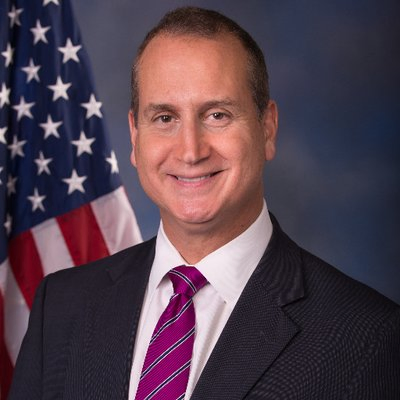
Subcommittee Chairman Mario Diaz-Balart said that NED's work is "a critical tool for advancing the foreign policy priorities of the administration", including "defending international religious freedom in places like Nigeria, Nicaragua, and Communist China, and supporting those struggling for freedom in places like Iran, North Korea, and Cuba".
He described democracy and human rights as "a fundamental part of our foreign policy and our national security", adding that NED and "accountable democracy programs in general are essential to countering adversaries, advancing American national security interests, and standing with those struggling for freedom".
Diaz-Balart recalled that NED was founded in the 1980s "to counter the then-evil empire of the Soviet Union", arguing that while the Soviet Union no longer exists, "threats to freedom and our security remain and have, frankly, evolved significantly".
Ranking Member Lois Frankel framed support for democracy as a preventive security policy. "Supporting democratic institutions is not just charity. It is a preventative measure, it is for our own national security, and it is cost-effective," she said, adding that "the resources we devote to democracy support are a fraction of what we spend when instability turns into war".
Frankel acknowledged critics who argue that democracy promotion "advances US geopolitical interests", but said that NED's work is "independent, transparent, and Congressionally authorized and rooted in universal principles".
Damon Wilson, President and CEO of NED, told lawmakers that "supporting those who seek freedom is a strategic investment in US national and economic security".
"Where democratic institutions and free markets are weak, conflict, drug and human trafficking, terrorism, refugee flows, and coercive economic practices take root," Wilson said. "Where citizens have a say in their future, societies are more stable partners for the United States."
He linked democracy promotion directly to geopolitical competition. "NED counters America's rivals by helping partners build effective democracies and protect fundamental freedoms despite intensifying repression," he said.
Referring to Ukraine, Wilson said, "NED's work helps Ukrainians defend against Kremlin aggression". On China, he noted that "NED supported researchers who exposed more than 100 CCP police stations across 53 countries working to silence dissidents".
In Bolivia, he said, "NED partners helped prevent the world's largest lithium deposits from falling under Moscow's and Beijing's control".
Wilson described the effort as cost-effective, telling lawmakers that "$0.84 of every dollar goes directly to the front lines, making NED one of the most cost-effective national security investments".
The National Endowment for Democracy was created by Congress in 1983 during the Cold War as a publicly funded but formally independent nonprofit to support democratic movements abroad.