Kolkata, February 23 Mukul Roy, a key strategist once hailed as the "Chanakya" of West Bengal politics, defined an era of silent political coups and shifting loyalties as a master of defection, yet ironically, he came to embody the very politics he perfected.
With the passing of the founding member of the TMC early Monday, one of the most complex and paradoxical political journeys of post-Left Front West Bengal came to a close – a career that mirrored the turbulence, ambition, and shifting allegiances of a state in transition.
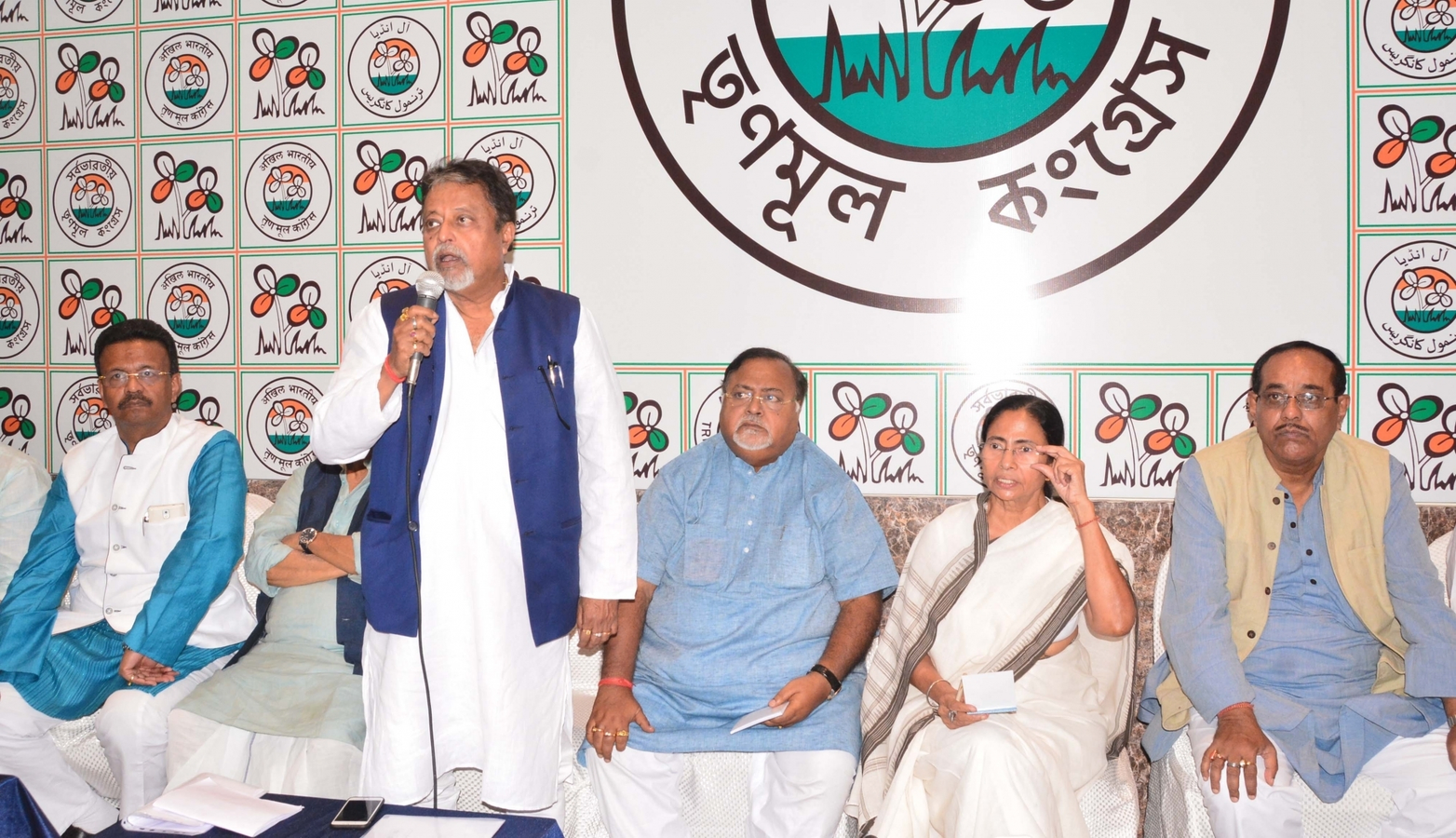
Roy, born in Kanchrapara in North 24 Parganas district in 1954, began his political career with the Youth Congress in the 1980s. When Mamata Banerjee broke away from the Congress to form the Trinamool Congress in 1998, Roy was among the earliest to join.
A soft-spoken and meticulous organizer, he avoided grand rhetoric. His expertise lay in arithmetic, booth-level committees, district-level dynamics, ticket allocation, and alliance management. Within a few years, he emerged as the party's general secretary and principal troubleshooter in Delhi.
Elected to the Rajya Sabha in 2006 and re-elected later, Roy became the TMC's leader in the Upper House in 2009. In the UPA-2 government, he served first as a Minister of State for Shipping and later as the railway minister in 2012. However, his true domain was West Bengal.
After the TMC's historic victory in 2011 ended the 34-year uninterrupted rule of the Left, Roy oversaw a wave of unprecedented political crossovers. Municipalities and district councils run by the opposition flipped almost overnight. Leaders from the Congress and CPI(M), sensing a new political center, aligned with the ruling camp.
Until then, West Bengal had been known for its ideological steadfastness. Cross-party defections were seen as a vice of other states. Under Roy's watch, however, defections became a method and even a spectacle. Councillors and MLAs appeared at choreographed press conferences, and numerical dominance was publicly displayed.
His strategies earned him the moniker "Chanakya of West Bengal politics". To some, Roy symbolized ruthless pragmatism in an era of ideological fluidity. To others, he epitomized opportunism. But few disputed his organizational brilliance.
By the 2014 Rajya Sabha elections and subsequent local body elections, Roy's behind-the-scenes maneuvering had become integral to the TMC's expansion. The party's organizational strength reflected his influence.
However, his rise was also overshadowed by controversies. His name surfaced in the Saradha chit fund case and the Narada sting operation, allegations he consistently denied. Simultaneously, power within the TMC further centralized around Mamata Banerjee.
As the general secretary of the TMC until 2015, he was effectively the second-in-command in the party. However, following disagreements with the party, he was removed from the position, only later to be appointed as vice president from which he resigned.
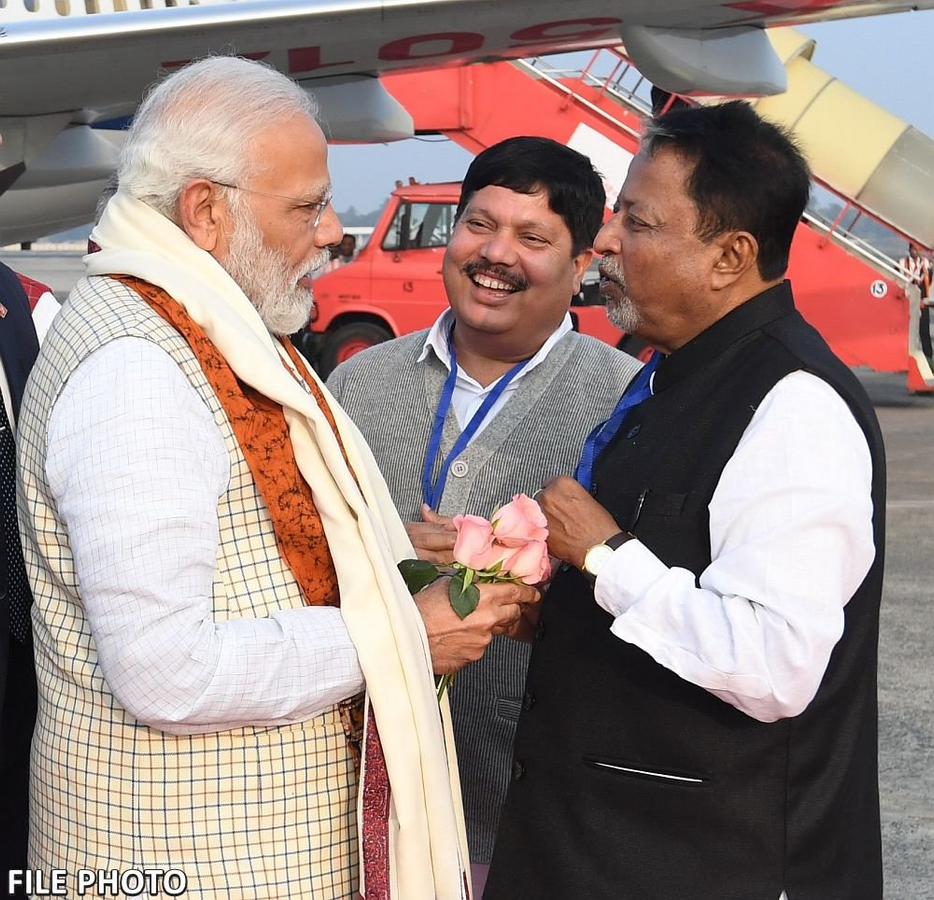
By 2017, relations with his former mentor Banerjee had further deteriorated. Roy eventually left the party he had helped form and joined the BJP. The architect of TMC's expansion was now working for its main adversary. It was a defection laden with symbolism.
In the BJP, Roy continued to employ his well-honed strategies. Ahead of the 2019 Lok Sabha elections and the 2021 assembly polls, he emerged as the saffron party's key organizer in West Bengal. Several TMC leaders followed him. The BJP's 18 out of 42 Lok Sabha seats in 2019, party leaders claimed, was partly due to his recruitment efforts. In 2020, he was appointed the national vice president of the BJP.
"The architect of defections had become the architect of counter-defections," a senior TMC leader once remarked.
Roy was elected as an MLA from Krishnanagar Uttar on a BJP ticket in 2021. But within weeks of the assembly results, which saw Banerjee secure a resounding third term, Roy returned to the TMC fold, describing it as his "first and last home".
By then, however, the once-formidable strategist was no longer a central figure, and he had retreated from the political arena.
Roy's health deteriorated sharply after 2021. He resigned as chairman of the Public Accounts Committee, citing health concerns. Public appearances became rare. Multiple hospitalizations followed.
For decades, he had reshaped West Bengal's political landscape through late-night meetings and discreet negotiations. Now, he was absent from the arena he once dominated.
Though he rejoined the TMC, he never regained the prominence he once held. New power centers had emerged.
The Calcutta High Court disqualified him under the anti-defection law. The decision was later stayed by the Supreme Court. In a twist steeped in irony, the law he had long navigated and, critics said, weaponized during his prime, now turned against him.
In the 15th and 16th West Bengal assemblies, defections from the Left and Congress became a defining feature of politics, reflecting a culture Roy had helped institutionalize.
He preferred the shadows to the stage, negotiation to confrontation, numbers to slogans. He was rarely the face of a movement, but often its architect.
Roy's life mirrors West Bengal's post-2011 political churn – the erosion of rigid ideological lines, defections, the rise of tactical realignments, and the dominance of survival over sentiment.
With Roy's death, West Bengal's political theatre lost one of its most skilled backstage directors – a man who lived in the shadows of power, engineered its shifts, and exited quietly, as he had often operated.