Chandigarh, March 7 Legislative reforms and judicial discipline have worked in tandem over the past decade, Chief Justice of India Surya Kant said here on Saturday evening.
The Chief Justice noted that amendments to the Arbitration and Conciliation Act have tightened timelines, strengthened neutrality standards, and clarified the contours of judicial oversight.
Courts, for their part, have repeatedly affirmed the principle of minimal intervention while remaining vigilant where natural justice demands scrutiny, he said.
"That balance is not cosmetic. Arbitration cannot thrive without autonomy. But autonomy, if left unmoored, risks arbitrariness. The task has therefore been to allow the arbitral process some room to breathe, while ensuring that its legitimacy remains intact," the CJI said.
He was delivering his keynote address on "India's Cross-Border Disputes Services: 2026-2030 Outlook for Litigation, Mediation, & Arbitration" after inaugurating the Chandigarh International Arbitration Centre (CIAC) at the opening ceremony of the first edition of India International Disputes Week (IIDW) 2026.
Recalling a time when India's arbitration regime was approached with caution in international circles, the CJI told the gathering that "questions were raised about delay, intervention, and unpredictability."
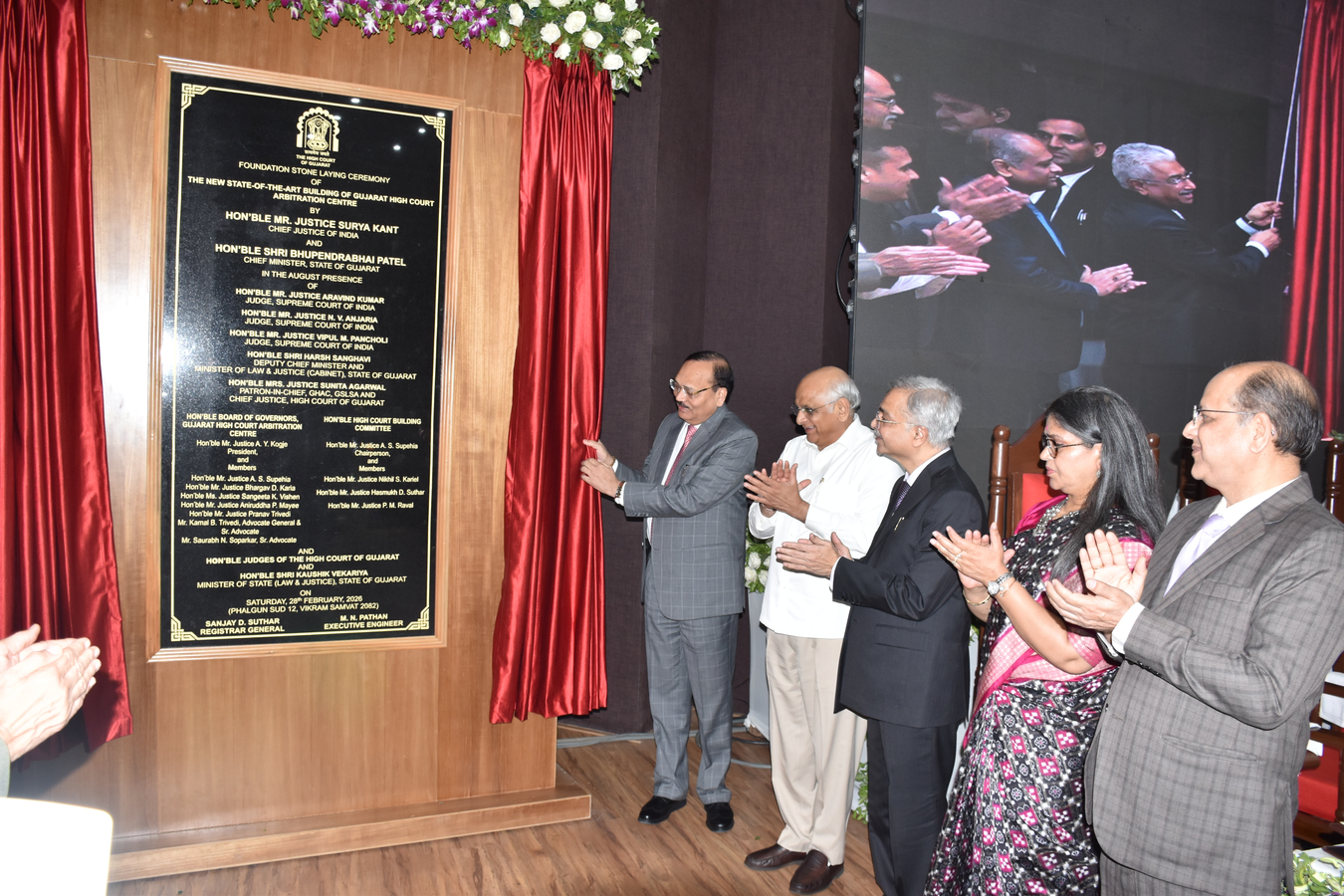
As I had the occasion to flag issues recently while inaugurating the Gujarat High Court Arbitration Centre, the challenges we face exist on multiple fronts. These include building trust for institutional arbitration, enhancing the capacity of Arbitration Centres, and the need for greater professionalism," he said.
He added that credibility is not measured by the elegance of a statute, but by the confidence it inspires. Investors and commercial actors look at lived practice than merely legislative text.
They ask whether arbitral awards are enforced predictably, whether appointments of arbitrators are neutral, whether timelines are respected, and whether courts exercise restraint with consistency, he said.
"It is in this context that the Chandigarh International Arbitration Centre assumes significance. CIAC must not become just another administrative fixture. It must stand for neutrality that is beyond doubt, efficiency that is beyond promise, and procedural integrity that is beyond reproach," the CJI said.
If it does so, it will contribute to India's standing as a dependable seat of international arbitration, he added.
The inaugural ceremony was attended by several distinguished members of the judiciary, including Supreme Court judges Justice Rajesh Bindal, Justice Satish Chandra Sharma, and Justice P K Mishra.
Also present were Justice Sheel Nagu, Chief Justice of the High Court of Punjab and Haryana; Justice G S Sandhawalia, Chief Justice of the High Court of Himachal Pradesh; Attorney General for India R Venkataramani; and several judges of the Punjab and Haryana High Court.