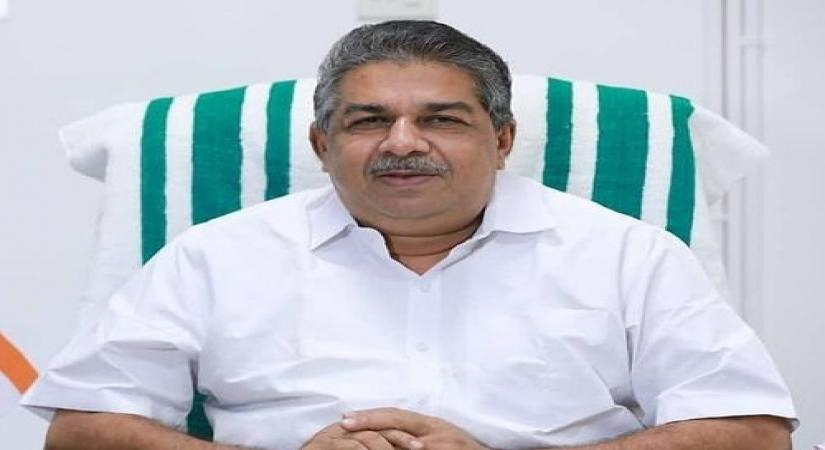
Chengannur, April 6 – As Kerala heads into the final phase of polling, the Chengannur Assembly constituency in Alappuzha district is emerging as one of the most closely watched contests, characterized by a compelling mix of incumbency, grassroots connections, and shifting political dynamics.
At the heart of the contest is two-time legislator and State Fisheries Minister, Saji Cherian, of the CPI(M)-led LDF, who is seeking a third consecutive victory.
His opponent is Congress candidate Abey Kuriakose, a familiar face in the constituency with nearly three decades of grassroots engagement.
Adding another dimension to the contest is BJP's M.V. Gopakumar, who secured an impressive 23.5 per cent of the vote share in the 2021 elections.
Cherian, who won by a commanding margin of over 32,000 votes last time, exudes confidence in improving his performance.
Drawing on his track record, he highlights visible development and sustained welfare initiatives.
Known for his accessibility and connection with the lower strata, Cherian's campaign is built on continuity and delivery.
However, Kuriakose is mounting a spirited challenge, leveraging deep personal connections with voters.
His ability to engage with voters on an individual level, often knowing their names, has become a key campaign strength.
He is also counting on a perceived anti-incumbency sentiment against the state government and points to past controversies surrounding Cherian as factors that could sway the outcome.
With both principal candidates belonging to the Christian community, which holds significant sway in Chengannur, the battle for consolidating this vote bank is intense.
However, an external factor – the ongoing West Asian crisis – is casting a shadow, as the constituency has a sizeable diaspora population.
A lower turnout among expatriate voters could influence the dynamics.
Further complicating the electoral arithmetic is the presence of veteran leader G. Sudhakaran, a four-time former CPI(M) MLA, now contesting as an Independent with reported backing from Congress sympathizers.
In a district considered a CPI(M) stronghold after Kannur, Sudhakaran's entry introduces an element of uncertainty.
While Cherian's camp dismisses him as a non-factor, the Opposition sees his candidacy as a potential disruptor, especially given his past role in mentoring Cherian.
The triangular nature of the contest, combined with local equations and broader state-level narratives, makes Chengannur a microcosm of Kerala's larger political battle.
As campaigning draws to a close, both camps remain optimistic, each interpreting the situation differently.
The final verdict, however, will rest with the electorate, and only on counting day will it become clear whether Chengannur endorses continuity or delivers a surprising turnaround.