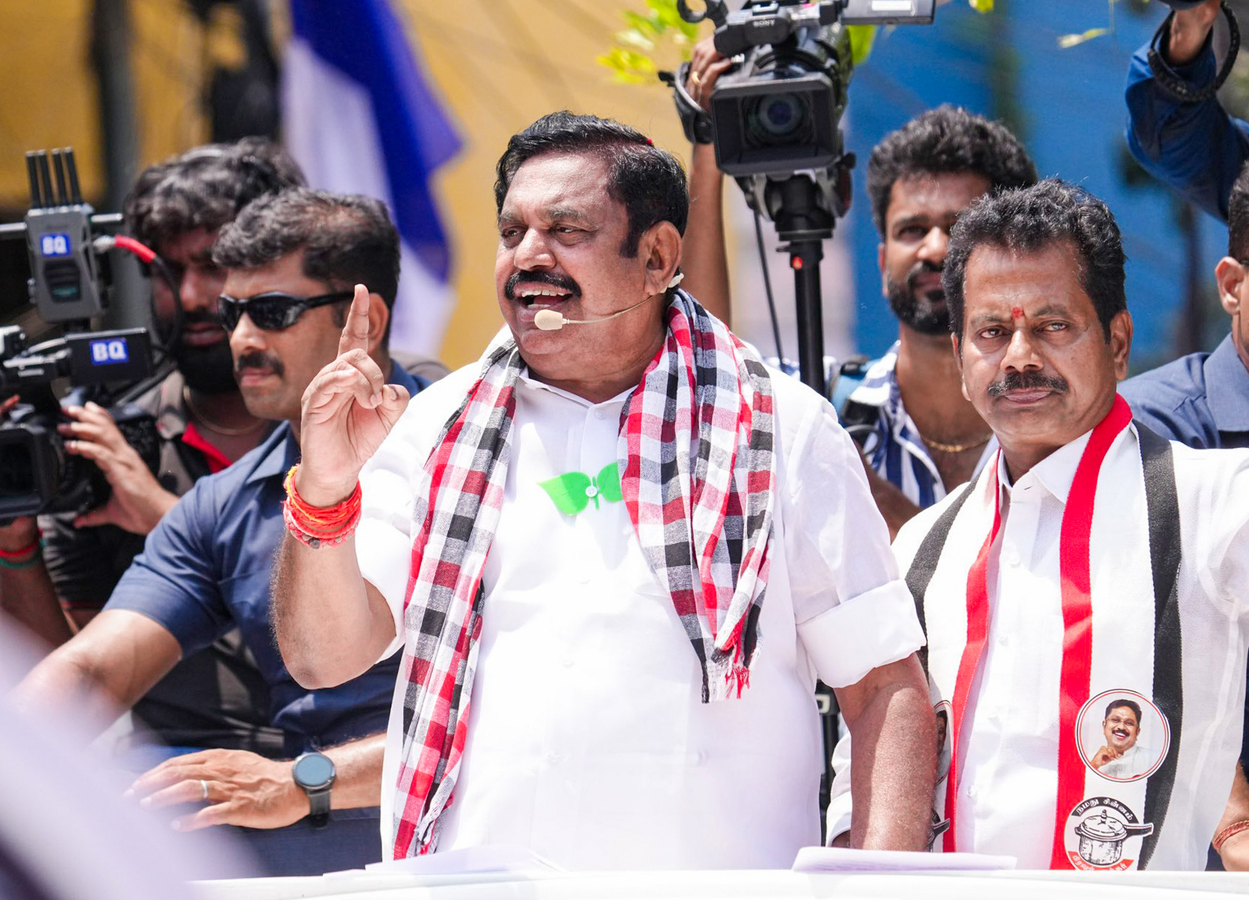
Chennai, April 8 – Edappadi K Palaniswami launched a strong attack on the ruling Dravida Munnetra Kazhagam (DMK) government on Wednesday, calling it a "failure model" and urging voters to remove it from power in the upcoming Assembly elections.
Addressing a public meeting in Velachery, the AIADMK General Secretary accused the M.K. Stalin-led administration of failing to fulfill key electoral promises, particularly in creating employment opportunities for youth and filling vacant government positions.
Palaniswami also criticized the government over recurring monsoon flooding in Chennai, especially in low-lying areas like Velachery.
He said the DMK had not taken adequate measures to prevent flooding, leaving residents to face repeated hardships during heavy rains.
"Even after five years in power, there has been no lasting solution to the flooding issues in the city," he said.
Calling the DMK an "evil force," the former Chief Minister alleged a deterioration in law and order across the state. He claimed that women, children, and the general public were increasingly feeling unsafe, adding that people were "living in fear" under the current regime.
In contrast, he said the AIADMK government had ensured safety and acted firmly against offenders during its tenure.
The AIADMK leader urged voters to carefully assess the DMK's performance between 2021 and 2026, questioning whether the government had delivered any tangible benefits.
He alleged that Chennai, despite being a major urban center, had not seen any significant new infrastructure or development projects under the present administration.
Highlighting local concerns, Palaniswami said Velachery remained particularly vulnerable to waterlogging during monsoon seasons, and accused the government of ignoring repeated complaints from residents.
He promised that an AIADMK government would prioritize flood mitigation and urban infrastructure improvements if voted back to power.
With the election campaign intensifying, Palaniswami's remarks signal a continued focus by the Opposition on governance issues such as employment, civic infrastructure, and public safety, as parties vie to shape voter sentiment ahead of the polls.