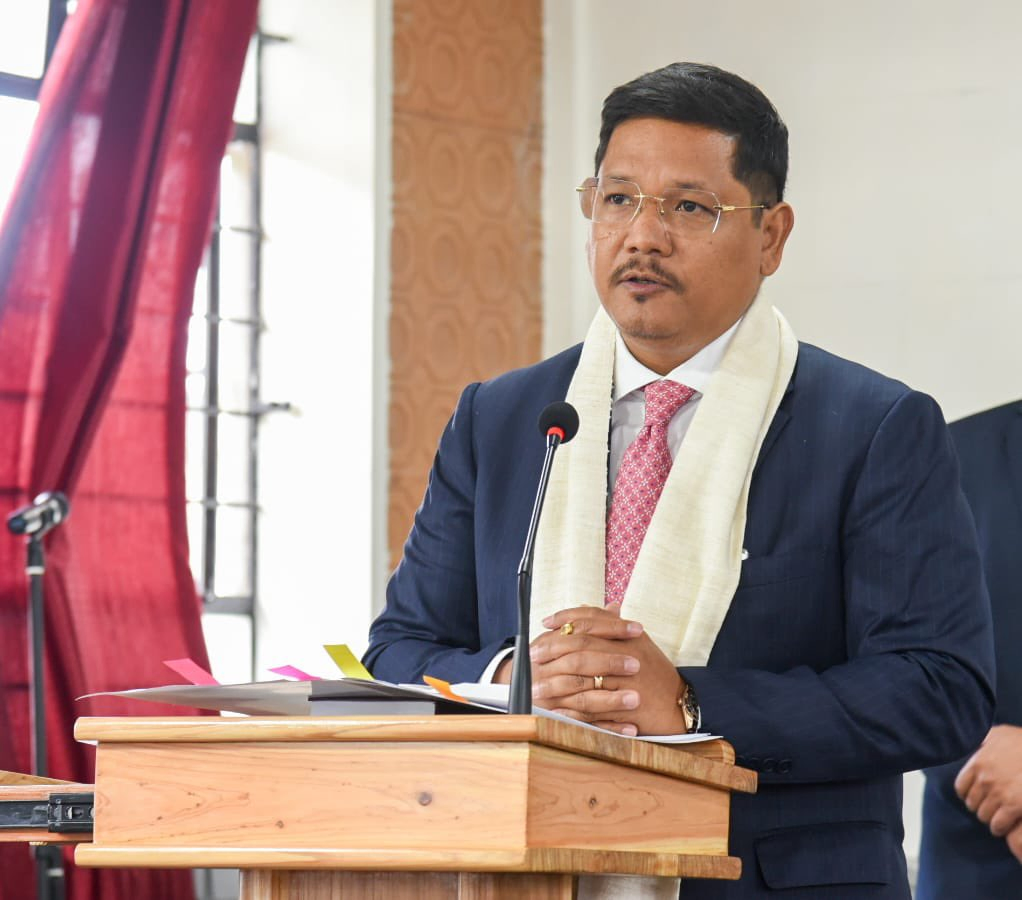
Shillong, February 25 – Meghalaya Chief Minister, Conrad K. Sangma, informed the Assembly on Wednesday that the state’s Self-Help Group (SHG) movement has expanded exponentially over the past seven years under the current government, emerging as one of the largest grassroots livelihood initiatives in the region, covering nearly 90 per cent of households.
Responding to a question in the House, the Chief Minister said that the number of SHGs in Meghalaya has risen from approximately 4,000–5,000 groups in 2018–19 to around 53,000 at present.
He stated that the network has mobilized nearly Rs 1,100 crore in credit, significantly boosting women-led livelihoods in both rural and semi-urban areas.
Sangma explained that SHGs in the state are formed voluntarily, with a minimum requirement of 10 to 15 women per group, and do not require formal registration.
He said that the Meghalaya State Rural Livelihoods Society (MSRLS) plays a key role in facilitating bank linkages.
“When they come together as a group, they do not need to provide collateral. They can open a bank account and access loans at an interest rate of seven per cent,” he said.
Highlighting the financial discipline of SHGs, the Chief Minister said that nearly 95 per cent of loans are being repaid on time.
He said that banks have so far disbursed Rs 755 crore to SHGs, with more than 40,800 groups regularly servicing their repayments.
“This reflects the sense of responsibility and sustainability of the SHG system,” he added.
According to Sangma, nearly Rs 1,100 crore is currently available to SHGs, benefiting over 58,000 women's groups, with about 70 per cent of the funds coming from bank credit.
He credited the MSRLS team for driving the movement, saying officers have worked tirelessly to strengthen livelihoods at the grassroots.
The Chief Minister said that SHG membership has grown from around 40,000 women eight years ago to nearly 5.8 lakh today, while credit flow has increased from less than Rs 100 crore to current levels.
Responding to a supplementary by Voice of the People Party MLA, Brightstarwell Chyne, on relatively lower participation in urban Mawlai, Sangma said that SHG formation depends on the willingness of individuals.
He noted that urban areas like Mawlai and Mawpat have shown a weaker response compared to rural blocks, but assured that efforts are ongoing to achieve full coverage.
On income generation, Sangma said that 41,323 SHG members have already achieved “lakhpati” status, and the government is now working to help them scale up to higher income levels.