Taipei, April 4. With the rise of new political leadership in Kathmandu and growing strategic constraints on China’s engagement with Nepal, there is hope that stronger democratic institutions will enable the Nepali people to understand Beijing’s expansionist ambitions in Nepal and the wider South Asian region, according to a report published on Saturday.
"The parliamentary elections in Nepal this year – the first after the violent protest led by the Gen Z that ousted the previous government in September last year – marked a fundamental shift in Nepal's domestic politics. The results overwhelmingly rejected the traditional political parties, with the Rastriya Swatantra Party (RSP), led by Balen Shah, securing a majority in the 275-member Nepalese House of Representatives. This complete turnaround in Nepal's political environment could undermine China's plans in South Asia," the report in 'Taipei Times' detailed.
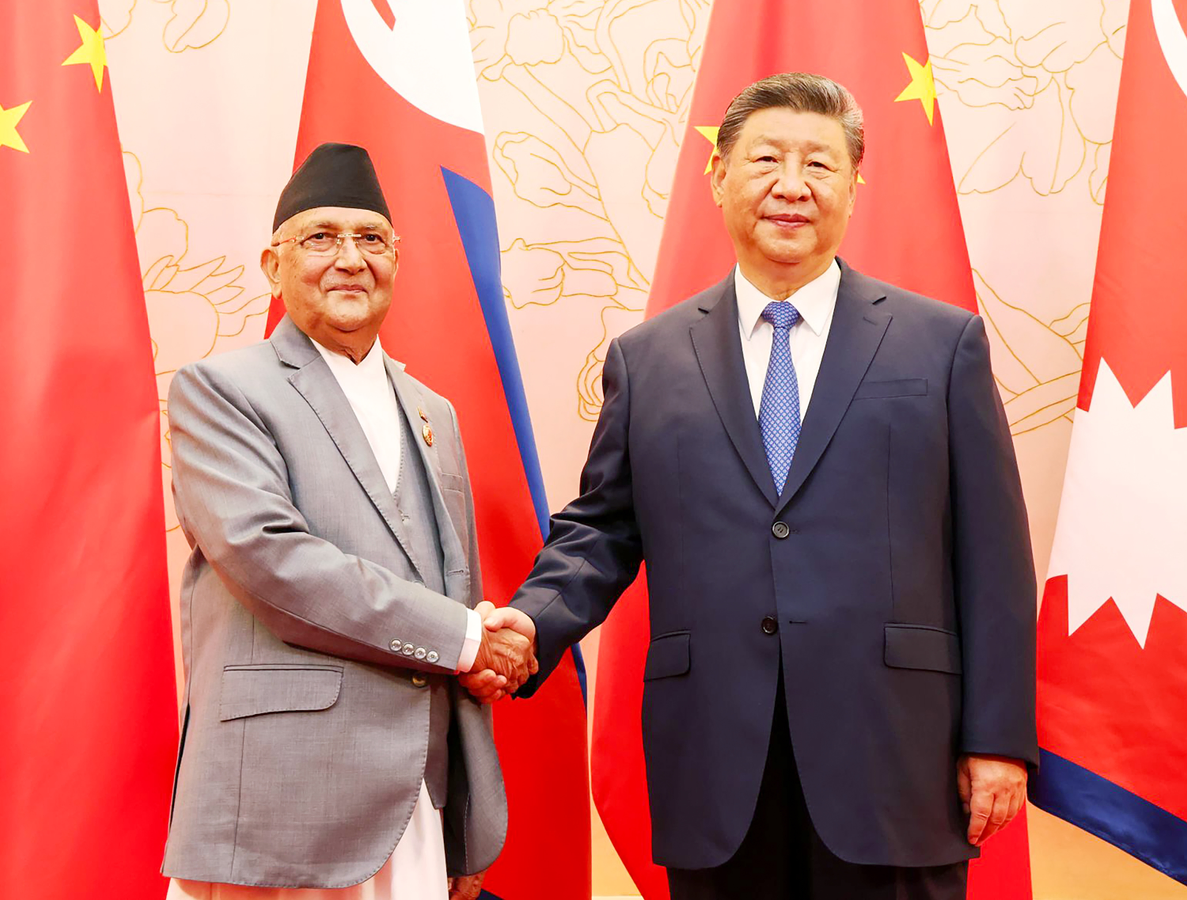
"Over the years, China has sought to make Nepal a strategic asset in South Asia. A major shift in China's Nepal policy was observed in 2017, when Beijing played a role in bringing together the two Nepalese communist parties – the Communist Party of Nepal (Unified Marxist-Leninist), led by K P Sharma Oli, and the Communist Party of Nepal (Maoist), led by Pushpa Dahal. This paved the way for Oli's appointment as Prime Minister of Nepal," it added.
According to the report, the formation of a new government led by Prime Minister Balen Shah in Kathmandu is seen as a major setback to China's Nepal policy.
It further added that the declining political influence of the communist parties in Nepal would curb China's clandestine efforts to "consolidate the tenets of a communist regime" in South Asia and beyond.
"Therefore, the defeat of Oli and other prominent communist leaders is not merely a reflection of the people's dissatisfaction with these leaders, but also reflects their discomfort with China's inroads into Nepal. This can be seen from the fact that sections of Nepal's political parties, civil society, and the media had expressed their objection to China's interference in internal affairs," the report mentioned.
It stressed that China's efforts to build close ties between its military-industrial complex and Nepal's defence requirements, and thereby make Kathmandu dependent on it for military supplies and services, would ultimately fail.
Highlighting the political shift in Kathmandu, the report further said, "Shah belongs to the Madhesi region of Nepal, which has close ties with India's state of Bihar, and he studied and lived in India for a long time, meaning that the prospect for a strong bilateral relationship with India during his tenure is high, further adversely impacting China's interests."