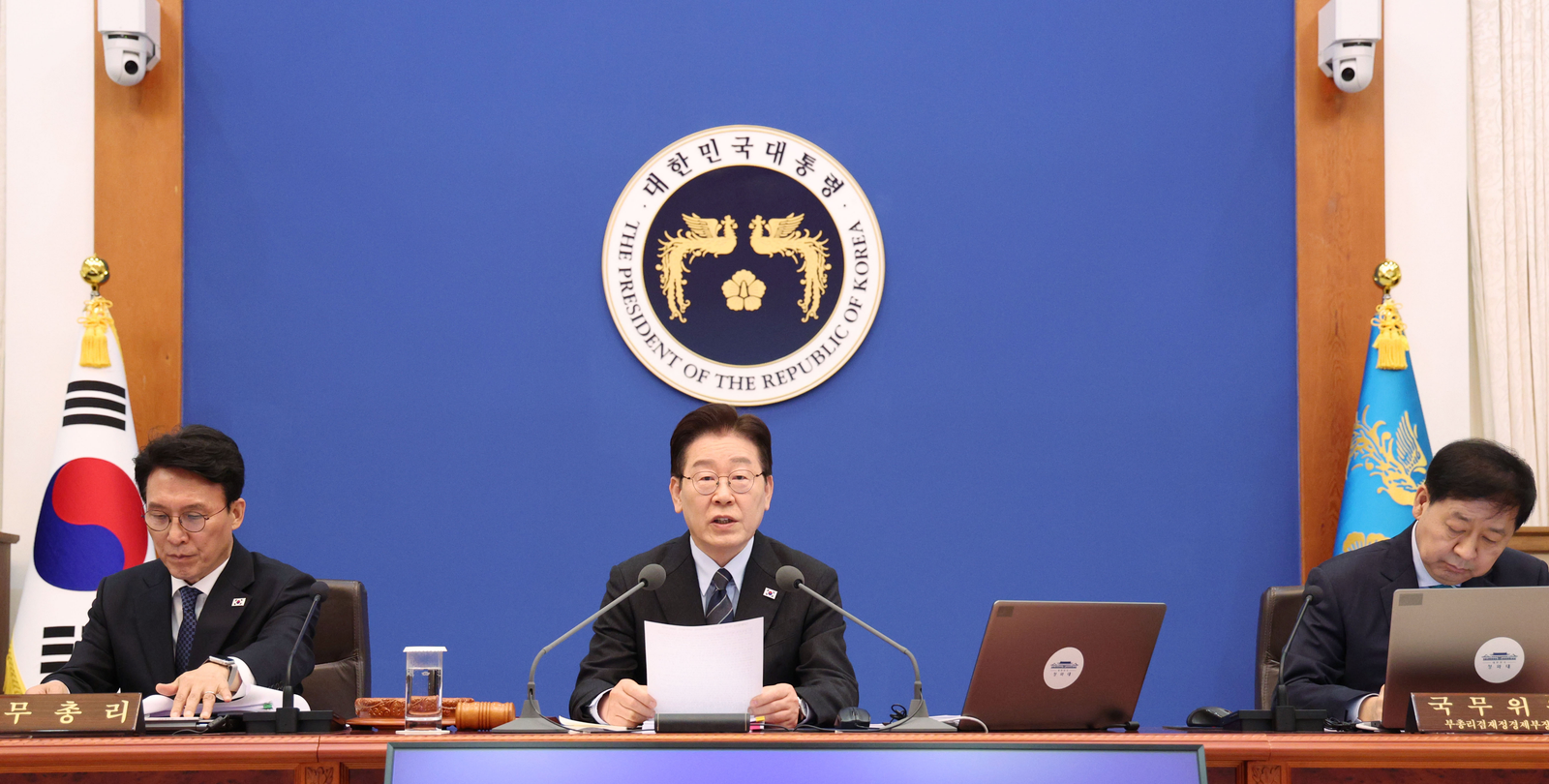
Seoul, April 6 – South Korea's Cabinet approved a motion on Monday to amend certain sections of the Constitution, paving the way for the National Assembly to vote on the proposed amendment. If passed by lawmakers, the amendment will be put to a national referendum.
The move follows a proposal by 187 lawmakers from the ruling Democratic Party and five minor parties on Friday to tighten the requirements for declaring martial law and incorporate the spirit of past pro-democracy movements into the Constitution. The main opposition People Power Party has not joined the move, according to Yonhap news agency.
With the Cabinet's approval, President Lee Jae Myung is required to issue a public notice of the proposed amendment for at least 20 days to allow citizens to review it.
The National Assembly must then vote on the bill within 60 days of the public notice, requiring a two-thirds majority for passage.
If the bill is approved between May 4 and 10, a national referendum could be held alongside the June 3 local elections. The amendment must achieve both a majority turnout and a majority approval to be finalized.
The proposal aims to include the 1980 pro-democracy uprising in Gwangju and the 1979 Busan-Masan pro-democracy protests in the preamble. It currently states that the country inherits the spirit of the April 19 revolution in 1960, which overthrew South Korea's first president, Rhee Syng-man, due to election fraud.
The bill also seeks to tighten the requirements for declaring martial law, requiring the president to obtain parliamentary approval without delay and stipulating that if the National Assembly rejects the declaration or fails to approve it within 48 hours, the martial law will be immediately nullified.
During a Cabinet meeting, Lee called for bipartisan support for the constitutional revision to reflect social changes since the Constitution was last amended in 1987.
"There is broad consensus on the need to revise the Constitution to better reflect changes in society nearly 40 years after its last revision," he said. "Bipartisan cooperation is needed to advance constitutional amendments to the best extent possible."
He said there appears to be no disagreement over reflecting key pro-democracy movements in the Constitution's preamble and tightening requirements for imposing martial law, expressing hope that the referendum will take place in time for the local elections.
"On issues that all political forces have explicitly agreed upon, it appears possible to pursue constitutional amendments alongside the upcoming local elections," he said.