Kolkata, March 8 Three assembly constituencies bordering West Bengal's Cooch Behar district – Dinhata, Sitai, and Sitalkuchi – together account for the highest number of voters whose names are currently "under review" in the district, election officials said.
According to the Chief Electoral Officer's statistics, across the nine assembly segments of the Cooch Behar district, a total of 2,38,107 electors are marked as "under review".
Of these, 1,03,548 voters come from just the three border constituencies, 35,932 in Dinhata, 36,405 in Sitai, and 31,201 in Sitalkuchi, the data show.
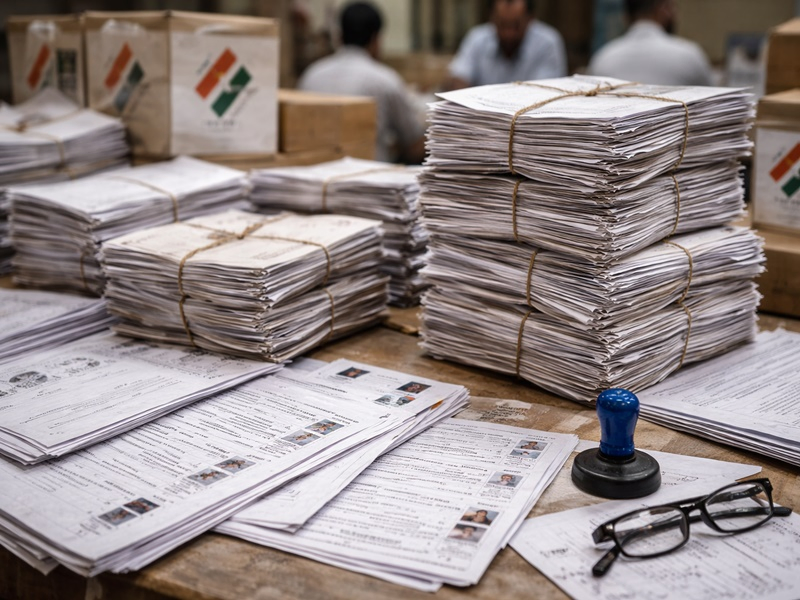
The "under review" category includes voters whose entries were flagged during the ongoing Special Intensive Revision (SIR) of electoral rolls and are now subject to further scrutiny before their voting status can be confirmed. Officials say this process is part of a routine, Supreme Court-mandated revision of electoral rolls aimed at removing ineligible entries and ensuring accuracy.
The "under review" figures have resonated politically in the border region, where electoral arithmetic has historically been tight.
In the 2021 assembly election, Dinhata was one of the closest contests in the state, with the BJP winning by just 57 votes, a margin that made the seat a key prize in that election.
Sitai was won by the Trinamool Congress (TMC) by approximately 10,112 votes, while Sitalkuchi went to the BJP by about 17,815 votes.
These narrow margins mean that even relatively small adjustments in the rolls can potentially alter electoral outcomes.
In addition to those under review, more than 1.13 lakh names in Cooch Behar have been deleted from the electoral list for reasons such as death, relocation, or duplication, with the three border constituencies again topping that count with 45,934 deletions.
Notices citing "logical discrepancies" have also been issued to tens of thousands of electors in the trio of constituencies, further swelling the pool of unsettled cases.
The matter has sparked a fresh political row, with leaders from both the ruling TMC and the BJP offering contrasting interpretations of the numbers.
Local BJP leader Ashok Mondal said the scale of review and deletions reflects a larger trend seen statewide following the Special Intensive Revision, which has led to millions of names being revised, deleted, or placed under consideration by the Election Commission.
"We believe this is a necessary cleanup to remove duplicate and ineligible entries from the rolls. A clean list ensures fair polls and protects the integrity of the democratic process," Mondal said, adding that the BJP welcomes judicial oversight to speed up the review process.
He argued that political parties should focus on campaigning and voter engagement, rather than contesting every technical roll dispute.
On the other hand, TMC district president Rina Ghosh criticised the process, saying the "under review" figures in Cooch Behar and beyond underscore fears among rural voters that they were being unfairly caught up in the revision.
"These numbers – more than one lakh in just three constituencies – far exceed the margins of last election. When eligible voters are left in limbo or removed, it affects confidence in the system," she said.
Ghosh called for greater transparency and faster resolution, and urged the Election Commission to publish supplementary rolls showing which adjudicated voters have been cleared, echoing pleas made by senior party leaders at the state level.
Poll body officials emphasise that being marked "under review" does not automatically disqualify a voter, and individuals have the right to submit documents and clarify discrepancies before the Electoral Registration Officer (ERO).
Nevertheless, the sheer volume of cases, mirrored elsewhere in the state where the SIR has reduced the electorate by several million and placed tens of lakhs in judicial review, means the roll revision could have significant political implications.
It shows that in marginal seats like Dinhata, where the 2021 result was determined by just a few dozen votes, even a small swing due to adjudication outcomes could prove decisive.
In constituencies with larger victory margins, such as Sitalkuchi, the impact will depend on the direction in which reinstatements or deletions fall when the adjudication process concludes.