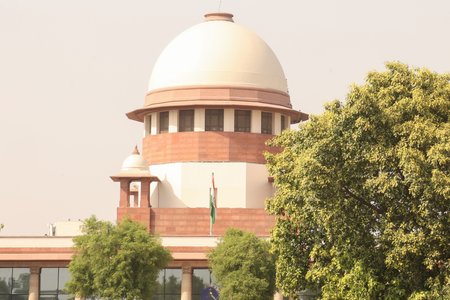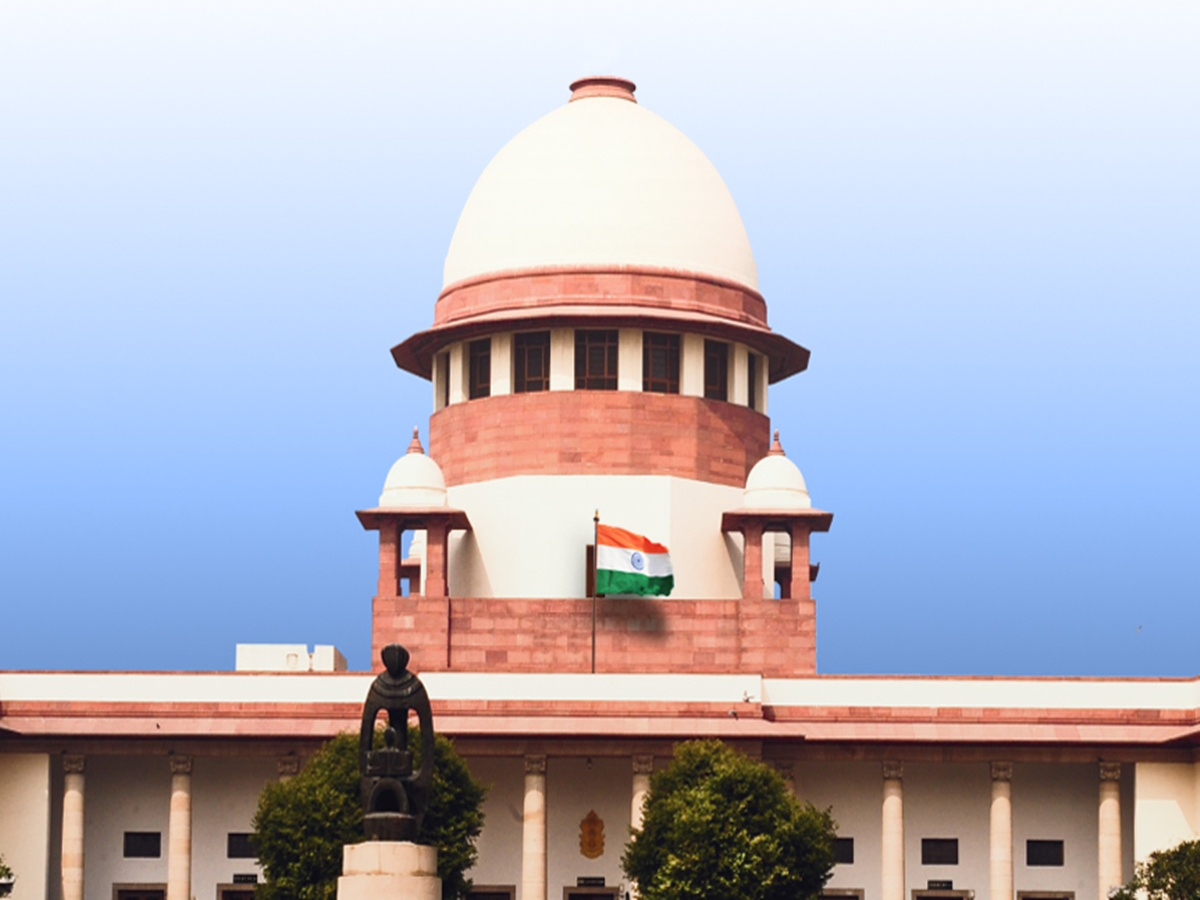
New Delhi, February 19 – The Supreme Court on Thursday dismissed a petition challenging the upcoming film, previously titled 'Ghooskhor Pandat', after filmmaker Neeraj Pandey informed the top court that the controversial title and all related promotional materials had been withdrawn.
A bench of Justices B.V. Nagarathna and Ujjal Bhuyan accepted an affidavit filed by Pandey, in which he undertook that the controversial title would no longer be used “in any manner whatsoever” and that all publicity content carrying the earlier name had been removed.
Recording these developments, the Justice Nagarathna-led bench closed the proceedings, observing that no further directions were required in the matter.
During the hearing, the lawyers representing the filmmakers submitted that the title had already been withdrawn, and the controversy surrounding the film should now come to an end.
The apex court observed that once the undertaking had been given and accepted, no fresh criminal proceedings should be initiated in relation to the impugned title.
Dismissing the petition, the Supreme Court remarked that the controversy relating to the film title should now be treated as closed, and the petition was disposed of.
The public interest litigation (PIL) before the apex court had alleged that the film’s title and storyline promoted caste- and religion-based stereotyping and hurt the dignity of the Brahmin community.
The petition contended that associating the caste identifier “Pandit” with the term “ghooskhor” (bribe-taker) created a defamatory stereotype against an identifiable community and violated constitutional protections under Articles 14, 19(2), 21, 25 and 51A(e).
Following the Supreme Court’s intervention, filmmaker Neeraj Pandey filed an affidavit assuring the top court that the controversial title had been “unequivocally withdrawn” and that the film does not insult or target any religion or community.
Last week, the Supreme Court strongly criticized the filmmakers over the title “Ghooskhor Pandat”, observing that freedom of speech and expression cannot be used as a license to denigrate a section of society.
The Justice Nagarathna-led bench had issued notice to the Centre, the Central Board of Film Certification (CBFC), and the filmmaker, while indicating that the film would not be permitted to release unless the title was changed.
“Freedom of speech and expression does not mean you can portray a community in a bad light,” the apex court had remarked, cautioning that such nomenclature could disturb social harmony at a time when societal tensions already exist.
In a related development, the Delhi High Court had earlier dismissed a similar petition seeking a stay on the release of the film after Netflix submitted that it would change the title and had removed all promotional content bearing the earlier name from social media.
Taking the statement on record, a single-judge Bench of Justice Purushaindra Kumar Kaurav of the Delhi High Court observed that no further directions were required in view of the stand taken by the streaming platform.