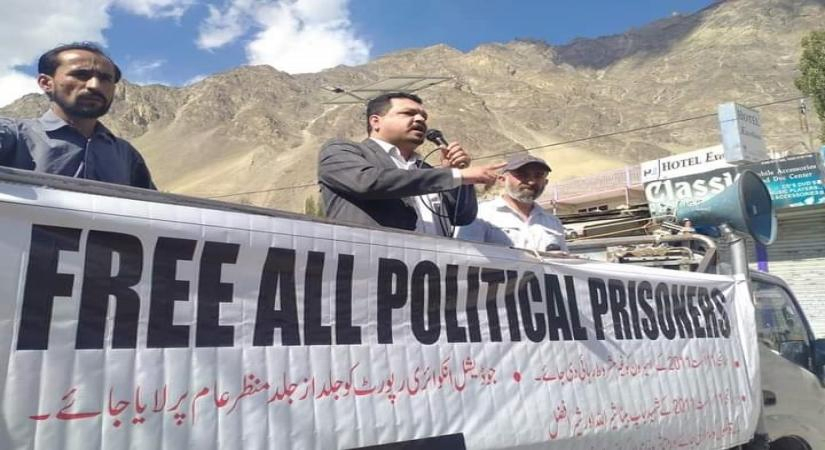
London, March 20 – The denial of essential services in Pakistan-administered Jammu and Kashmir (PoJK) and Pakistan-administered Gilgit-Baltistan (PoGB) has created a widening humanitarian divide, where inflation, unemployment, food insecurity, and power shortages are intertwined with political exclusion and security-driven administration, a report highlights.
According to a recent report in the UK-based newspaper 'Asian Lite', the increasing involvement of women and students in demonstrations highlights societal discontent, signaling a persistent crisis rooted in structural neglect.
As unrest grows and crackdowns escalate, the worsening humanitarian crisis in PoJK and PoGB exposes Pakistan’s administrative policies in the territories it controls without constitutional integration.
"These protests were not limited to food prices. Electricity shortages and inflated power bills have become a year-round ordeal. Despite hosting major hydropower projects, residents endure prolonged load shedding while being charged commercial tariffs. This contradiction has become emblematic of the wider crisis – regions rich in natural resources but denied their benefits," the report details.
"In PoJK, similar protests escalated into region-wide shutdowns. Demonstrators refused to pay electricity bills, citing unaffordable rates, unpaid salaries, and the erosion of basic civil liberties. The response from authorities has often involved arrests, communication blackouts, and the use of force," it adds.
The report notes that in PoGB, land ownership has become a critical flashpoint with large tracts of land labelled as state property, denying communities legal rights to their ancestral lands.
"Allegations of land grabs linked to infrastructure and strategic projects have intensified resentment, particularly where locals claim displacement without compensation. Resource exploitation has followed a similar pattern," it adds.
Additionally, the electricity generated from the hydropower project in PoJK and PoGB feeds Pakistan’s national grid, while local communities struggle with power shortages and soaring tariffs.
"The perception that regional resources are extracted for external benefit has deepened mistrust toward federal authorities," the report notes.
Highlighting the repression in these Pakistan-occupied territories, it says, critics argue that Pakistani security agencies, especially the Inter-Services Intelligence, prioritize controlling dissent rather than resolving grievances.
"Allegations of surveillance, intimidation, and enforced disappearances have surfaced repeatedly in reports by rights groups," the report highlights.
While the crisis has begun to attract international attention, though sporadically, in 2025, activists from PoJK and PoGB at a side event during the UN Human Rights Council session in Geneva, expressed grave concerns over restrictions on freedom of expression and peaceful assembly.
"Speakers described systematic suppression and the absence of legal protections for millions living in the disputed territories. Despite such interventions, Pakistan’s official response has largely focused on denial. Authorities have frequently attributed protests to ‘external influence’, a narrative that sidesteps the documented economic and humanitarian grievances raised by residents themselves," the report mentions.