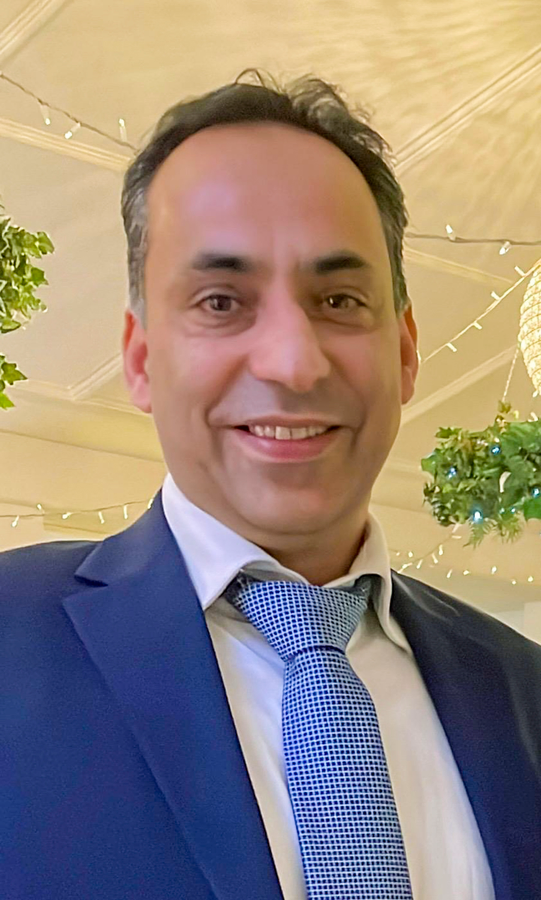
New Delhi, February 21 The International Cricket Council's existing commercial model, which distributes the majority of revenue to Test-playing nations, is counterproductive for associate members like the Netherlands, according to ICC board member Rashid Shah.
Approximately 40 per cent of the ICC's revenue, estimated at USD 231 million per year, will go to India in the 2024–2027 cycle, with the cricketing powerhouse generating the majority of the global body's revenues driven by media rights.
Shah also praised the BCCI's achievements and its massive contribution to the growth and global expansion of cricket.
Out of the estimated USD 600 million annual earnings in the 2024–2027 period, close to USD 533 million will be distributed among the 12 full members, while approximately USD 67 million will be shared by the associate teams.
Shah, a former cricketer who played a lot of cricket in Jammu and Kashmir before moving to the Netherlands more than two decades ago, said the ICC revenue-sharing model is not helping smaller nations develop the game.
"Well, obviously, we are an associate cricketing nation. We don't often get to play against the bigger nations. Financial models are not sustainable for us. The ICC's commercial model is counterproductive for us. We only get a fraction of the funds from there," said Shah.
"We have to develop our own models to generate the finances and promote cricket development. But yes, playing in the World Cup in India was a massive boost for us.
"Playing a game in Ahmedabad against India, watched by around 70,000 people in the stadium, with a global viewership of around 160 million, was a major achievement for us."
Despite the challenges, Shah said that the game has grown rapidly in the Netherlands in the last five years. The overall numbers remain small, with around 8,000 people involved in cricket.
Shah, a tech entrepreneur, informed that the Netherlands board, KNCB, has a clear plan in place for the game until 2030.
"Well, my heart is there now. I have been living in Holland for the last 26 years. I played cricket in Holland for almost 13–14 years.
"Dutch cricket has also reached great heights over the years. We have qualified for almost all World Cups in the last 10 years. The Dutch women's cricket team has also qualified for the World Cup to be held in England in summer 2026, creating history.
"Over the last couple of years, we have set out on a journey. We have a mission and vision in place. We are working on the development structure of cricket to increase the talent pool of cricketers. We are working from the top by having role models and from the bottom to create a strong pipeline," he said.
Cricket in J&K has come a long way since I played.
==============================
Shah's heart and loyalty lie with the Netherlands, but he remains strongly connected to his roots in Srinagar. For someone who played a lot of cricket in J&K in the 1990s, he could not be more proud of the team's maiden entry into the final of the Ranji Trophy this season.
"I think if I compare when I was back in Kashmir almost 27 years back, the structure, facilities, and accountability around the game, along with the turmoil we were going through, meant there wasn't much and there weren't many cricketers. Looking now at the structure and the great work done by the JKCA, it's amazing to see that the game has spread to every district in Kashmir.
"It's amazing to see the talent pool they have brought to the front and the system they have created. Making it to the Ranji Trophy final is an amazing achievement in itself," Shah added.