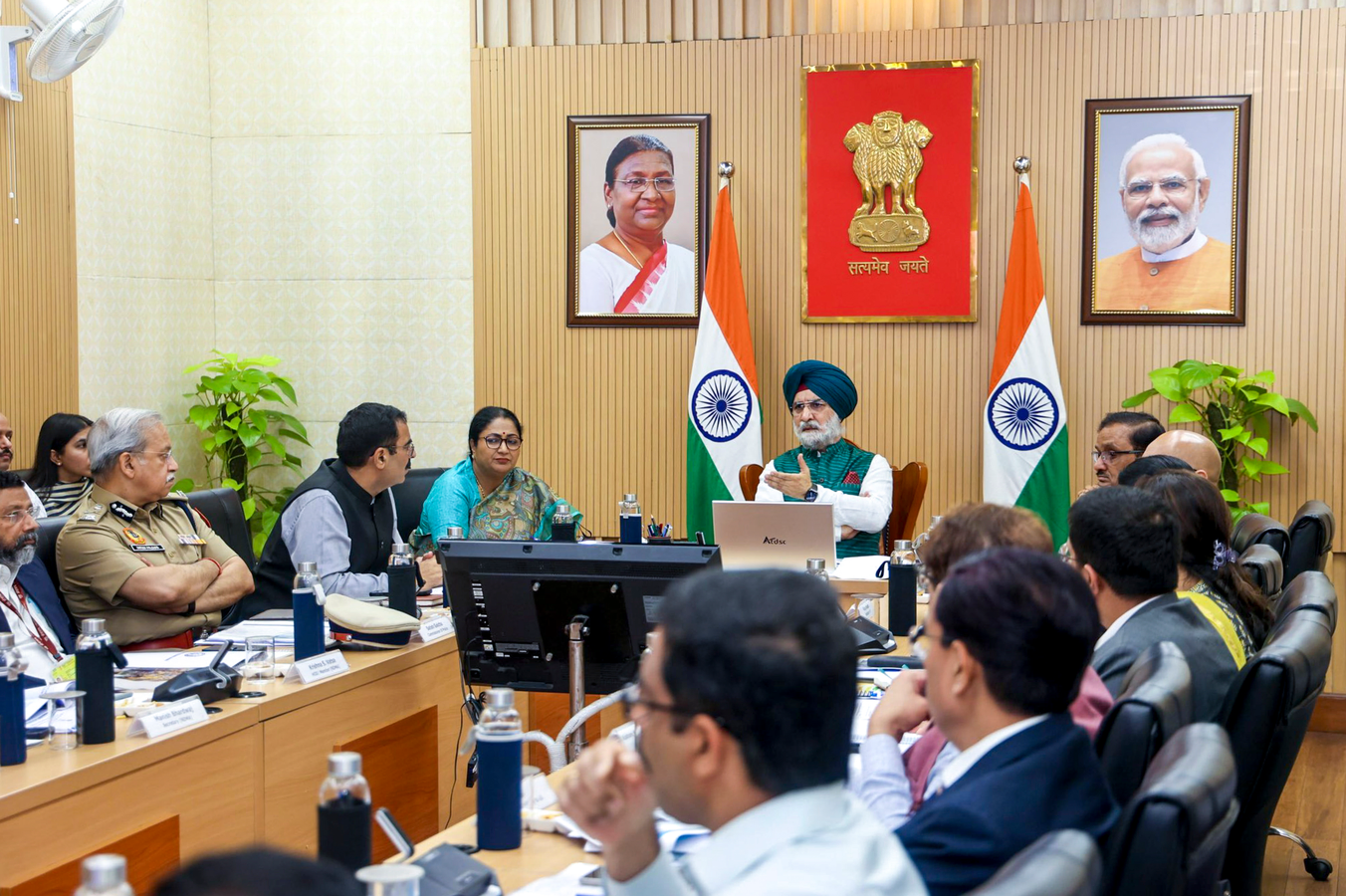
New Delhi, March 18 Delhi Lt Governor Taranjit Singh Sandhu, who chaired his first Delhi Disaster Management Authority (DDMA) meeting on Wednesday, directed a comprehensive fire audit across the city.
This directive came in the wake of a fire in a multi-story building in southwest Delhi's Palam area, which claimed nine lives and injured three others.
The Authority gave in-principle approval to the Delhi Urban Flood Mitigation Plan with a proposed budget outlay of Rs 21,000 crore, and decided to set up a state-of-the-art Emergency Operations Centre (EOC) and an Integrated Command and Control Centre for Delhi, an official statement said.
In a post on X, the LG office said, "Discussed today's unfortunate residential fire incident; directed a comprehensive fire audit across localities and institutions to strengthen prevention."
Chief Minister Rekha Gupta was also part of the high-level meeting, where other issues like flooding and the availability of LPG in the city were also discussed.
Sandhu also reviewed the availability of LPG, PNG, petrol, and diesel in the context of the evolving geopolitical situation due to the conflict in West Asia, the LG office said.
The Delhi Urban Flood Mitigation Plan, approved by the DDMA, focuses on strengthening drainage infrastructure, desilting of major drains, construction of additional stormwater channels, and real-time flood monitoring systems to significantly reduce urban flooding risks during the monsoon season.
The chief minister emphasised the need for timely implementation of the plan in view of the upcoming monsoon season.
Gupta also emphasised the need to augment energy infrastructure by ensuring judicious use, promoting renewable energy integration, being vigilant against black marketing and hoarding, and ensuring uninterrupted supply to critical installations during potential disruptions, the statement said.
The DDMA also reviewed the energy demand and supply scenario in the context of the emerging current geopolitical situation due to the conflict in Gulf countries, it said.
The proposed EOC and the Integrated Command and Control Centre will serve as the nerve center for disaster management, enabling real-time coordination, predictive analytics using AI and satellite data, and swift response mechanisms across all disaster scenarios, including floods, earthquakes, fires, and chemical emergencies, the statement added.