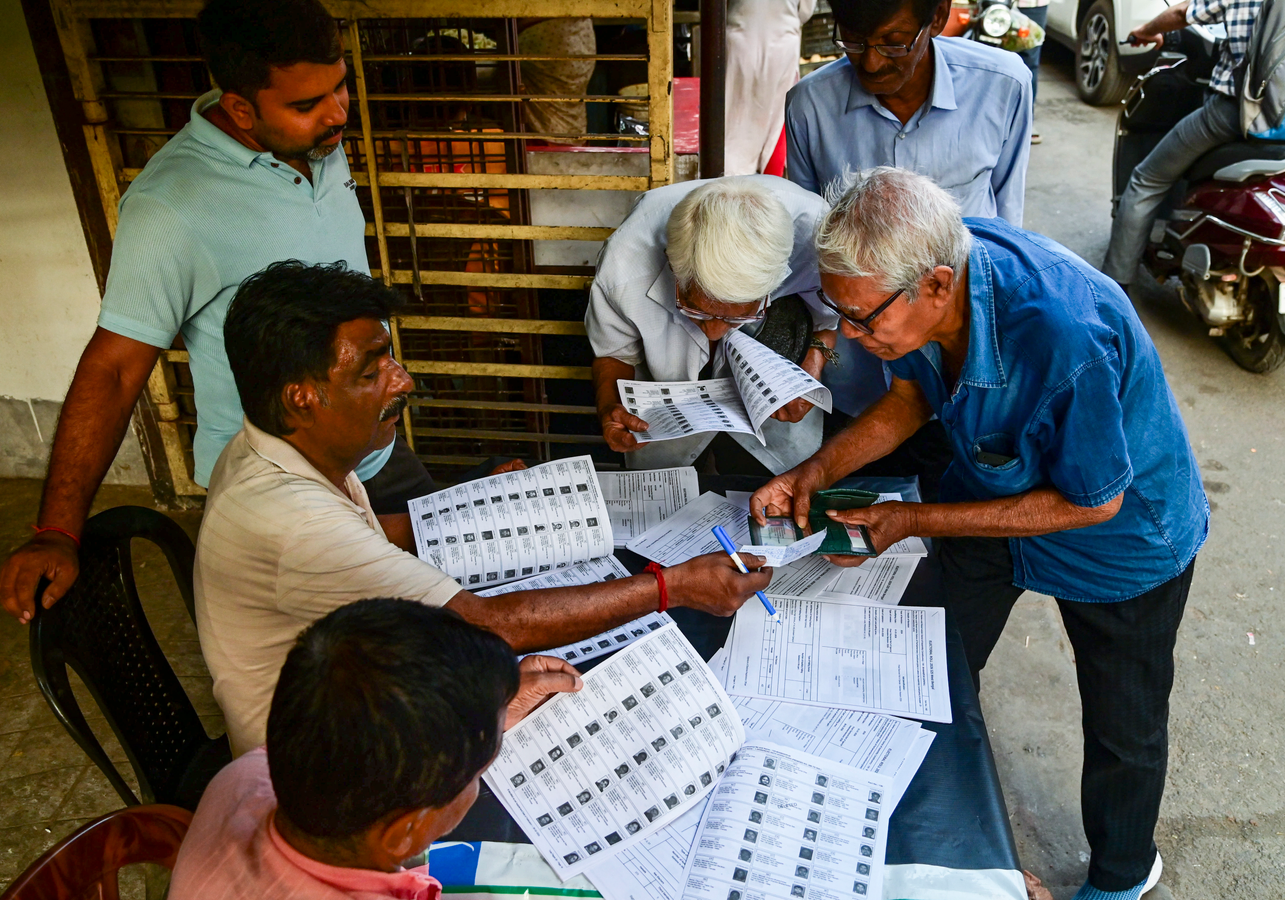
Kolkata, March 1 The publication of West Bengal’s post-SIR rolls has not only pruned 63.66 lakh names from the electorate, but has also redrawn the state’s demographic and political landscape ahead of the 2026 assembly polls, recasting voter profiles across districts, border areas, and key constituencies just weeks before the campaign intensifies.
With the electorate reduced from 7.66 crore to just over 7.04 crore – an 8.3 percent contraction – and 60.06 lakh names placed under review, the state enters a fluid pre-poll phase marked by significant voter churn.
The deletions are geographically concentrated and politically significant.
“The SIR exercise introduces three key variables into the 2026 contest: demographic filtering in border areas, emphasis on social coalitions in Matua and minority districts, and recalibration in urban and Junglemahal regions that have seen the BJP’s expansion since 2019,” said political analyst Biswanath Chakraborty.
The SIR has reshaped voter profiles across border districts, areas dominated by refugees, minority-heavy regions, tribal zones, and key urban constituencies. In a state where dozens of seats were decided by margins of 2,000–5,000 votes in 2021, even marginal shifts in the rolls carry significant weight.
The sharpest churn is visible in districts bordering Bangladesh, where citizenship and migration politics have framed the contest between the TMC and the BJP.
In Nadia, 2.73 lakh names were deleted, reducing the electorate from 44.18 lakh to 41.45 lakh. North 24 Parganas saw its voter base shrink by nearly 10 lakh, from roughly 83 lakh to 73.88 lakh, with around six lakh names under review.
In Muslim-majority Malda, the electorate fell from 32 lakh to 29.88 lakh, with nearly nine lakh names under review. Murshidabad recorded 2.93 lakh deletions from a base of 57.64 lakh voters, while 11 lakh names remain under scrutiny. South 24 Parganas, the state’s largest district electorally, saw deletions of over 8 lakh, with around five lakh names pending review.
Together, these districts influence more than 125 seats in the 294-member assembly. Minority-heavy belts such as Murshidabad, Malda, and the two 24 Parganas have traditionally delivered substantial leads to the TMC, often offsetting the BJP’s gains in north Bengal and Junglemahal.
“If even a portion of the 60.06 lakh names under review are concentrated in these border and minority belts, the final adjustments could redraw constituency margins in a state where several seats in 2021 and 2024 were decided by just a few thousand votes, even small shifts in inclusion or exclusion can significantly influence the outcome,” said another political analyst Suman Bhattacharya.
The churn has been most pronounced in the Matua belt across North 24 Parganas, Nadia, and north Bengal, where leaders claim that nearly 90 percent of the community has been affected – an assertion that, if validated, could have a significant impact on 40-50 seats where the Dalit Hindu refugee bloc forms the BJP’s core voter base.
For the BJP, the review process is both a reinforcement and a risk, strengthening its CAA stance while potentially alienating refugee voters. For the TMC, deletions in border and minority-heavy districts trigger urgent recalibration at the booth level to protect its turnout-driven strategies.
In essence, the review process has introduced an element of uncertainty into districts that traditionally anchor the TMC’s statewide calculations while also serving as the BJP’s primary expansion zone. The 2026 election, therefore, may hinge on how this demographic shift plays out in these politically sensitive areas.
The TMC’s lead over the BJP narrowed from around 61 lakh in the 2021 assembly elections to roughly 42 lakh in the 2024 Lok Sabha polls. The 2026 election is therefore not a repeat of the landslide of 2021 but a contest characterized by a tightening bipolar dynamic.
In Kolkata’s urban core, traditionally a TMC stronghold, deletions have also drawn attention. The seven assembly segments in North Kolkata together saw around 4.07 lakh deletions.
Across four constituencies in South Kolkata – Bhabanipur, Kolkata Port, Rashbehari, and Ballygunge – the electorate dipped from 6,91,306 in the draft to 6,88,099 in the final phase, with 78,657 names under review.
In Bhabanipur, represented by Chief Minister Mamata Banerjee, 47,094 names were struck off across the draft and final stages, with over 14,000 electors still under review. These deletions represent a reduction of approximately 11,000 compared to Banerjee’s 2021 bypoll victory margin of over 58,000 votes.
However, in Nandigram, a high-voltage constituency represented by Leader of the Opposition Suvendu Adhikari, the final rolls show a net addition of 770 voters compared to the draft list, bringing the electorate to 2,68,378. In 2021, Nandigram was decided by just 1,956 votes.
Paschim Medinipur saw a total increase in deletions to over 2.21 lakh, with over one lakh names still under review.
Jalpaiguri in north Bengal recorded deletions of roughly 1.5 lakh since the SIR began, bringing its electorate down to around 17.48 lakh. Alipurduar in north Bengal recorded 1,02,835 deletions, with 11,96,651 names featured in the final rolls. These belts, particularly Junglemahal and north Bengal, were key growth zones for the BJP in 2019 and 2021.
“The most crucial aspect is not the deletions already counted, but the names still under review – a pending ledger that could continue to reshape booth arithmetic even as the campaign gains momentum,” said a TMC leader.