Mandi, February 16 – The seven-day internationally renowned Mahashivratri Festival began on Monday in Mandi, a town in Himachal Pradesh, also known as 'Chhoti Kashi', which is celebrating its 500th anniversary.
This year, 216 deities are participating in the week-long festival, which begins a day after the festival is celebrated across the country.
A day before the festival, the Dev Samagam (congregation of deities) began with the arrival of Kamrunag, the presiding deity of the Mandi district. This year's Shivratri festival showcases a glimpse of Mandi's 500-year-long history.
Deputy Commissioner Apoorv Devgan explained that the festival has undergone numerous changes over time. The Mahashivratri religious celebrations date back to 1527, when this town was founded during the rule of Ajbar Sen (1499-1534) and was the capital of the erstwhile state of Mandi.
The ruler had "invited" all the local deities to mark the founding of the new town. Ever since the rule of princely states came to an end, the district administration has been following this practice and inviting deities to the Shivratri festivities.
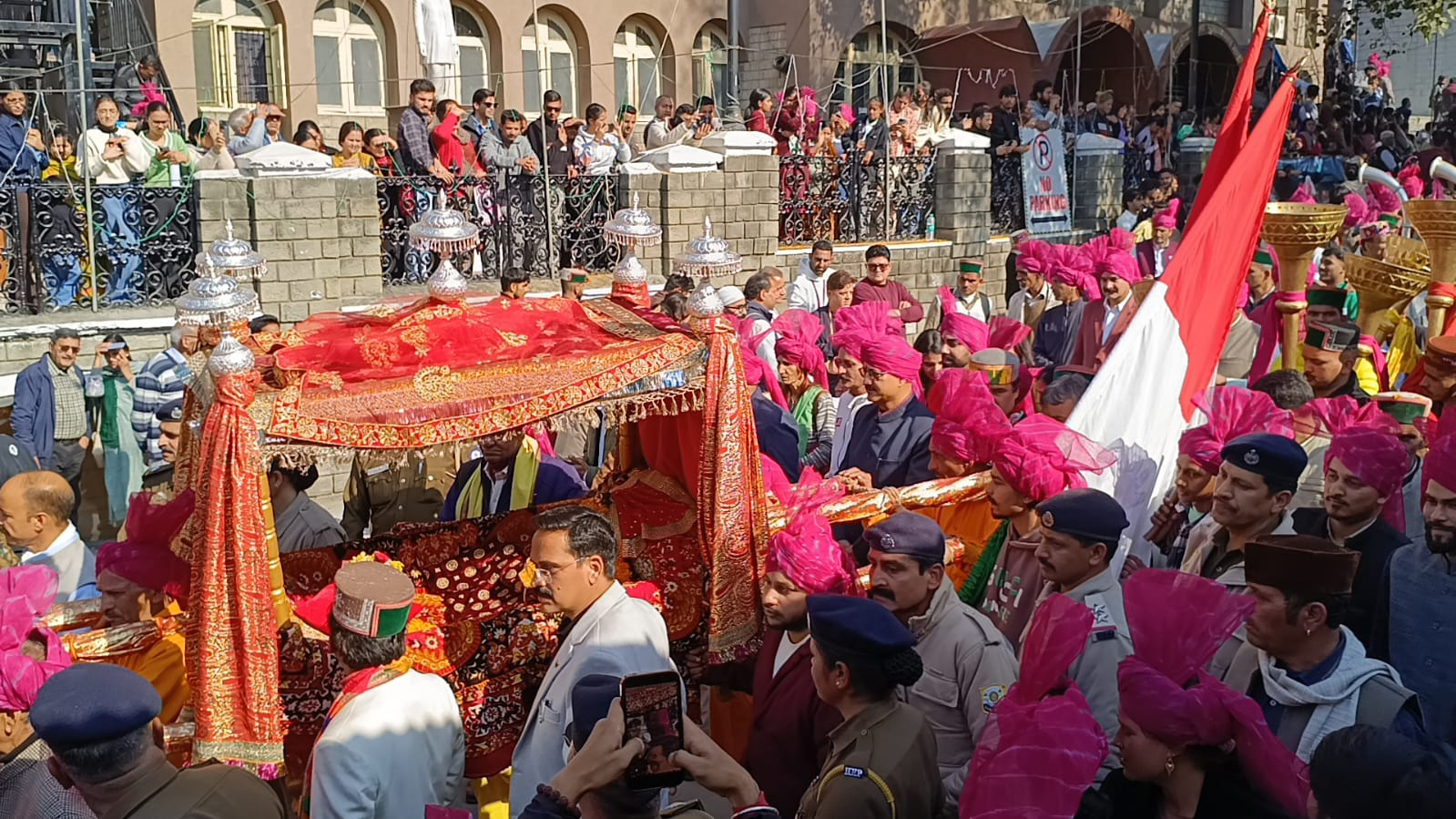
On the first day of the festival, Deputy Chief Minister Mukesh Agnihotri took blessings of the Kamrunag deity at the Tarna Mata Temple. A procession, accompanied by the beating of drums and the playing of 'shehnais', led by Lord Madho Rai, an incarnation of Lord Vishnu and the chief deity, was taken out in the town.
The assembled deities followed him in beautifully decorated palanquins, as per protocol, and later assembled at the Bhutnath temple, dedicated to Lord Shiva, which was constructed in 1526.
Three such processions, locally called 'Jaleb', will be taken out on the opening, middle, and concluding days of the fair, said an organiser.
Six cultural evenings will be organised during the festival, featuring performances by Himachali artists only.
Deity Kamrunag reached the town on Sunday along with hundreds of his devotees in a colourful procession accompanied by the beating of drums.
Mandi, located on the Chandigarh-Manali National Highway-21, is dotted with more than 80 temples built in typical hill architecture. The prominent temples are those of Bhutnath, Triloki Nath, Jagannath, Tarna Devi, and Jalpa Devi.
The rulers of Mandi were devotees of Lord Shiva. It is believed that ruler Ajbar Sen saw in his dreams a cow offering milk to the image of Lord Shiva. His dream came true when he himself saw the cow offering its milk to the idol. He then constructed a temple there in 1526 – the Bhutnath temple. Simultaneously, the foundation of Mandi town was also laid, and he shifted his capital here.
The local administration, the organiser of the festival, also offers an honorarium to the "kardars" – the attendants of deities – for participating in the festival.
The week-long festival, which attracts hundreds of tourists and many researchers from across the globe, is also a culinary adventure.
Visitors will be able to savor the rich repast of local delicacies reflecting unique Himalayan culinary traditions and flavours. Also, transactions worth lakhs of rupees of hand-knitted Kullu and Kinnauri shawls, handicrafts, carpets, handcrafted blankets, intricate pattu-pattis, exquisite wooden crafts, and dry fruits are also available during the festival.