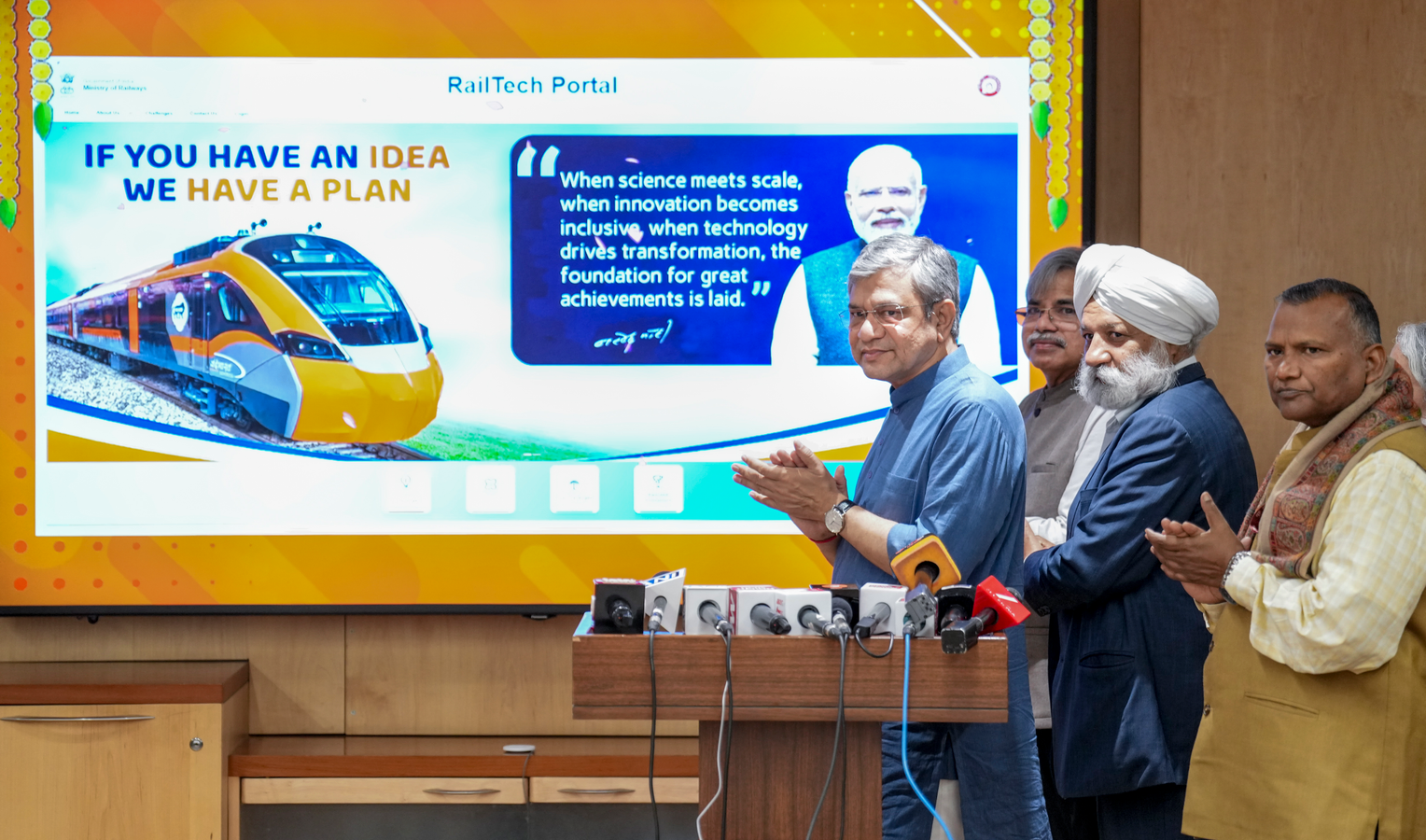
New Delhi, February 26 The Railways will engage innovators, start-ups, industry and institutions under the new Rail Tech Policy to promote innovation and also digitize the railway claims tribunal to benefit claimants who can file their cases from anywhere with 24x7 availability, Railway Minister Ashwini Vaishnaw said on Thursday.
Introducing two new reforms under the initiative '52 Reforms in 52 Weeks in 2026', Vaishnaw said that the purpose of these reforms is to, first, connect start-ups and innovators with the Railways in a systematic and meaningful way and improve efficiency, accessibility and transparency in all 23 railway claims tribunal benches across the country.
Under the Rail Tech Policy, start-ups can suggest solutions through the Railways' innovation portal in areas such as operational safety, passenger amenities, and all other aspects of train operations in the country.
The minister highlighted four features of the scheme: a single-stage detailed submission of proposals by the innovator, a scale-up grant increased more than three times, a doubled maximum grant for prototype development and trials, and a user-friendly interface.
Some of the innovation challenges suggested by him include an AI-based Elephant Intrusion Detection System, an AI-based fire detection system in coaches, a drone-based broken rail detection system, and a rail stress monitoring system.
Although the railway ministry had already introduced a similar scheme, 'Innovation Policy' in 2022 to "develop cost-effective, implementable, and scalable solutions" to address quality, reliability, and maintainability-related issues, Vaishnaw said that the earlier policy had a lot of restrictions.
He added that in the earlier policy, the Railways were supposed to identify the problems and then innovators were expected to bring solutions to those issues, but now with the new policy, anyone can come up with an innovative solution to any problem related to the operation of the Railways.
He stated that the new policy has been framed based on the experience and learning gained from sectors such as defense, electronics, and information technology, telecommunications, and biotechnology.
According to Vaishnaw, the new policy was drafted after a thorough discussion and consultation with the start-ups.
When asked about budgetary challenges, given that the Railways' allocation for research was merely Rs 42 crore in 2024-2025 and Rs 86 crore in 2026-27, he said that the budget would come from the respective departments for which the innovative proposal relates to.
"For example, if the innovation is related to the maintenance of tracks, then a part of the budget allocated for track maintenance will be used for the innovation. There is no separate head for this," Vaishnaw said.
Outlining the selection process, he stated that once a proposal comes, the concerned department will check whether the suggested solution is feasible, and then it will be recommended to the Board to process further.
"The divisions will be given the responsibility to implement the pilot project of the proposal," he added.
Talking about the digitization of the railway claims tribunal, he said, "It will benefit litigants to file their cases from anywhere electronically easily with 24x7 availability."
He also highlighted benefits such as easy online filing of railway claims from anywhere, automatic alerts/notifications to all users, real-time case volumes and monitoring leading to faster resolution, automated document handling and real-time insights to benches, and the use of AI for processing cases.
The minister had earlier introduced the first two reforms concerning train cleaning and Gati Shakti Cargo terminals.