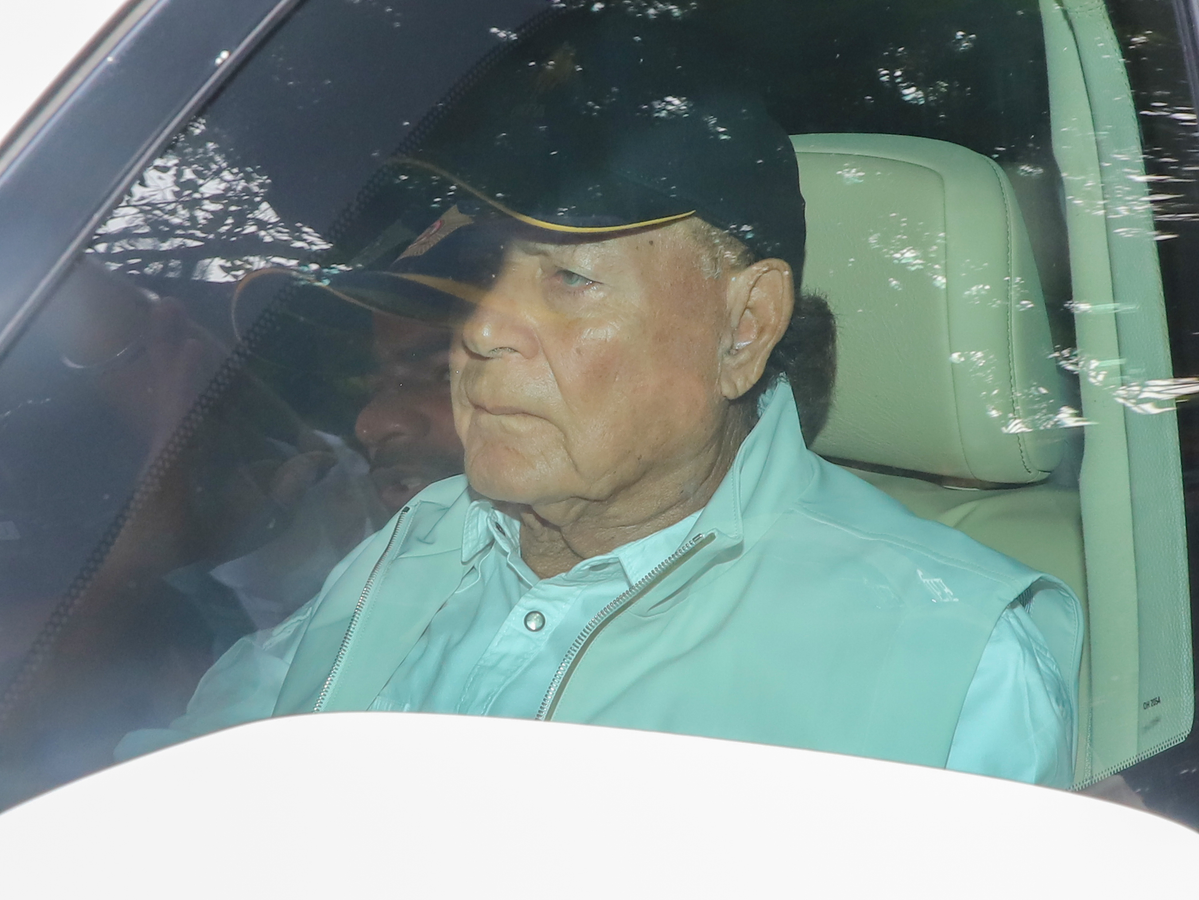
Mumbai, February 17 – Veteran screenwriter Salim Khan was admitted to the ICU after being rushed to Lilavati Hospital on Tuesday. Dr. Jalil Parkar, who is overseeing his case, has issued a statement providing an update on Mr. Khan's health.
He said, "Yes, it is true that Salim Khan (father of Bollywood superstar Salman Khan) and a renowned figure in himself was admitted to Lilavati Hospital in the ICU early this morning at 8:30 am. His family doctor, Sandeep Chopra, brought him to the emergency room. Emergency care was provided, and Mr. Khan was then transferred to the intensive care unit on the first floor. A team of doctors, including Dr. Vinay Chavan (neurologist), Dr. Ajit Menon (cardiologist), Dr. Nitin Dange (neurosurgeon), and Dr. Bineet Ahluwalia, attended to him. We are respecting the family's request and will not be sharing further details today."
However, tomorrow at 11:00 am, we will issue a press statement with the consent of the family and with the utmost confidentiality regarding the patient. We appreciate your patience. "He is stable but is under close observation regarding his clinical condition," he added.
Earlier in the day, Salim Khan's eldest son, Bollywood superstar Salman Khan, along with his daughters Alvira Khan Agnihotri and Arpita Khan, and actor Aayush Sharma, were seen arriving at the hospital.
Salman left the shooting on Madh Island to visit his father. Mr. Khan reportedly complained of swelling.
Salim Khan moved to Mumbai in the 1950s and initially worked as a film extra and supporting actor in Hindi cinema. Although his acting career was limited, it led him to scriptwriting. In the late 1960s, Salim Khan partnered with Javed Akhtar, forming Salim–Javed, one of the most influential screenwriting teams in Indian cinema. Between 1971 and 1982, they wrote a series of commercially successful and culturally influential films, including 'Andaz', 'Seeta Aur Geeta', 'Zanjeer', 'Yaadon Ki Baaraat', 'Deewaar', 'Sholay', 'Trishul', 'Don', and 'Kaala Patthar'. Their work helped establish the template of the Hindi commercial film, driven by strong narratives, dialogue, and a central male protagonist.