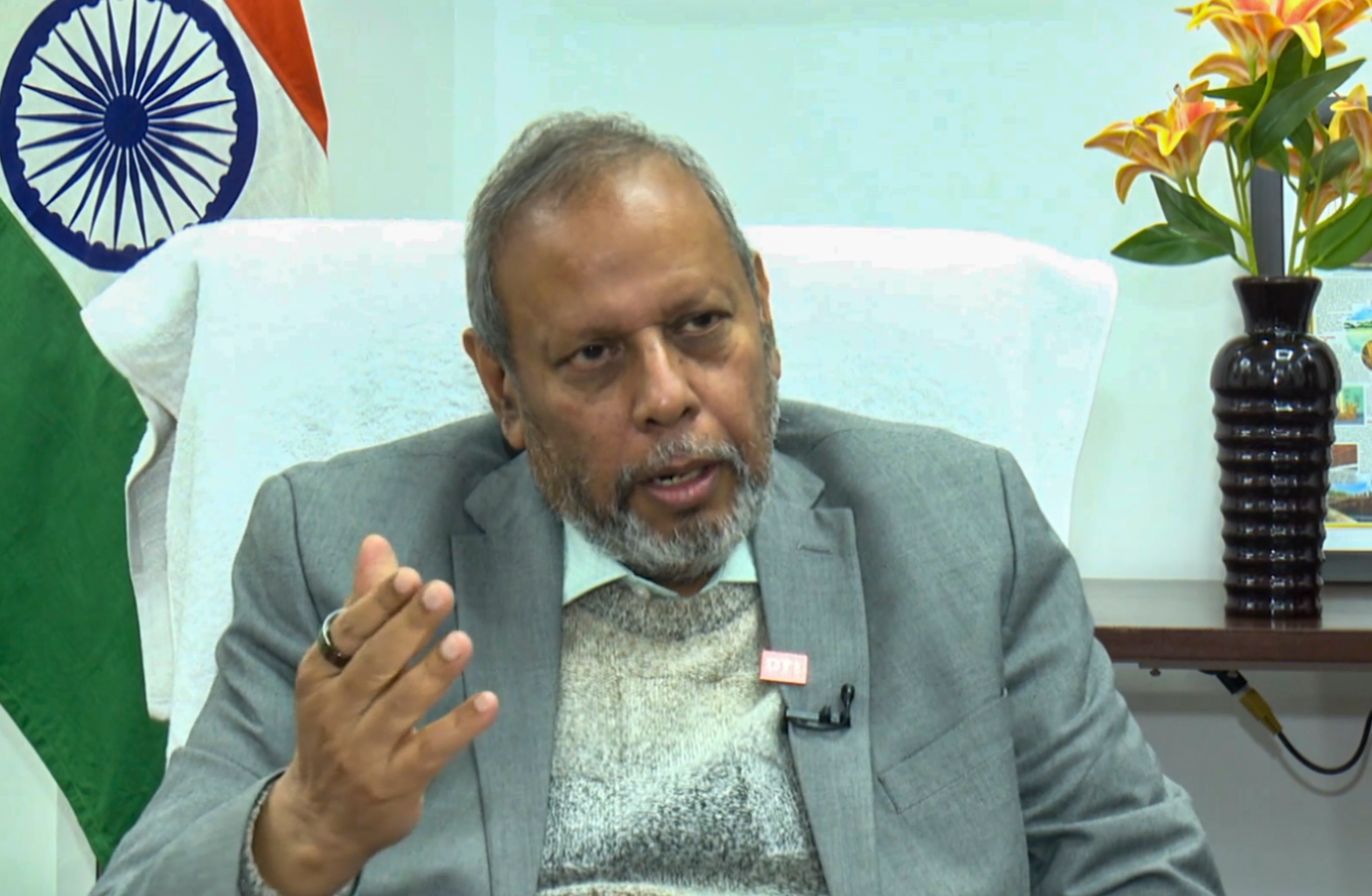
In Kolkata, on April 8, S. Mahendra Dev, Chairman of the Prime Minister's Economic Advisory Council (EAC-PM), stated that the Indian Rupee is expected to stabilize around the 92-93 level against the US dollar. He expressed optimism that foreign investment flows would improve in the near future, given the easing of geopolitical tensions and the continued strength of macroeconomic fundamentals.
Dev also emphasized that India must maintain a growth rate of 7-8 per cent and implement reforms to achieve developed nation status by 2047, the centenary year of independence.
He attributed the pressure on the currency to global uncertainties, including the West Asia conflict and the withdrawal of foreign institutional investors (FII).
These remarks came during a temporary ceasefire between the US and Iran, which had calmed global markets.
"The rupee is stabilizing around 92-93. The pressure came from global war-related headwinds and FII withdrawals, but the rupee will stabilize at these levels," Dev said during a session organized by the Bharat Chamber of Commerce.
He noted that India's economic resilience and strong macroeconomic fundamentals allow it to absorb external shocks.
According to Dev, India's fiscal position allows for continued spending on infrastructure and welfare, even during times of global uncertainty.
"We can continue capital expenditure and social spending, which many countries cannot," he said.
Dev stated that India has a comfortable headroom on its current account deficit, which is currently at 1.3 per cent of GDP.
He also described the Reserve Bank of India's Monetary Policy Committee's decision to keep policy rates unchanged as appropriate in the current economic environment.
Regarding growth prospects, Dev remained optimistic that India could achieve 6.9 per cent and even around 7 per cent growth in 2026-27, despite global uncertainties.
Dev outlined India's emergence as a "global bright spot" and the need for sustained high growth and structural reforms to achieve developed nation status by 2047.
He stated that India needs to maintain a nominal growth rate of around 11-12 per cent, translating into real growth of about 7-8 per cent, to reach that milestone.
Dev identified investment as the primary engine for this transformation.
"The investment rate is currently 31 to 32 per cent. It needs to be increased to 34-35 per cent," he said, emphasizing that private sector investment is crucial given the government's limited capacity for capital expenditure.
He noted that several states, including Uttar Pradesh and Maharashtra, have already set ambitious GSDP targets in line with the national vision.
Dev also warned of a shift in the global economic order away from the "peak of globalization" towards protectionism and fragmented supply chains.
He cited policy moves such as the CHIPS and Science Act and the European Green Deal as examples of advanced economies returning to aggressive industrial policies.
Dev said India's response involves adjusting tariffs, diversifying exports, and accelerating free trade agreements, while focusing on strategic sectors such as semiconductors, critical minerals, and defense manufacturing to strengthen technological self-reliance.
Dev highlighted structural challenges, including the "missing middle" in India's manufacturing sector, dominated by very small firms and very large corporations, with relatively few mid-sized enterprises employing 200-500 workers.
While initiatives such as the Production Linked Incentive Scheme have helped strengthen manufacturing, particularly in mobile phone production and exports, he said manufacturing and services should be viewed as complementary sectors rather than substitutes.
Dev also stressed the importance of addressing social sector gaps, noting that India has world-class higher education and healthcare institutions but weaker foundational learning and primary health services, particularly in rural areas.
With a median age of about 28, India has a significant demographic advantage compared to ageing economies like Japan and China, he said.
However, this demographic dividend can only be realized through improvements in education, health, and skill development, the EAC-PM chief said.
Dev also emphasized that domestic savings remain the primary source for financing investment, even as foreign direct investment plays a supportive role.
He praised India's digital public infrastructure, particularly the Unified Payments Interface (UPI), and advocated the development of "inclusive AI" as a public good.
Dev cautioned policymakers to avoid the middle-income trap, noting that only a limited number of middle-income economies have successfully transitioned to high-income status.
Looking ahead, Dev said India’s share of global GDP in purchasing power parity (PPP) terms could reach around 25 per cent by 2043-44, comparable to the country’s economic prominence in 1700 when its share of global GDP was estimated at 24 per cent.
The economist said India’s political stability, reforms, and a large domestic market of 1.4 billion people provide resilience against global shocks as the country moves towards its goal of becoming a developed nation by 2047.