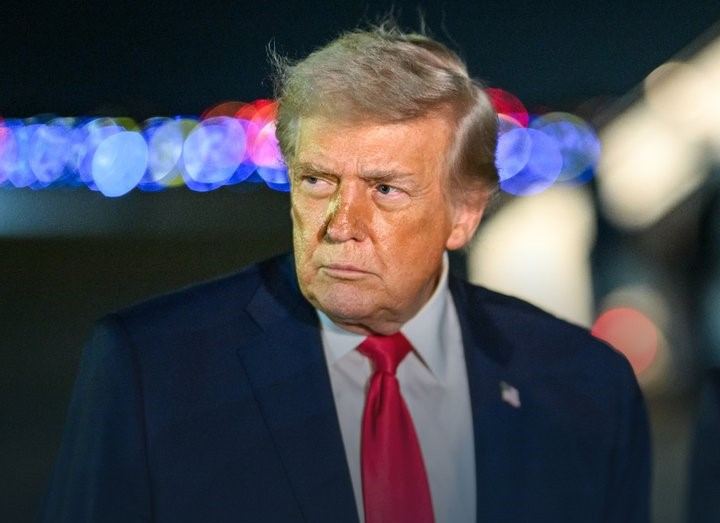
Washington, March 30 – US President Donald Trump reiterated his call for sweeping election reforms, advocating for mandatory voter identification and sharply criticizing mail-in ballots as "inherently dishonest."
Speaking aboard Air Force One, Trump urged Republicans to take aggressive legislative steps, including ending the Senate filibuster, to pass what he described as the "Save America Act."
"They should end the filibuster, just vote, and you'll get everything you want," he said.
Trump outlined a set of priorities centered on tightening voting rules. "We have voter ID, we have proof of citizenship. It's very important," he said.
He specifically criticized mail-in voting. "Mail-in ballots have to be stopped… otherwise, mail-in ballots are inherently dishonest," he said, while noting limited exceptions for "the military, sick people, the disabled, and people who are travelling."
The president argued that stricter rules enjoy broad public support. "It's polling at 87 percent – with all voters, including Democrats," he said, referring to voter ID requirements.
He accused Democratic leaders of opposing such measures for political reasons. "The only ones who don't want it are these corrupt Democratic leaders, because it will not give them the ability to cheat in an election," Trump said.
Trump framed the proposed changes as central to election integrity. "Why wouldn't you want voter ID? There's no reason in the world you wouldn't want it, except to cheat," he said.
Responding to questions, the president spoke about his policy goals tied to the legislation, including restrictions on transgender participation in sports and changes to voting procedures, presenting them as part of a broader political agenda.
Trump said Republican leaders have said they lack the votes to end the filibuster. But he insisted that leadership should push harder. "That's what being a leader is. You have to get the votes," he said.
Trump's comments come amid ongoing debates in Washington over voting access and election security, issues that have become increasingly polarized in recent election cycles.