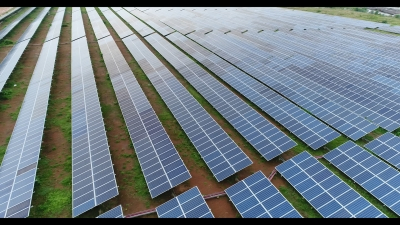
New Delhi, February 28 While the generation of renewable electricity has continued to grow as the world shifts away from fossil fuels, the speed of this transition may not be as fast as one would have hoped, said Ita Kettleborough, director of the Energy Transitions Commission.
She noted that this is despite the "remarkable cost declines" in the generation of clean energy.
The Energy Transitions Commission is a UK-based think tank that focuses on economic growth and climate mitigation. It is currently working in India to expand the use of clean electricity in the agricultural sector, in collaboration with The Energy and Resources Institute (TERI).
Kettleborough said, "There have been remarkable cost declines in the generation of clean energies, especially in solar and wind. For example, in the case of solar, there have been 99 per cent reductions in cost over the last 30 years. But the use of fossil fuels has not come down as fast as we perhaps hoped it might."
An analysis by the Energy Institute (EI), the global professional body for the energy sector, revealed that while wind and solar energy alone expanded by an impressive 16 per cent in 2024, total fossil fuel use grew by more than 1 per cent, highlighting the slow progress of the energy transition.
The continued use of fossil fuels is resulting in record-breaking emissions every year. For instance, global carbon emissions from fossil fuels were projected to increase by 1.1 per cent in 2025 -- reaching a record high, according to a study by the Global Carbon Project.
"While we now have clean energy technologies, to really meet the challenge of climate change, we needed them 20 years ago, maybe even before that. We are still struggling to move at the pace [in deploying these technologies] we need to… I am confident we will get to that pace by the end of the century, but we need to get there a lot faster than that," Kettleborough said.
The world needs to quickly expand renewable energy generation, as its carbon budget to limit global warming to the 1.5-degree Celsius threshold is "virtually exhausted", with only about 170 billion tonnes of carbon dioxide (CO2) left, equivalent to approximately four years of emissions at current levels, according to the Global Carbon Project study. The concentration of CO2 in the atmosphere was set to reach 425.7 ppm in 2025, 52 per cent above pre-industrial levels, the study added.
Once the 1.5-degree Celsius threshold is breached for a long period of time, the impacts of climate change, such as sea level rise, intense floods and droughts, and wildfires will significantly increase and accelerate.
The world is already witnessing these consequences, to some extent. For instance, the last three years are the hottest years on record, sea surface temperatures have been abnormally high, and extreme weather events have become more intense.