Sydney, April 6 – An Australian-led study has uncovered evidence of a rare form of exploding star, shedding light on one of the most cataclysmic events in the universe.
The study, published in Nature, uses gravitational wave observations to probe how the most massive stars end their lives, strengthening the case for a long-predicted "forbidden gap" in black-hole masses, according to a statement from Australia's Monash University.
At the end of their lives, most massive stars collapse into black holes – objects with gravity so strong that not even light can escape, it said.
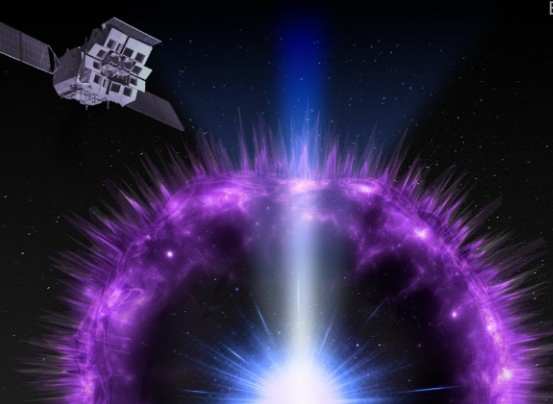
However, extremely massive stars are thought to become so hot that they are blown apart in a "pair-instability supernova," an explosion so violent that the star is completely destroyed and leaves no black hole behind, reports Xinhua news agency, quoting the statement from Australia's Monash University.
Researchers identified a "forbidden range" of black-hole masses more than 45 times the Sun's mass, where stellar-origin black holes are rare. The gap aligns with models in which such stars explode via pair-instability and leave no remnant.
Project lead Tong Hui, a PhD candidate from Monash University, said the study found a forbidden mass range where stars seemingly don't make black holes.
"The only black holes in this mass range are made from merging smaller black holes, rather than directly from stars," Tong Hui said.
Confirming the existence of this gap would help settle a major question about how the most massive stars live and die, and the origin of black holes, the researchers said.