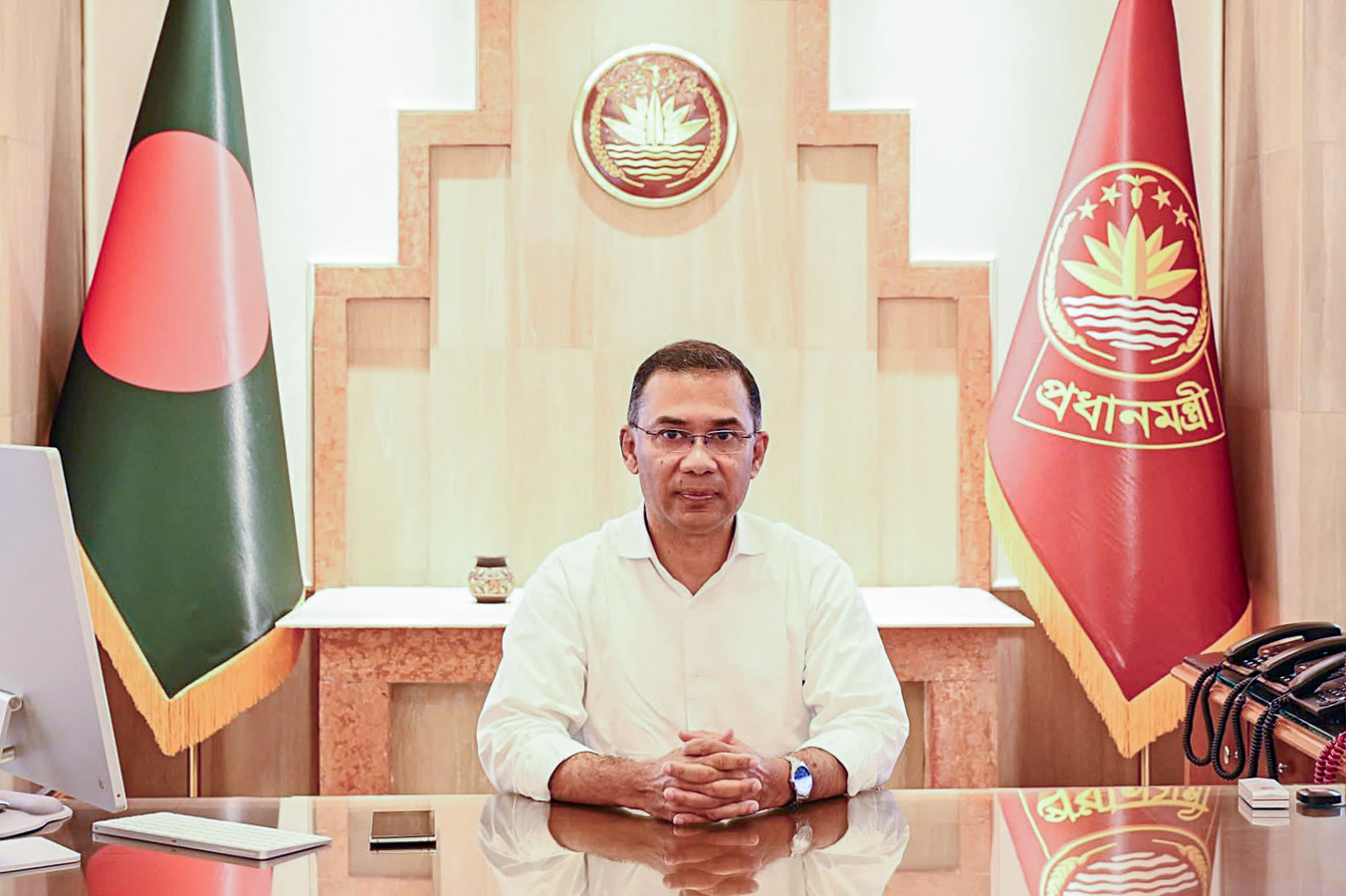
Dhaka, March 18 – Bangladesh’s Prime Minister Tariq Rahman faces a daunting task in guiding the nation towards stability and ushering in a new golden era, while also keeping extremist elements in check and preserving the party's hard-earned credibility.
The BNP pledged in its election manifesto to boost the economy to a trillion by 2030 – a goal that depends on "regional security, economic stability, and the restoration of peace in society," according to a report.
According to a report in 'Fair Observer', Bangladesh's political turmoil and economic challenges are intertwined. Former Chief Advisor Muhammad Yunus, who led the 18-month interim government, faced criticism from the country's President, Mohammed Shahabuddin, for the poor state of affairs during his tenure.
"The President accused Yunus of being uninformed and deliberately obstructing key decisions, such as trade tariff negotiations with the US – decisions that had significant ramifications for Bangladesh," the report mentioned.
"Bangladesh's ready-made garments industry, the backbone of its dollar-earning crop, not only provides employment but also empowerment, especially for women who play an active role in the vibrant Bengali social fabric. Any political formation aiming to alter and possibly marginalize this very significant section takes an enormous risk," it added.
The report noted that the radical Islamist party Jamaat-e-Islami also drew widespread criticism for misogynistic remarks targeting working women, including comparisons to sex workers, proposals for reduced working hours, and hinting at the enforcement of harsh Islamic laws if elected. Jamaat's disregard for gender equality directly clashed with students' aspirations.
Following the suspension of the Awami League (AL) from political participation by the Yunus regime, the report said, a political vacuum emerged, and Jamaat expected a decisive outcome in the February elections.
"However, the electorate did not play ball. Not only was the AL suspended from political participation, but the sitting Bangladeshi president also alleged that, on the occasion of a royal invitation by the state of Qatar, his participation was blocked by design. Bangladesh had descended into a violent spiral of violence, arson, attacks targeting minorities, and an almost omnipresent law and order in the last 18 months following Sheikh Hasina's departure," it added.
The report further said, "The role of the interim caretaker, in association with student minister designates, must be examined impartially, and the whole timeline needs a holistic, overarching inspection. If these acquisitions hold, then the 'banker of the poor' has much to disclose as to what transpired in the corridors of power in Dhaka."