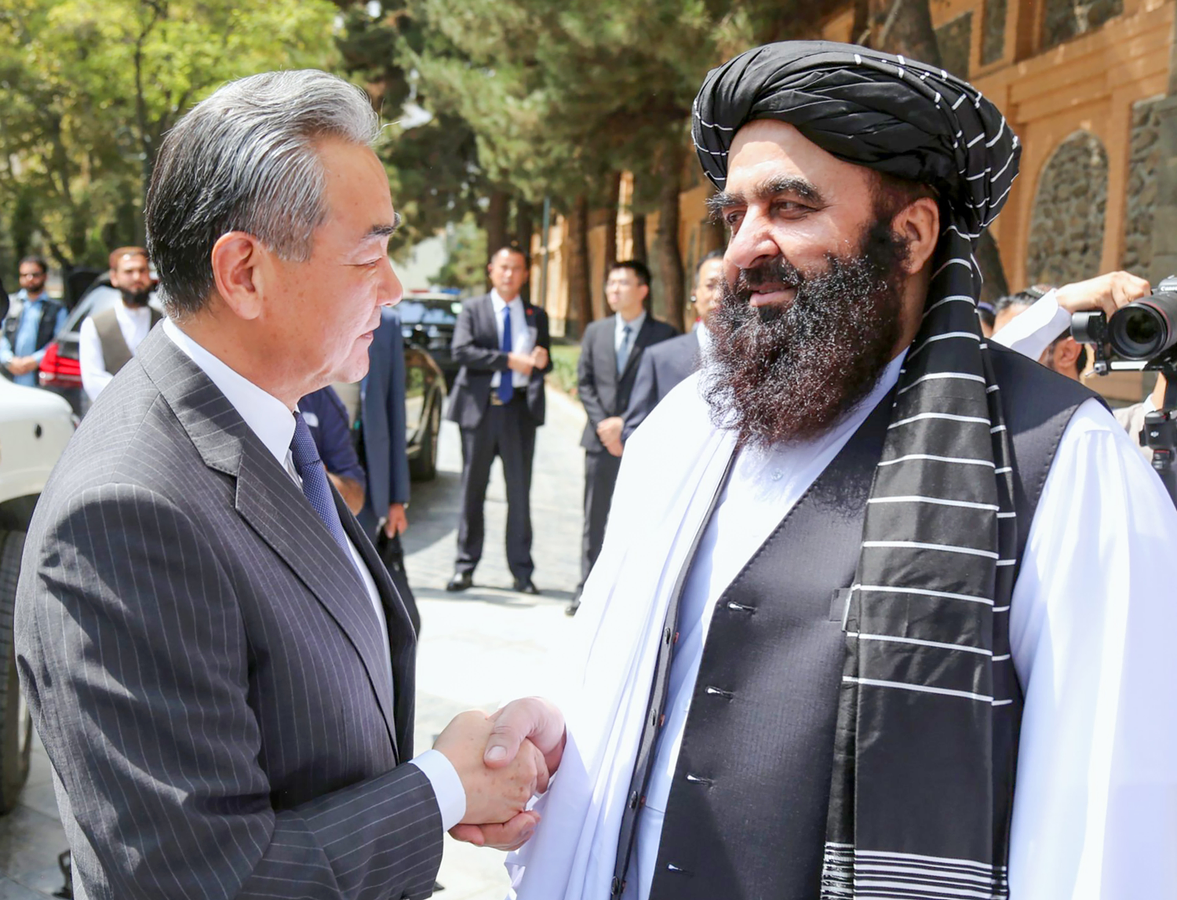
In an exclusive interview with a leading international affairs magazine, Kabul-based Afghan intelligence analyst and counterterrorism expert Ajmal Sohail accused Pakistan's Inter-Services Intelligence (ISI) of increasingly targeting Chinese infrastructure and investment projects in Afghanistan.
Sohail, co-founder and co-president of the Counter Narco-Terrorism Alliance Germany, emphasized that this move reflects Islamabad's concern that Beijing's growing engagement with Kabul, ranging from mining operations to foreign investment and potential transit corridors, could limit Pakistan's geopolitical influence.
"The ISI has increasingly focused on targeting Chinese infrastructure and investment projects in Afghanistan. This strategy reflects Islamabad's concern that Beijing's growing direct engagement with Kabul, particularly through mining operations, foreign investment, and potential transit routes, could diminish Pakistan's geopolitical leverage. By undermining Chinese projects, the ISI seeks to remind Beijing that Pakistan remains a critical gateway for regional connectivity, especially through the China-Pakistan Economic Corridor (CPEC)," the expert stated in an interview with The Diplomat magazine.
"Part of this strategy involves encouraging guerrilla-style attacks on foreign tourists and investors, with Chinese nationals being specifically targeted. The aim is to create insecurity around Chinese ventures and to complicate Beijing's ability to operate independently in Afghanistan," he added.
Sohail highlighted that the ISI is focused on Afghanistan's Wakhan Corridor in the Badakhshan province, which could serve as an alternative trade route for China, bypassing Pakistan.
"If China succeeds in building direct infrastructure links through Afghanistan, Pakistan's role as a strategic intermediary will weaken. Therefore, the ISI's strategy is designed to redirect Beijing's reliance back toward Pakistan, preserving its geoeconomic relevance and ensuring that CPEC remains the primary artery for China's regional ambitions," he told The Diplomat.
When asked about the seizure of a consignment of weapons from Pakistan bound for the Wakhan Corridor, Sohail noted that the Taliban's intelligence intercepted a shipment of approximately 525 weapons and 27,000 rounds of ammunition at the Torkham border on February 21. The weapons, hidden in trucks and destined for the Omari refugee camp and ultimately the Wakhan Corridor, he said, represented a significant escalation in covert operations aimed at the Taliban regime.
"Intelligence reports attribute the operation to Pakistan's ISI and Military Intelligence, which are responsible for supplying arms to anti-Taliban groups and separatists in Afghanistan. Newly active organizations, such as the Afghanistan Independence Front, along with regional factions, ISKP, and other contracted armed groups, were provided with weapons to conduct attacks against Chinese mining companies and foreign investors, particularly in the Wakhan Corridor," the expert told The Diplomat magazine recently.
"Additionally, a portion of the weapons was intended for the 'Tajikistan Taliban', a group led by Mahdi Arslan and Muhammad Sharipov, who are now operating from the Chitral mountain range with Pakistani intelligence support. Their activities target Chinese investors and Tajik border forces in Badakhshan province," he added.
According to Sohail, the February 21 seizure of the weapons shipment exposed the ongoing proxy conflict involving Pakistan and the Taliban, highlighting how intelligence agencies shape regional security.
Asserting that Pakistan's use of extremist proxies to advance its strategic interests reflects a long-standing pattern, dating back to the Soviet era and continuing through the post-9/11 period, Sohail said, "This incident underscores the risks posed by arms proliferation, cross-border militancy, and the manipulation of refugee populations for covert operations."