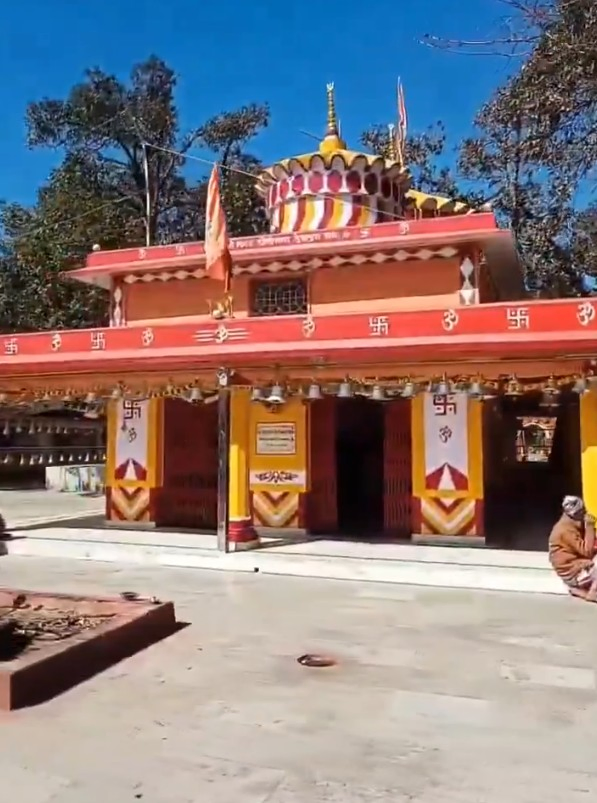
Dehradun, April 7 – Uttarakhand Chief Minister Pushkar Singh Dhami spoke on Tuesday about the significance of the Dhaulinag Devta Temple, located in the Vijaypur area of the Bageshwar district, describing it as an important centre of faith and devotion in the region.
In a post on X, the Chief Minister wrote, "The Dhaulinaag Devta Temple, located in the Vijaypur area of Bageshwar district, is a major centre of faith and devotion."
His remarks brought renewed attention to the temple's religious and cultural importance in the Kumaon region.
CM Dhami further noted that special worship and rituals are organised at the temple on occasions such as Rishi Panchami, Naag Panchami, and Navratri Panchami, attracting large numbers of devotees from nearby areas and beyond.
Emphasising its spiritual appeal, he added, "When you visit Bageshwar, you should certainly visit this sacred temple."
The post was accompanied by a 37-second video showcasing scenic visuals of the temple premises, including panoramic mountain views, temple bells, and devotees engaged in worship, highlighting the serene and devotional atmosphere of the site.
Dhaulinag Devta, also referred to as Dhauli Nag or the 'White Snake God', is a prominent Naga deity worshipped primarily in the Vijaypur region of the Bageshwar district in the Kumaon belt of Uttarakhand.
The temple is situated on a picturesque hill at an altitude of approximately 1,840 metres, about 1.5 to 2 kilometres from Vijaypur town and about 25 kilometres from Bageshwar, offering sweeping views of the Himalayan landscape surrounded by dense forests of pine, oak, and rhododendron.
According to local belief, Dhaulinag is regarded as the son of Kaliya Nag, the serpent from the Yamuna, subdued by Lord Krishna. Following Krishna's victory, it is believed that Kaliya Nag and his family migrated to the Kumaon hills. Dhaulinag, considered the eldest son, is said to have arrived in the Bageshwar region, with his name 'White Snake' symbolising purity and calmness.
Legends narrate that Dhaulinag undertook intense penance dedicated to Lord Shiva, eventually transforming from a potentially fearsome entity into a benevolent guardian revered by local communities.
A widely shared local folklore explains his enduring connection with the people of the region. It is believed that upon arriving in the Vijaypur hills, Dhaulinag resided in an oak tree. During a forest fire one night, he called out for help. While the Kandpals of Kanda could not respond, the Dhapolas of Dhapolasera alerted the Chandolas of Pokhri, along with the Churmals and Bhools, who collectively helped rescue him and guide him to safety.
In gratitude, Dhaulinag is believed to have blessed these communities and vowed to protect the surrounding region, including 22 villages, becoming their Ishtadevta or Kuldevta. This episode continues to shape local traditions and devotional practices even today.
Another version of the folklore suggests that upon his arrival in the region, Dhaulinag called out to various community groups, who then served him and received his blessings of protection.
He is also believed to have entrusted specific families, including the Pant and Dhami lineages, with the responsibility of performing regular worship and rituals at the temple, a tradition that has been passed down through generations.
A Shiv Ling installed within the temple further reinforces its deep association with Lord Shiva worship.