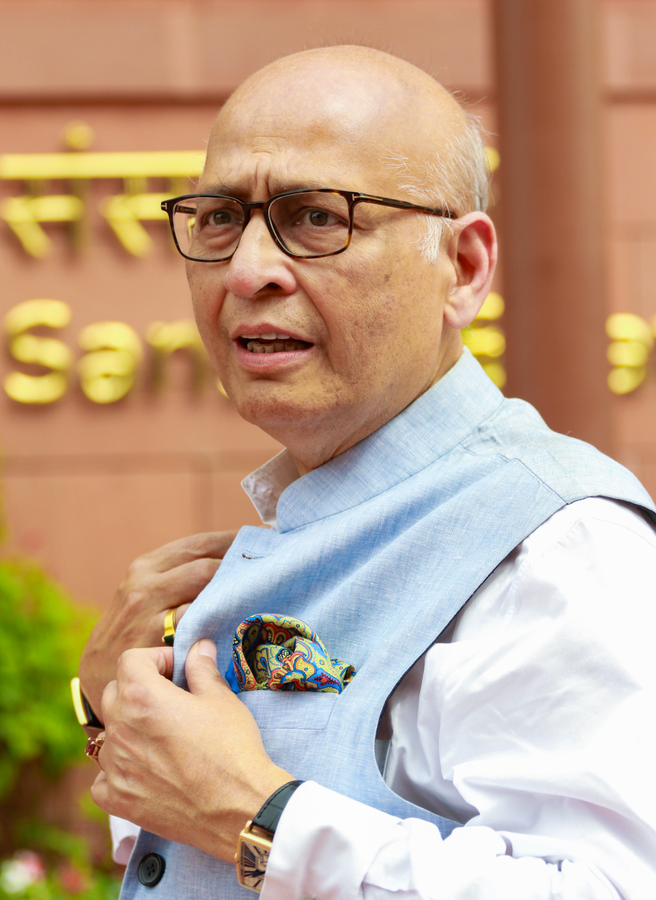
New Delhi, April 1 – Congress Rajya Sabha MP and senior advocate Abhishek Singhvi urged the ruling Bharatiya Janata Party (BJP)-led Union government to send the recently introduced Foreign Contribution (Regulation) Amendment Bill (FCRA), 2026, to a Select or Standing Committee. He also cautioned the government against passing the Bill in haste.
Speaking to reporters outside the Parliament, Singhvi said, "The legacy and past history of this (NDA) government and the ruling party (BJP) regarding FCRA has not been positive. It has also not been positive regarding the solid groundwork being done by deserving NGOs."
"It has been like painting everyone with the same black brush. It has hindered and stopped constructive work on the ground. And with this backdrop, I think it is important not to hasten things. It is important to send it (FCRA Bill) to a Select Committee or Standing Committee for discussion," he added.
Singhvi also cited the example of the previous Transgender Persons (Protection of Rights) Amendment Bill, 2026, to highlight public dissent.
"In the Transgender Persons (Protection of Rights) Amendment Bill, almost everything we have said has come true. Everyone outside is criticizing the Bill. The High Court is criticizing it. Even members of their own government committee have resigned," he said.
Significantly, two members of the National Council for Transgender Persons (NCTP) had resigned following the Bill's passage.
President Droupadi Murmu has given her assent to the Transgender Persons (Protection of Rights) Amendment Bill on Monday, according to a notification from the Union Law Ministry.
On the FCRA Bill, Singhvi also added, "So if you listen to us and make appropriate and constructive amendments, you don't lose face. You don't become smaller. It is not an ego fight. We are only saying let everybody collaborate to get a better Bill."
Meanwhile, on Wednesday, the FCRA Bill, 2026, did not come before the Parliament.
Moreover, amid the intensifying row, Kerala BJP President Rajeev Chandrasekhar has struck a conciliatory note, saying that the current version of the Bill would not be passed without addressing concerns.
He assured that discussions would be held before the legislation is brought before the Lok Sabha.