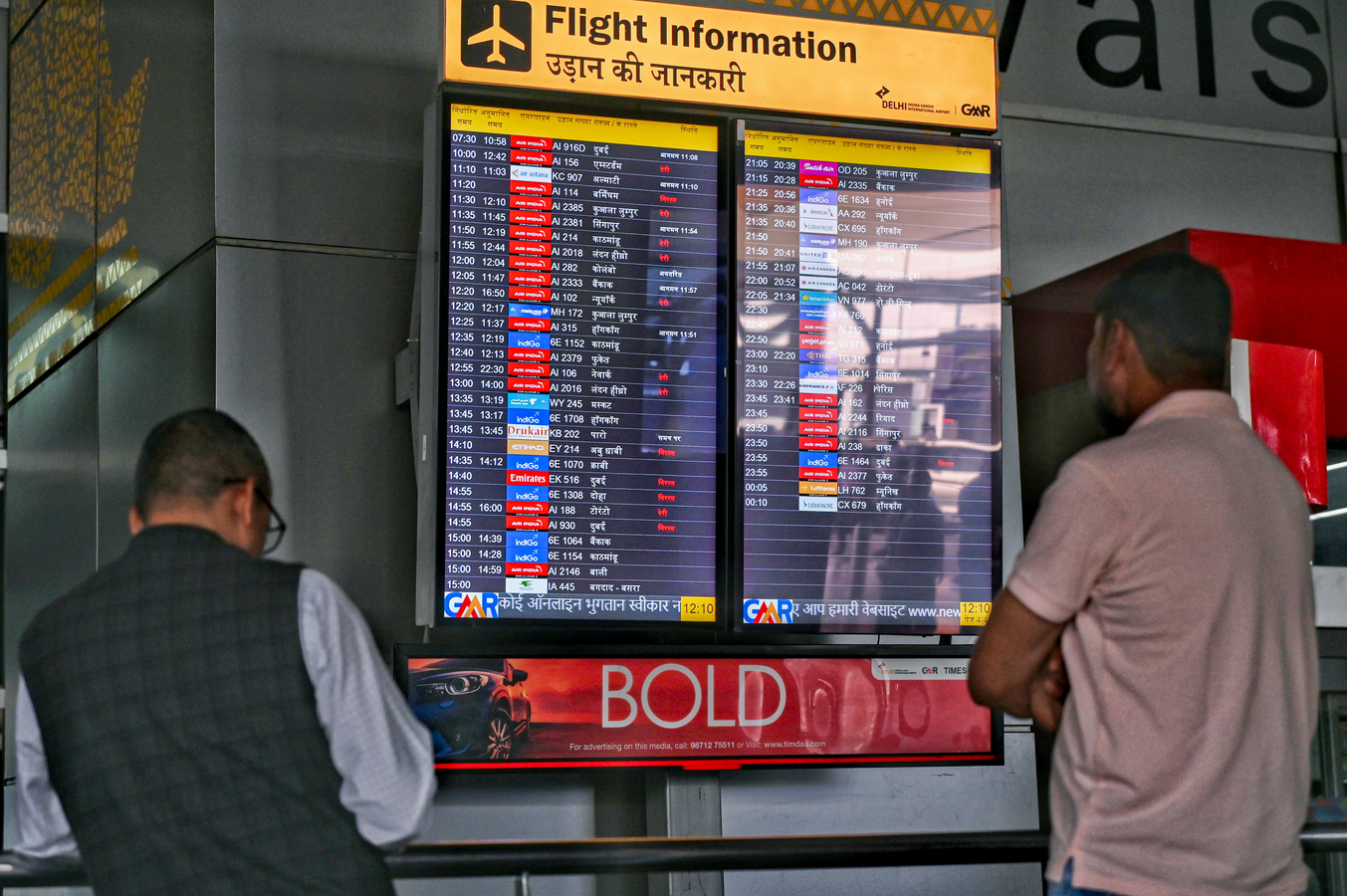
New Delhi/ Bengaluru, March 3 Passengers who returned to India after being stranded in the region affected by the conflict, whether during transit or on a trip to Dubai, narrated their experiences, from hearing the sounds of explosions to facing financial difficulties, long waits, and confusion during their stay.
Several Indian airlines, including IndiGo, Air India, Air India Express, and SpiceJet, are operating over 12 special flights to various cities in Saudi Arabia and the UAE to bring back passengers stranded due to the escalating Middle East conflict.
Several passengers said they felt relieved only when their aircraft touched down in India after a long and arduous journey, and thanked the central and state governments for their efforts.
Praveen Khandelwal, a Lok Sabha MP from Chandni Chowk in Delhi, said his daughter, who was stranded in Dubai for the last three days amid the ongoing conflict between Israel and Iran, returned safely to India. He said she had traveled to Dubai on a business trip and was unable to return due to flight cancellations.
Tensions have escalated following a coordinated offensive launched by the United States and Israel against Iran on February 28. The US and Israel jointly launched military strikes on the Islamic country on Saturday. Iran responded by firing drones and missiles at Israel and US military installations across the Gulf, as well as at Dubai, a global business hub.
"I didn't feel any relief, not even during the flight, until I finally landed in Delhi," said Sunil Gupta, one of the several passengers who returned home shaken.
Gupta, who was returning from Dubai, said the uncertainty was overwhelming.
Arvind, a resident of Noida who also returned from Dubai, said many people were stranded after flights were cancelled.
"People had just gone there for a few days and are unable to handle the expenses. The stranded tourists are facing a serious financial burden. That is the biggest problem right now," he said.
He said the flight that he had initially booked was cancelled, forcing him to stay back for four extra days.
"During that time, we kept hearing about and seeing incidents around us. I personally saw explosions in the sky, but they (missiles) were being intercepted. Even though the missiles were intercepted, witnessing something like that creates fear," he said.
For some families, the situation was far more personal.
Kunwar Shakeel Ahmed, father of an Indian student studying in Iran, said the situation near his daughter's hostel is frightening.
"Sounds of blasts can be heard. Whatever missiles are being fired are landing very close to where she is staying. She told me that after one blast nearby, parts of the roof and the plaster of the hostel building fell off. You can imagine what the girls must be going through," Ahmed said.
Another passenger, Suhail Ahmed, returning from Muscat, said delays and uncertainty at airports worsened the situation.
"There were long waits and confusion. Families with children were struggling and many people were running short of money. In such times, authorities should ensure a faster clearance and better arrangements for those trying to return," he added.
Relief was palpable among the Indian passengers who arrived at Kempegowda International Airport in Bengaluru from the UAE, bringing an end to the high tension fueled by the conflict in West Asia.
Upon arrival on Monday night, the passengers recounted the tense moments of a missile attack in the Gulf nation, before safely flying back.
Saurabh Shetty, who hails from Mangaluru and works for an oil company in Abu Dhabi, described the situation as "worrisome and scary".
"When I came to catch my flight on February 28, everything seemed alright. Suddenly, near the check-in area, we got an alarm and were asked to sit down. We were cautioned not to sit near the windows because of a missile threat," he told