Islamabad, March 29 Amidst a struggling economy with loose ends in energy, logistics, digital infrastructure, education, poverty, and employment, the Pakistani government aims to establish itself as a major exporter of fighter jets, according to a report.
"To be clear, an economy struggling to meet its needs must focus on producing goods for mass consumption to ensure the welfare of its citizens; otherwise, scarcity can lead to a spiral of rising inflation, rising inequality, and rising economic injustice. This crucial economic lesson seems to have been missed by Pakistan's leaders," Nasir Khattak, who specializes in the China-Pakistan region, wrote in a report for the Afghan Diaspora Network.
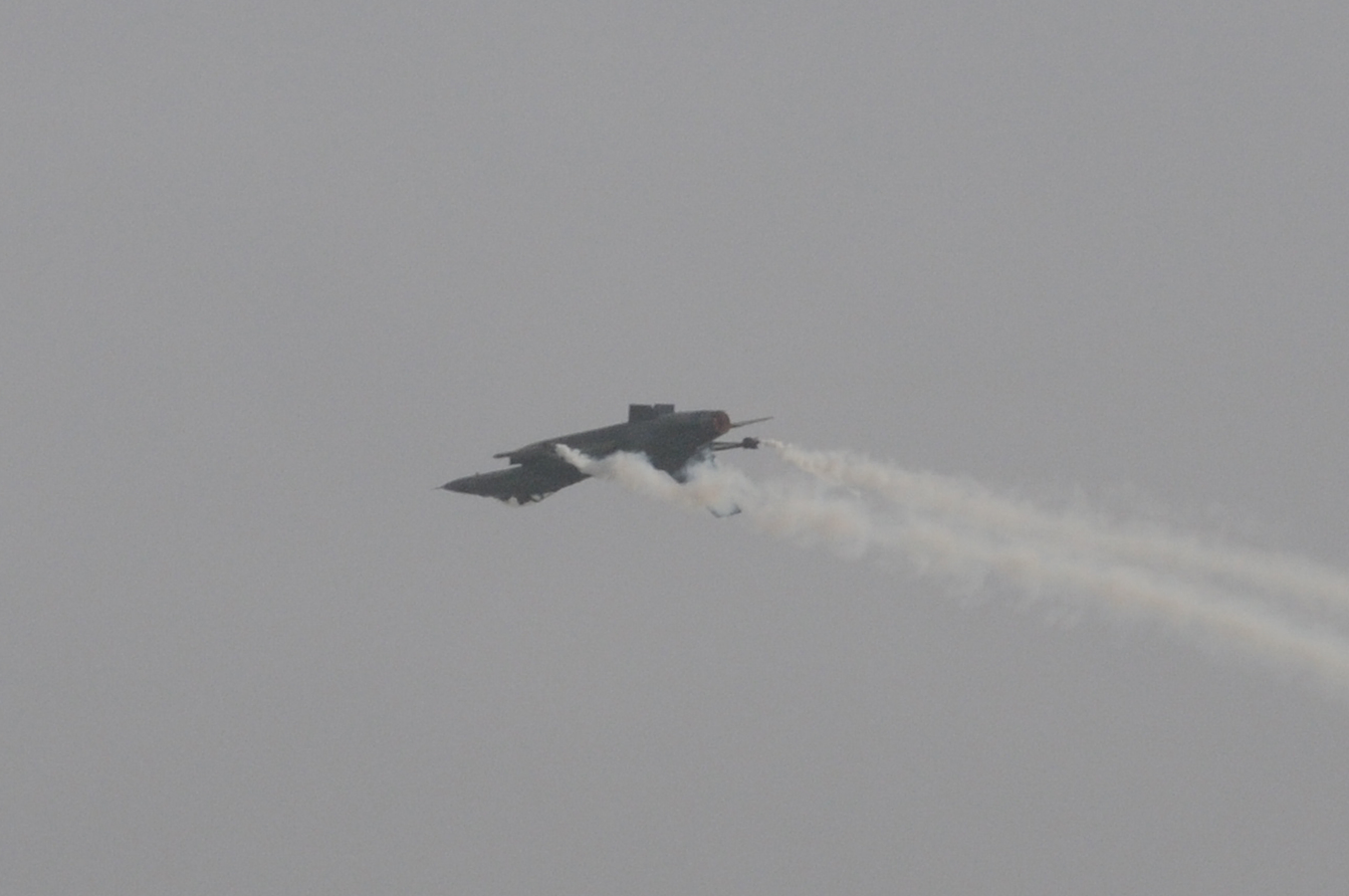
In 2025, Pakistan signed a $10 billion deal to export military hardware. This deal includes the China-Pakistan joint venture JF-17 fighter jet and the Mushshak trainer aircraft. Pakistan has been presenting itself as an alternative international arms market to Africa, Europe, and the Gulf. However, it faces many challenges at home.
"First, the sale of jets is presented as a solution to its debt problems and future IMF bailouts. However, the production of the JF-17 jet, jointly ventured with China, has significant manufacturing costs. These costs are complicated by foreign exchange problems, as many components need to be imported from China, Russia, and the UK. In addition, Pakistan is making deals with risky partners like Libya, which, under the UNSC and Western sanctions, is not allowed to procure defense equipment. Thus, the logistics of such deals remain a major concern," the report said.
Second, Pakistan wants to address its macroeconomic instability through extensive military involvement. This approach has not worked in the past, and the chances of it succeeding this time are slim. According to the report, the Pakistan government, under the influence of the military, has been involved in economically unsound and ethically questionable practices of allocating a larger share of its budget to the defense sector year after year. According to the 2025 budget, Pakistan increased defense spending by 20 per cent while cutting overall spending by 7 per cent.
Pakistan's apparent aim to be a fighter-jet supplier to the world comes with many developmental concerns. The anticipated achievement of self-reliance through selling off the fighter jets will also lead to a massive outflow of financial resources to foreign collaborators. The entire debate surrounding Pakistan's defense diplomacy offers little benefit to ordinary citizens. Experts have repeatedly warned Pakistan about its poor state of development, increasing poverty, and the need to revamp institutions; however, the current focus of the Pakistan government appears to have no impact on these structural issues.
"The current economic situation is characterized by fragile recovery, high inflation, substantial debt obligations, and significant vulnerability to external shocks, including potential oil price hikes. Despite claiming to be a market economy, the essential components of the economy are determined outside the market. Subsidies are often negotiated, with tax exemptions given to those with a strong political voice: primarily an economy based on patronage politics and elite capture," the report in the Afghan Diaspora Network said.
"Therefore, the paradox: While the economy suffers from loose ends in energy, logistics, digital infrastructure, education, poverty, and employment, the government aims to establish itself as a major exporter of fighter jets. And it is important to reiterate that the celebrated JF-17 is not viable, as many parts are imported and foreign suppliers need to be paid in foreign currency, leading to lower net earnings. Thus, the economy, barely managing to survive with high vulnerability to external shocks, is betting on its notorious defense sector to correct its macroeconomic imbalances," it added.
--IAS
akl/vd